


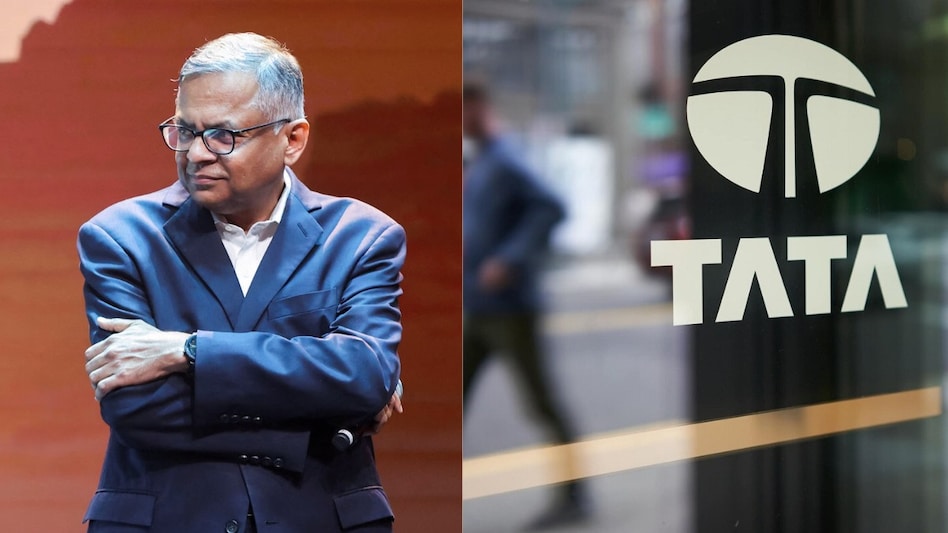
 Earlier this month, N Chandrasekaran, Chairman, Tata Sons, said he was not offering himself for a third term.
 On Tuesday, August 18, Tata Sons, the holding company of India’s oldest and largest conglomerate, adjourned its annual general meeting due to a lack of quorum. It marked the first instance of this taking place in the company’s history.
This comes on the back of the inability of Sir Ratan Tata Trusts (SRTT), which holds a 23.56% stake in Tata Sons, to nominate its representative for the meeting. The issue relates to SRTT’s board composition and, more specifically, the proportion of permanent trustees. A valid quorum at the meeting mandatorily requires the attendance of at least five members and must include a representative jointly nominated by two trusts – Sir Dorabji Tata Trust (SDTT) and SRTT – that together hold a 52% stake in Tata Sons.

 NPCI to discuss MDR rates for UPI transactions above ₹2,000 today, say sources
 Inflation may cross 6.5%: SBI Research sees RBI hiking repo rate in October, December
 India’s imports from China rise to $65.49 billion in April-August 2026-27
 India’s dependence on Russian crude set to rise after a steep drop in August
 MDR on UPI: What it means for customers
 "Diplomacy Is An Exercise In Nuance": EAM S Jaishankar At ICWA
 New BMW 7 Series Walkthrough | Facelift And More Tech | Most Aggressive Looking BMW
 Why Mihir Vora Prefers Mid & Small Caps Over Large Caps | Growth Stocks Explained
 Tamil Nadu CM Vijay's UK Race Visit Sparks Big Clash: Official Trip Or Personal?
 Defence Stocks Outlook: Why Private Players Could Outperform PSU Defence Companies
 42% upside seen in this auto-ancillary stock; brokerage initiates coverage with 'Long' call
 ICICI Bank, Ashok Leyland, Oberoi Realty, SBI shares: Rate-sensitives slide as 25 bps Oct rate hike bets rise
 SBI shares in a downtrend, hit three-month low; here's why
  Tenneco Clean Air shares jump 5%; Motilal Oswal initiates coverage with Buy, sees 33% upside
 Tata Chemicals, Tata Investment shares jump; check near-term targets, outlook42% upside seen in this auto-ancillary stock; brokerage initiates coverage with 'Long' call
 Charged ₹7 extra for water? Andhra temple shop ordered to pay ₹7 lakh penalty
 BT explainer | Machine vs. man: Leaders building AI think it could kill us. But should we be afraid?
 ₹11 IV set, ₹325 price tag: Tukaram Mundhe flags over 2,800% markup on medical devices' pricing
 'I’ll ride again, but...': Gurugram hit-and-run survivor recalls 'extremely traumatising' incident












