












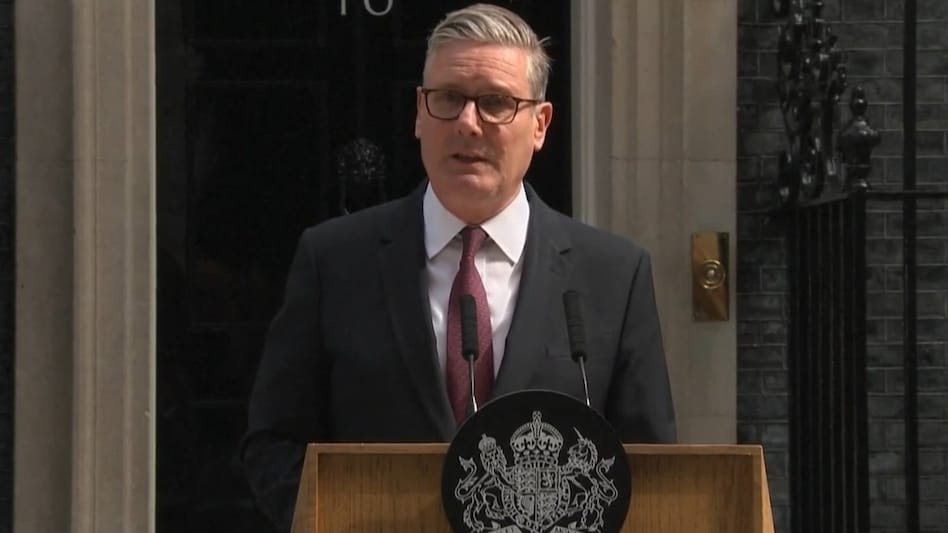
 Addressing the nation from 10 Downing Street, Starmer said he had accepted that he was no longer the best person to lead Labour into the next general election.
 In a dramatic turn for British politics, UK Prime Minister Keir Starmer announced that he will step down as leader of the Labour Party and resign as prime minister once a successor is chosen, less than two years after leading Labour to a landslide election victory.
Addressing the nation from 10 Downing Street, Starmer said he had accepted that he was no longer the best person to lead Labour into the next general election.
"The question my party is asking now is whether I am best placed to lead us into the next General Election. I have heard the answer from my parliamentary party, and I accept that answer with good grace," Starmer said on June 22.
He added that every major decision during his tenure had been guided by what he believed was best for Britain. "That is why I will resign as Leader of the Labour Party."
End of a short-lived premiership
Starmer described becoming prime minister in 2024 as the proudest moment of his life, recalling Labour's return to power after 14 years in opposition.
He reflected on rebuilding a party that he said had been "politically, financially and morally bankrupt" when he took over as Labour leader six years earlier.
MUST READ | UK PM Keir Starmer steps down: What happens next, how long will it take?
Starmer argued that Labour had overcome predictions of electoral irrelevance and achieved a historic victory by restoring public trust on key issues such as the economy, defence and national security.
"We proved those people wrong because we changed our party," he said.
His resignation marks an abrupt end to a government that had promised stability after years of political turbulence in Britain.
Leadership contest begins in July
Starmer confirmed that he had informed King Charles III of his decision and outlined a timetable for selecting his successor.
Nominations for the Labour leadership race will open on July 9, with the process expected to conclude before Parliament returns from its summer recess in September.
Starmer will remain Prime Minister until the contest is completed and pledged to ensure an orderly transition of power. "I will do everything I can to ensure an orderly handover of power. I will also give my successor my full and unequivocal support," he said.
Current speculation has focused on Andy Burnham as a leading contender. If Burnham runs unopposed, a new prime minister could take office by mid-July. If a contest takes place, Labour's new leader is expected to be installed by the end of August.
In an emotional conclusion to his remarks, Starmer thanked colleagues, civil servants and supporters who had worked alongside him during his leadership.
He also spoke about spending more time with his family after leaving office. "When I leave the biggest job in the country, I will spend more time on the most important job — being the best husband I can be to my wife, Vic, and being the best father I can be to my children."
Trump's Sunday post goes viral
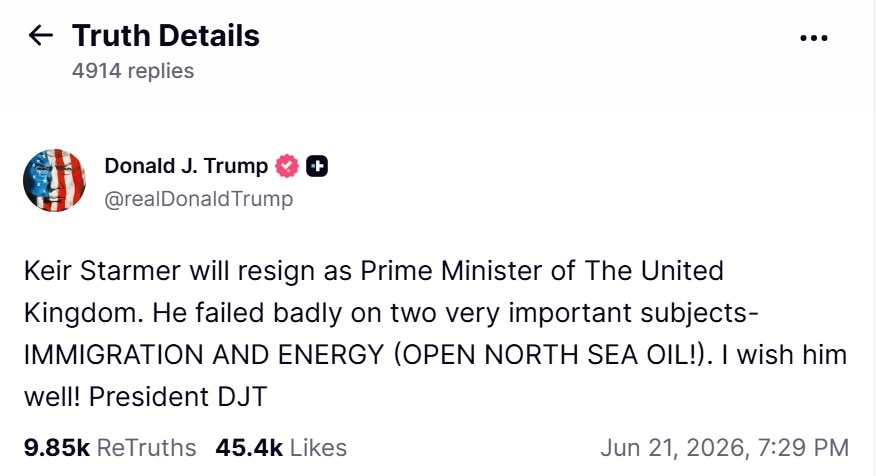
The announcement came just a day after US President Donald Trump publicly predicted Starmer's departure.
Posting on Truth Social, Trump claimed Starmer would resign, criticising his handling of immigration and energy policy.
"Keir Starmer will resign as Prime Minister of The United Kingdom. He failed badly on two very important subjects — IMMIGRATION AND ENERGY," Trump wrote, while also wishing the British leader well.
The timing of Trump's comments and Starmer's subsequent announcement has drawn significant attention, though there is no indication the US president had advance knowledge of Labour's internal deliberations.
Starmer's resignation opens a new chapter for the Labour Party at a critical moment. Despite securing one of the largest parliamentary majorities in modern British history in 2024, Labour now faces the challenge of selecting a new leader who can maintain public support and prepare the party for the next general election.

 Reliance's Tira brings South Korean dermo-cosmetics brand Dr. Melaxin to India
 No plans to sell more stake in SBI Funds Management, says State Bank of India Chairman
 Maruti Suzuki announces second price hike within 2 months; cars to get costlier by up to Rs 30,000 from August
 SBI funds listing makes employee shareholdings more valuable. Here's who gained the most crores
 'Dangerous precedent, not seen in mature...': Govt sources slam Congress protest outside PM's residence
  Ram Temple Donation Theft Case: Cars, Bullet Bike Seized as SIT Probe Deepens
 Indian Stock Market Outlook: Sanjay Sinha On Risks, Rally & Winning Sectors
 Karnataka Cabinet Expansion: Who's In, Who's Out In Congress' Big Balancing Act?
 India-U.S. Trade Deal Sparks Farmer Anger: What's Driving The Shambhu Border Protest?
 Nifty Stuck Near 24,000: Crude Oil Prices, FCNR Inflows And Market Outlook Explained
 TCS shares down 31% YTD; experts say AI infrastructure push could support long-term growthNo plans to sell more stake in SBI Funds Management, says State Bank of India Chairman
 Sensex, Nifty extend losses; HDFC Bank, RIL drag, broader market outperforms
 SBI rules out fresh SBI Funds stake sale after blockbuster IPO debut
 RVNL shares face worst year since listing; analysts decode next move