


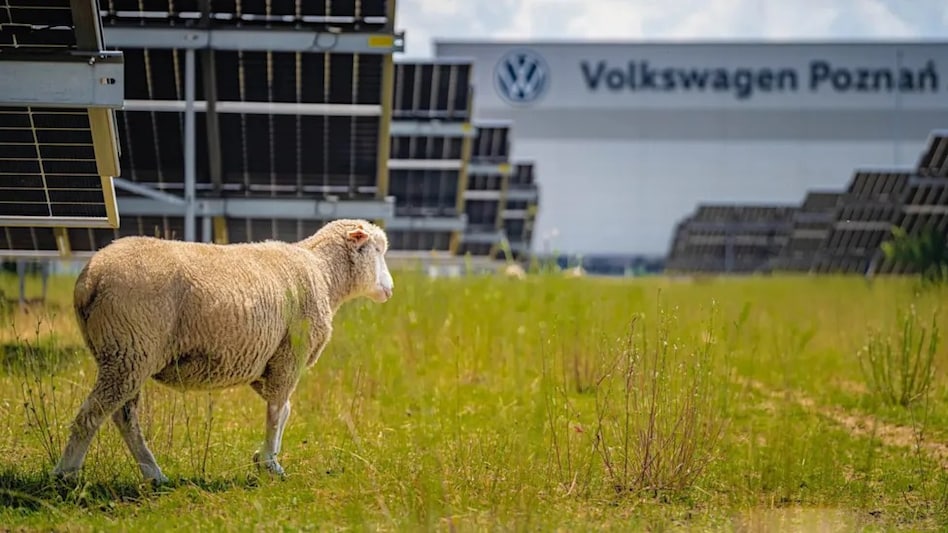
 German automaker Volkswagen has deployed a flock of 100 sheep to maintain the grass beneath thousands of solar panels
In a unique blend of clean energy and agriculture, German automaker Volkswagen has deployed a flock of 100 sheep to maintain the grass beneath thousands of solar panels at its manufacturing facility in Poznań, Poland.
The sheep feed underneath more than 31,000 photovoltaic panels installed at Volkswagen's 18.3-megawatt solar farm, which supplies around 25% of the factory's annual electricity needs and can meet the plant's entire power demand on sunny days. The move not only reduces emissions associated with mechanical mowing but also lowers maintenance costs while supporting biodiversity, according to The Times of India (TOI).

 UGC-NET 2026 blunder: NTA to hold English, Commerce, Sociology re-tests in September. Check dates
 Cash cow on tracks: Inside the lucrative economics driving India's Vande Bharat expansion
 Divyastra Mk3: Lucknow defence startup tests India's first fully indigenous jet-powered loitering munition
 Indian Railways: CAG audit finds E. coli in drinking water at stations, major gaps in passenger amenities
 LPG e-KYC deadline August 16: What happens if you miss it? Check cylinder booking, subsidy rules
 Bank Stocks In Focus: Analyst Prefers ICICI Bank, Axis Bank And Ujjivan SFB
 Power & Cable Stocks Q1: Analyst Bets On Polycab, Target Price At ₹11,000
 Auto Stocks In Focus: Maruti, M&M, Hyundai, Hero MotoCorp Or EVs—Where Is Value Now?
 Auto Ancillary Stocks: Analyst Picks Lumax Auto, Pricol, Sona BLW For Growth
 Pharma Stocks Rally After Earnings: Where Is The Value Across CDMO And Healthcare?
 Pace 360 exits Nifty, bets on Bank Nifty as valuations stay attractive
 SBI Securities bullish on banks, NBFCS, defence; Shriram, Baja Fin, L&T, BEL are top picks
 Rs 200 interim dividend for FY27 by this company; check record, payment dates, brokerages' view after Q1
 Helios Capital bullish on NBFCs, bets on consumption-led growth and last-mile finance
 HDFC Bank, ICICI Bank, SBI, BoB, Kotak Bank, IDFC First: Targets for banking stocks by YES
 Karma hits back: Indian-origin CEO who fired 900 employees on Zoom call gets sacked as CEOUGC-NET 2026 blunder: NTA to hold English, Commerce, Sociology re-tests in September. Check datesIndian Railways: CAG audit finds E. coli in drinking water at stations, major gaps in passenger amenities
 No more risky road crossings? Noida Sector 1 skywalk work to begin within a monthLPG e-KYC deadline August 16: What happens if you miss it? Check cylinder booking, subsidy rules












