


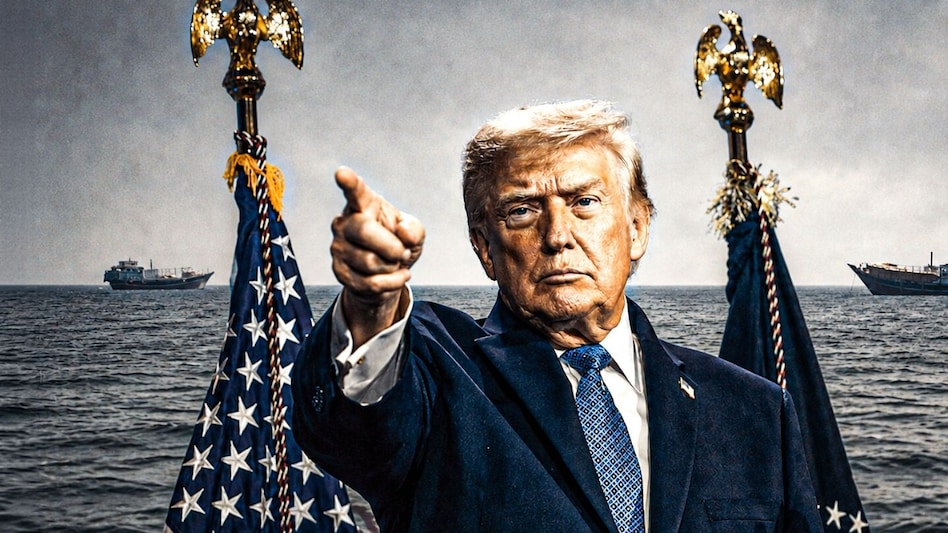
 Even as diplomatic talks progress, the global maritime industry has mounted strong opposition to Iran's reported proposal to levy transit fees on ships using the Strait of Hormuz.
 President Donald Trump has indicated that a breakthrough on the Strait of Hormuz could be imminent, saying "a lot of progress had been made" toward reopening the strategic waterway and hinting that an announcement could come soon.
The remarks came as Iran confirmed it had reached an agreement with Oman on the shipping route through the Strait of Hormuz. Tehran's foreign ministry said both countries are finalising arrangements for jointly managing vessel traffic through one of the world's most important oil transit chokepoints.

 The GDP conundrum: Economists split over India's faster-than-expected 7.8% GDP growth rate
 Subhash Chandra insolvency case: 'I've been vilified across country over ₹6.5 crore repayment plan,' says media baron
 Mukesh Ambani's ₹10 power play: From Campa Cola to ice cream, why Reliance is betting big on India’s middle class
 After TCS, Wipro installs employee productivity tracker: Inactive days could trigger leave
 'No serious economist will complain': PM's advisor Sanjeev Sanyal defends India's 7.8% GDP growth
 Exclusive: FSSAI CEO Rajit Punhani On Red Labels, Misleading Food Ads & India's Obesity Crisis
 America At SCO Spotlight? Sergio Gor's Clever Central Asia Diplomacy Raises Big Questions
 Paper Leak Protests: Supreme Court Quashes FIRs, CJP Calls Off September 5 March
 Gland Pharma, Caplin Point, Nephrocare: These 3 Pharma Stocks See Strong Growth Potential Ahead?
 Russia Returns To G20 Talks As U.S. Engages Moscow, Europe Pushes Back
 Brigade Enterprises shares: Analyst on when to exit the real estate counter
  Nykaa rally: Planning to buy fashion retailer stock after recent up move? Here's what analyst says
  Paytm, Eternal, Lenskart, Nykaa, Honasa: New age stocks gain up to 49% in 3 months; worth a buy?
 Coal India arm Mahanadi Coalfields filed DRHP to launch its IPO; check all key details
 IFCI, NIACL stocks jump up to 14%; NSE IPO buzz lifts focus: Analysts share outlook
 ‘Some people are unable to digest…’: SBI Ecowrap says unnecessary controversy has been created on 7.8% GDP growth rateBrigade Enterprises shares: Analyst on when to exit the real estate counter
  CCPA fines Dial4Trade ₹10 lakh over online ammonium nitrate listings; seven platforms under scrutiny
 'Faking GDP growth is very difficult': Arvind Panagariya explains why numbers are hard to manipulate
 Apple CEO John Ternus education: His college, degree and early career












