According to Gulf officials and analysts, Iran's goal is to convince the US and its allies that containing the crisis is more costly than accepting Tehran's demands over the Strait of Hormuz.
Don't Miss: After calling off Iran strike, Trump says talks will begin on Monday
They said Tehran also wants to send a message that unless Washington accepts a new regional arrangement that gives Iran a bigger role in the Strait of Hormuz, the conflict could spread beyond the Gulf.
By putting several shipping chokepoints and energy infrastructure at risk, Iran believes it can strengthen its position in any future negotiations, according to the officials and analysts.
"Iran, from the beginning, has tried to out-escalate the United States by stretching out its escalation options so that it always has something new to bring every week -- a new geography, a new type of weapon, a new type of target," Michael Knights of the Washington Institute told Reuters.
"The bigger advantage they have is not that they can hurt America or Israel," Knights added. "Their big advantage is that they can hurt the regional states and the global economy."
Iran widens pressure beyond Hormuz
After showing that it can disrupt traffic through the Strait of Hormuz, through which about a fifth of global oil consumption flowed before the war, Tehran has signalled that other key maritime routes could also come under pressure, according to analysts.
Threats to the Red Sea and Saudi energy infrastructure suggest Iran is trying to increase the cost of protecting global trade while testing how much disruption the US is willing to tolerate, they said.
One Gulf source told Reuters that commanders in Iran's Revolutionary Guards believe "they can get more".
According to the source, they see an opportunity in what they believe is President Donald Trump's reluctance to become deeply involved in another conflict in West Asia ahead of November's midterm elections.
"The Iranians...believe that by widening the war and increasing the pressure, he will eventually give in," the Gulf source said. "Trump thinks he can hit the Iranians hard and bring them to the negotiating table, but they won't bend."
Iran wants leverage before talks
According to Reuters, that calculation is shaping Tehran's negotiating strategy.
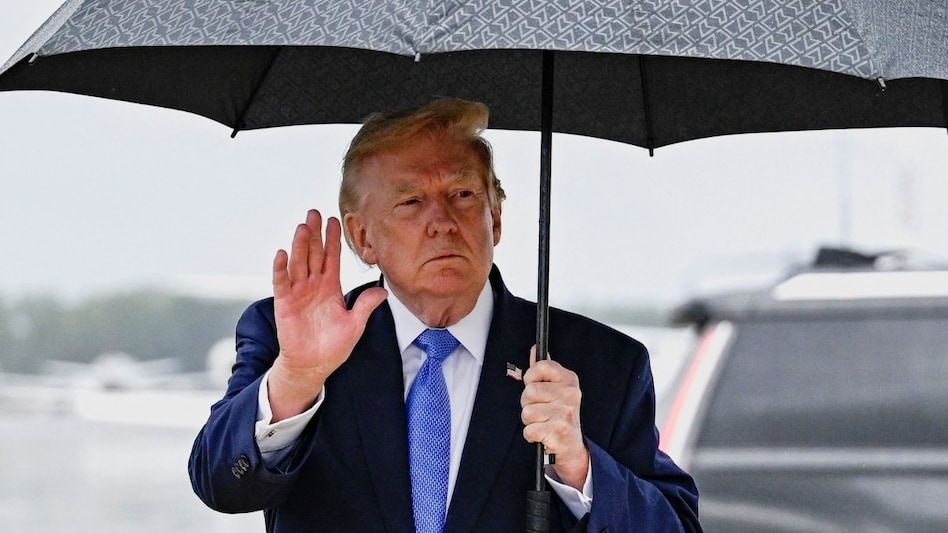
Trump said talks with Iran would take place on Monday after earlier saying he had called off an imminent attack in hopes of reaching a deal to reopen the Strait of Hormuz. Tehran, however, said it was not currently holding talks with the US.
A senior Iranian source told Reuters that Tehran's leadership believes earlier attempts at flexibility only resulted in greater pressure from Washington. That has reinforced the view that Iran must first build leverage before meaningful negotiations can begin.
The source said Tehran believes Trump sees concessions as weakness and responds only to pressure.
Michael Singh, senior fellow at the Washington Institute, told Reuters that Tehran believes it still holds the initiative because the Trump administration appears uncertain about how far it is willing to go militarily.
"The Iranians are trying to press their advantage," he added. "They're interested in establishing sovereignty over the strait and exercising selective control over the waterway."
Alan Eyre, a former US diplomat and Iran expert, told Reuters that Tehran is pursuing a strategy of deterrence aimed at forcing Washington to lift its blockade and stop military strikes.
"They don't want the US to dictate the pace of events," he said.
At the centre of the dispute is the future governance of the Strait of Hormuz. According to regional sources, Oman has presented Iran with a Gulf-backed proposal to manage the waterway, including voluntary user fees.
Tehran, however, is seeking administrative authority over the strait and the ability to charge service fees on vessels. Washington has rejected any such fees, insisting the Strait of Hormuz remain an international waterway free from Iranian control.
A strategy of endurance
According to Gulf officials and analysts, Iran's strategy has already changed the focus of regional and Western countries. As threats have expanded beyond the Strait of Hormuz, governments have increasingly focused on protecting shipping routes and energy infrastructure instead of stepping up pressure on Iran.
According to Gulf sources, the emerging Saudi-led maritime coalition is a defensive framework focused on escorting commercial vessels, sharing intelligence and protecting sea lanes rather than confronting Iran directly.
Knights compared the effort to Europe's Aspides mission in the Red Sea, which was created to protect merchant traffic rather than change the military balance.
According to analysts, this suits Tehran's strategy. While Iran cannot match US military power directly, it can still impose costs by forcing governments and navies to spend more resources protecting global trade.
Each new threat, whether in the Strait of Hormuz, Bab al-Mandeb—which connects the Red Sea to the Gulf of Aden—or elsewhere, increases the resources needed to keep global trade and energy supplies moving.
According to Gulf officials and analysts, Iranian leaders believe they can withstand economic pressure longer than a US-led coalition can tolerate repeated disruptions to global commerce and energy markets.
They also believe that by showing it can widen the crisis whenever needed, Tehran will be able to shape the terms of any future negotiations.
"If there are going to be negotiations, they will define the terms," said Ray Takeyh of the Council on Foreign Relations and a former advisor on Iran at the US State Department. "Both sides are matching escalation with escalation."
According to analysts, neither Washington nor Tehran appears willing to back down, raising the risk that a strategy meant to increase leverage could eventually spiral into a conflict that neither side can fully control.



 . According to regional sources, Oman has presented Iran with a Gulf-backed proposal to manage the waterway, including voluntary user fees.
 India braves global headwinds: Q1GDP surges 7.8% as investment and services fire on all cylinders
  HDFC Bank races to hire search firm for new CEO: Report
 Centre fast-tracks HMT revival plan; ₹2,000 crore package under consideration
  Semicon 2.0 notified: ₹1.27 lakh crore scheme widens India’s chip ambitions
 Defense boost: Tata Advanced Systems signs MoU for Javelin missile co-production
 Midcap Fund Strategy: Where WhiteOak Capital Sees The Biggest Opportunities
 Adani Stocks Fall Sharply: What’s Behind The Sell-Off?
 EMS Stocks: Can India’s Electronics Boom Drive More Gains?
 HDFC Bank CEO Exit: What Investors Should Know About Succession, Governance & Stock Outlook
 Gold & Silver Outlook: Should Investors Buy ETFs After The Big Rally?
 Priority Jewels IPO subscribed 21.23 times on Day 2; check latest GMP, other key details
 Ola Electric shares jump 5%; still down 34% in a year; what's ahead?
 Sensex falls 307 points, Nifty settles below 24,100; what happened today
 Market veteran Ajay Bagga on top sectoral picks; impact of oil prices, monsoon on economy
  Nifty Bank jumps over 600 points in last five minutes; CAS in focus
 Kotak Bank recommends two internal candidates for CEO post: Report
 India’s aerospace push gains momentum as Mahindra Aerostructures bags new Airbus A320 contract
 FM Nirmala Sitharaman Arrives In U.S. For G20 Meet, Carries Her Own Luggage At Airport












