


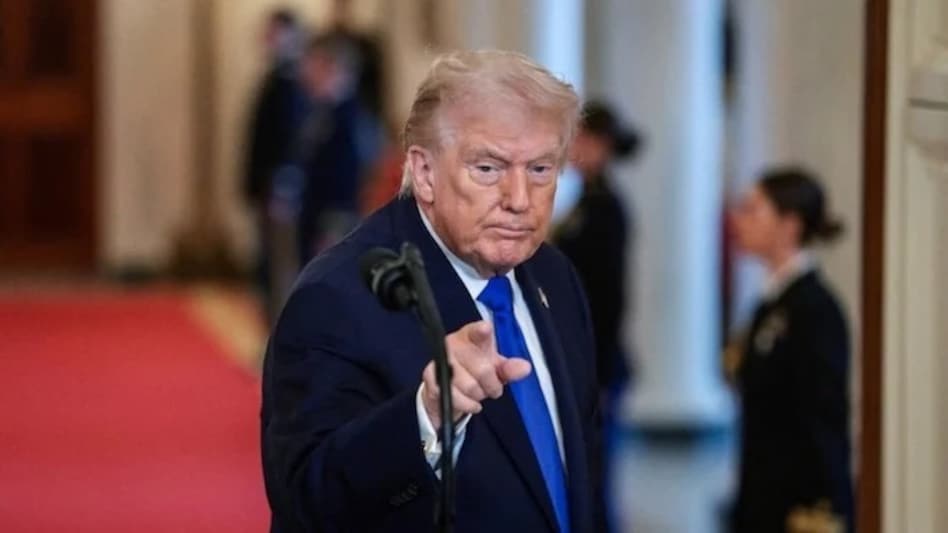
 Trump threatens to take over Hormuz and charge 20% tolls as Vance sits down with Iran in Switzerland
American and Iranian negotiators sat down at the Burgenstock resort in Switzerland on Sunday for the first round of talks under the Islamabad Memorandum of Understanding, and simultaneously, from Washington, Donald Trump was threatening to wipe Iran off the map.
As Vice President JD Vance spoke of turning over a new leaf with Tehran, Trump issued some of his most explicit threats yet against Iran, warning of devastating military action, demanding Tehran rein in Hezbollah and vowing that the Islamic Republic would cease to exist if it closed the Strait of Hormuz.

 'AI Jobocalypse': Raghuram Rajan proposes AI token tax to curb job losses, boost govt coffers
 Rays of Belief, parent of Mom's Belief, to launch IPO on September 1
 Core sector growth eases to 5.4% in July from 6% in June; iron ore, cement lead
 India’s digital shopping story is reversing: Bill payments move back offline, shows study
 Indian Oil close to signing LPG import deal with Algeria’s Sonatrach for 2027: Report
 #PROMO | Business Today Presents India@100: India’s Manufacturing Champions | Building Viksit Bharat
 Nifty Bounces Back After 7-Day Fall, Relief Rally Or Fresh Uptrend? Piyush Pandey Decodes
 Augmont Enterprises IPO Opens August 21: Price Band, Dates, & Should You Apply
 Top 5 Fixed Income Products To Invest | Investment Guide | Money Today
 These ETFs Are Quietly Taking The Lead As Global Markets, Gold And Metals Gain Momentum
 Rays of Belief, parent of Mom's Belief, to launch IPO on September 1
 Large cap stocks may lead market recovery; Anand Rathi analyst cites key factors
  Sensex, Nifty rebound sharply; can the recovery sustain?
 Hold ITC, avoid averaging despite underperformance, says Ruchit Jain of MOFSL
 HAL, BEL, MDL, Cochin Shipyard, Solar Ind shares: Kotak picks top defence stock
 Merck, Moderna cancer vaccine clears Phase 3 milestone in melanoma'AI Jobocalypse': Raghuram Rajan proposes AI token tax to curb job losses, boost govt coffersRays of Belief, parent of Mom's Belief, to launch IPO on September 1
 Niva Bupa barred from opening new branches for six months by IRDAI
 Delhi Master Plan 2047: Union Minister Manohar Lal Khattar lays out 24-hour cities, metro expansion and new development rules












