


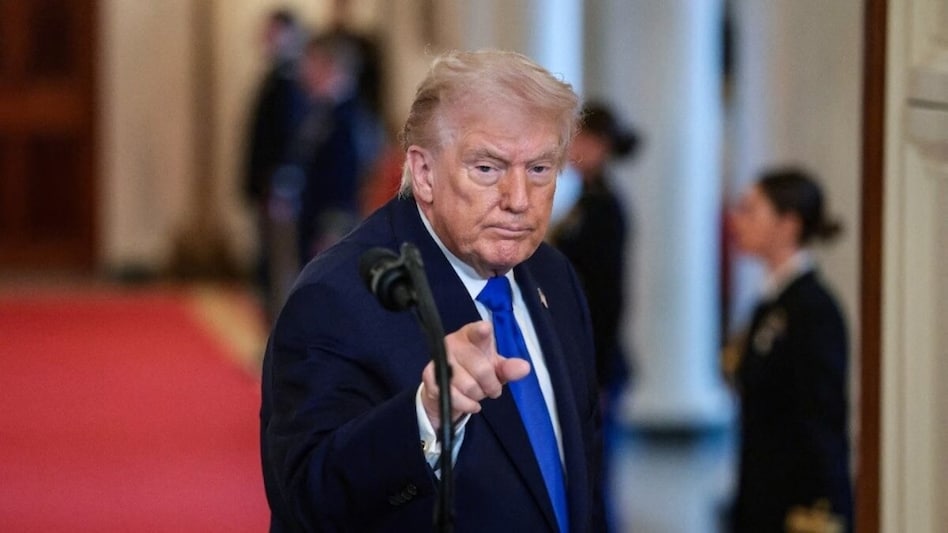
 Donald Trump replaces one tariff with another, to impose forced labour duties from Friday
The Trump administration will impose new tariffs of 10 per cent and 12.5 per cent on imports from 60 trading partners starting Friday. The move comes as the US believes these countries have failed to enforce bans on goods made with forced labour. These new duties will replace a temporary 10 per cent global tariff that was imposed earlier this year and is set to expire.
The tariffs will cover 99.4 per cent of US imports, although certain products such as oil and gas, fertiliser, and some food items will be exempt.

 'Iran will never have a nuclear weapon': Trump launches most severe economic campaign against Tehran
 Elon Musk’s Starlink reapplies for govt approval for satellite network in India: Report
 BSE, Manipal Health, Bharat Coking Coal, Ceigall, Aditya Infotech, HDFC Life | Stocks in focus today
  Shared sentiment: How Indians and Pakistanis view each other, the nations
 ₹8,585 cr Jewar Road project: Why Greater Noida could emerge as North India’s next growth hub
 Did Frontier AI Models Just Break Out On The Live Internet? The Great AI Escape Explained | Tech Today
 Nifty Falls For 7th Straight Session: Is This A Buying Opportunity? Sharad Avasthi Explains
 “Invest In India, Invest In U.P”: Ashwini Vaishnaw’s Big Pitch For Japan At Business Conclave
 Empowering Conscious Enterprise Leadership
 Bonds, AAA Debt Provides Strong Cushion To Portfolio
 177% return within hours! Why Moderna stock rallied after cancer vaccine trial - ExplainedBSE, Manipal Health, Bharat Coking Coal, Ceigall, Aditya Infotech, HDFC Life | Stocks in focus today
  Market Closing Auction: Sebi asks brokers to accept orders in first five minutes
  SEBI flags prima facie manipulation in Sensex closing auction session, blocks two entities
 Sensex, Nifty extend losing streak amid weak global cues; what's ahead for Dalal Street?177% return within hours! Why Moderna stock rallied after cancer vaccine trial - Explained
 Petrol, diesel prices today, August 20: Check latest rates in Delhi, Mumbai, Chennai, Kolkata & more
 From 8 students to ₹10,000 crore empire: All about Rajesh Maheshwari, the mechanical engineer who built Allen
 LPG, CNG, PNG prices today, August 20: Check latest rates in Delhi, Mumbai, Kolkata, other citiesElon Musk’s Starlink reapplies for govt approval for satellite network in India: Report












