


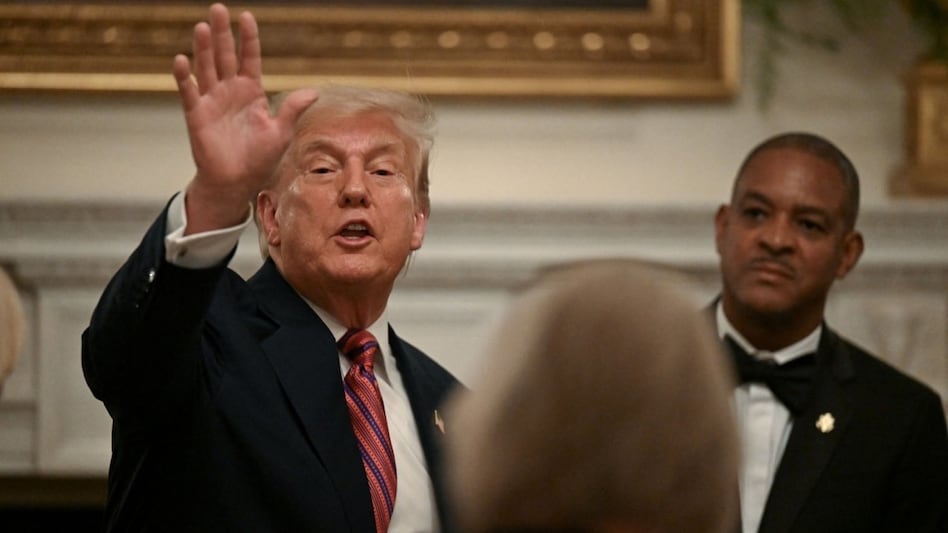
 US President Donald Trump said they are close to signing a trade deal with China
Donald Trump said the US is close to a trade deal with China. This comes after the US signed a trade deal with the EU. "We're very close to a deal with China. We really sort of made a deal with China, but we'll see how that goes," Trump told reporters before his meeting with von der Leyen, providing no further details.
Senior US and Chinese negotiators convened in Stockholm to address longstanding economic disputes between the two powers. Led by US Treasury Secretary Scott Bessent and Chinese Vice Premier He Lifeng, the discussions aim to extend a truce on tariffs that have heightened tensions in the trade war.

 HDFC Bank leadership shake-up: CEO Sashidhar Jagdishan to retire on Oct 26, will not seek reappointment
 GST Council set to meet on September 12; ITC norms, state revenues likely on agenda
 Multiple options exist post the deferment of Tata Sons' AGM, say legal experts
 Essel Group debt: Now, LIC Housing Finance, Union Bank to challenge NCLT's repayment plan
 Why Adani and Tata Power are turning to foreign nuclear reactors over local models
 ITR Filing Deadline August 31: Key Rules For Freelancers, Content Creators & F&O Traders
 “Bengaluru Needs Metro, Not A ₹40,000-Crore Tunnel Road,” Says Tejasvi Surya
 Why Astra Microwave Could Benefit From Rising Defence Orders | Defence Sector In Focus
 Alienware 16 Area-51 Review: RTX 5080 Beast Or ₹3 Lakh Overkill?
 Hitachi Stock Doubles In 6 Months: Why It Became The Top Portfolio Performer Of 2026
 Jio Platforms IPO gets SEBI nod: Rs 27,500 crore debt repayment plan, $100 billion valuation in focus
 Closing Auction Session: Why the system expected to reduce volatility is still seeing occasional wild swings
 RIL-backed penny stock hits 52-week low; firm clarifies on high trading volume
 Happiest Minds shares slip despite IT stocks surge; here's what is weighing on the stock
 BEL, Solar Industries shares remain Nuvama's top defence picks; here's what it said on BDL, Data Patterns, HALITR Filing Deadline August 31: Key Rules For Freelancers, Content Creators & F&O Traders
 'Do you feel you are a lord...': Bombay HC warns Tukaram Mundhe's FDA with contempt charges
 From Apple to the Boardroom: Tim Cook’s leadership roles beyond Apple
 The AI jobs shock: Why reskilling could become unavoidable by 2030, says reportHDFC Bank leadership shake-up: CEO Sashidhar Jagdishan to retire on Oct 26, will not seek reappointment












