


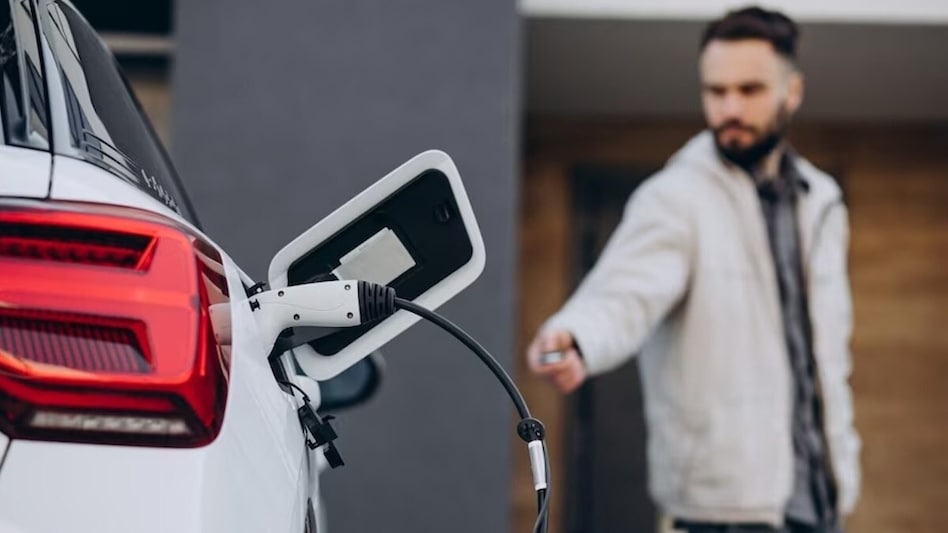
 At many places, an EV buyer has to secure a no objection certificate (NOC) from power utilities and fire services department.
Buying an electric vehicle may not seem a herculean task but charging it may turn out to be, especially if one is putting up in an apartment in one of India’s biggest metro cities.
Getting approval from the resident welfare association (RWA) of housing societies to set up an EV charger in the basement parking is becoming the biggest hurdle for EV buyers.

 ‘Welcome the decision wholeheartedly’: Shapoorji Pallonji on RBI’s decision on Tata Sons listing; full text
 ‘An Indian consumes 1/10th of an average American’: Amb Kwatra says energy security comes first
 Tata stock to buy: Nuvama bets on unique tech-telecom play, sees 28% upside
  NSE IPO, Hero Motors IPO, SS Retail IPO, Jindal Supreme IPO: GMP of four ongoing issues rises up to 32%
 UPI MDR: BharatPe distances itself from Ashneer Grover's remarks, says UPI to remain free for consumers
 From Putin To Meloni: World Leaders Send Birthday Wishes As PM Modi Turns 76
 Tata Sons Board Votes To Bring N Chandrasekaran Back As Chairman For 5 Years
 Corporate Health Insurance Vs Retail Policy: Why You Need Personal Health Cover Too
 How India Changed In 12 Years: PM Modi’s Journey From Economic Reforms To Viksit Bharat
 Modi @76: From Twitter To Instagram, How His Digital Outreach Has Evolved
 Waaree, Netweb, Tata Power, Sterlite Tech among 42 stocks in Goldman Sachs’ India AI Enablers portfolio
 Dr Reddy's shares rise 2% after exclusive Qdenga distribution deal with Takeda
 Aditya Birla Fashion arm raises stake to 100% in Urbano brand owner; stock reacts
 Block deal effect: Bombay Burmah shares zoom 9%, Mcap crosses Rs 10,000 crore
  Yatharth Hospital shares jump 20% in two days; what's behind the surge?From Putin To Meloni: World Leaders Send Birthday Wishes As PM Modi Turns 76
 Gold, silver prices on September 18: Yellow metal rises slightly, silver hits ₹2.5 lakh. Check latest prices hereWaaree, Netweb, Tata Power, Sterlite Tech among 42 stocks in Goldman Sachs’ India AI Enablers portfolioTata Sons Board Votes To Bring N Chandrasekaran Back As Chairman For 5 Years
 Tata Electronics CEO On Semicon 2026 MoUs, Global Partners And 400-Plus Suppliers












