Well, then why did Mahindra & Mahindra (M&M), India’s top SUV maker, enter a segment with so low volumes?
“This (pick-up truck) was for the global market. But in three years, we have had enough indications to tell us that there is some latent demand in this market. Several customers have told us so,” Nalinikanth Gollagunta, CEO of the Automotive Division at Mahindra & Mahindra (M&M), told reporters after the launch of Mahindra Lifestyler.
Must Watch: Mahindra Scorpio Lifestyler Walkaround | New Pickup Under ₹19.79 Lakh!
For an automaker that has made bold bets with the Scorpio in 2002 to born electric EVs BE6 and XEV 9e in 2024, the pick-up truck segment looks like an untapped opportunity.
“We are the third largest automotive market in the world. We believe the market is evolving, maturing and becoming a lot more sophisticated. The problem, you see, is that there are not enough choices in these markets,” Gollagunta said.
He is not wrong.
Existing models from Japan’s Isuzu and the popular Toyota Hilux are priced upwards of Rs 31 lakh whereas M&M has promised a starting price of less than Rs 19.79 lakh (ex-showroom).
“If the Lifestyler were positioned only alongside premium pickups such as Hilux and V-Cross, the market opportunity would remain constrained by today’s very small pickup category. At around ₹20 lakh, however, Mahindra is entering a price territory where Indian consumers already buy SUVs in very substantial numbers,” says Ravi Bhatia, President & Director of JATO Dynamics India.
Don't Miss: Mahindra BE 6 SPORTEQ launched with BaaS price starting at ₹11.45 lakh; deliveries from August 26
Over the last 12 months, India sold 730,991 SUVs within the ₹15–25 lakh price band, according to JATO Dynamics data. Even if a small proportion of these customers were to consider a different body style, the Mahindra Lifestyler could tap into a sizeable pool of potential buyers, giving the automaker a strong base to create an entirely new pick-up segment in India.
Just like customers who buy the Thar as a lifestyle statement for mostly urban commutes and not for its off-road capability, customers could choose a pick-up truck simply for its road presence and not for its hauling prowess.
“There are reasons to believe Mahindra has some advantages in attempting this. It understands both sides of the equation. It has decades of experience with utility vehicles and pickups,” says Bhatia.
But making the Mahindra Lifestyler mainstream is not going to be a cakewalk.
“The Indian consumer already understands the SUV extremely well. It provides enclosed luggage space, family comfort, status, versatility and increasingly sophisticated technology in one familiar package. A pickup asks the customer to make a different choice. The open load bed has to provide enough additional utility or lifestyle value to compensate for compromises around vehicle size, parking, luggage security and everyday urban usage,” explains Bhatia.
Price alone cannot create this market, according to Bhatia. Nor can India replicate Australia’s lifestyle-led demand, where pick-ups are commonly used to haul boats, surfboards and other recreational gear. “Their vehicle usage, geography, outdoor culture and pickup histories are different,” says Bhatia.
It is no surprise, then, that M&M is targeting the bulk of its pick-up truck volumes from markets outside India.
“Our business case was based on global volumes. That opportunity still exists. That’s the meat of the market,” said Gollagunta. “We will double down on our core markets of South Africa and Australia for sure. We will continue to bet on some LHD (left-hand drive) markets like Tunisia and Chile... Indonesia is an important market for us. We are doing well with the commercial one. We have realised that this is the market where we can play and do well in,” he added.
Double-cab pickups account for 13% of passenger vehicle sales in Australia, nearly 15% in South Africa and 16% in Thailand, according to JATO Dynamics data.
Australia’s pick-up truck market is 235,000 units annually, while in South Africa it is about 135,000 units.
Around 6.2 million pick-up trucks are sold worldwide each year. Of this, North America accounts for 60% of the market. In mature markets like the US, pick-up trucks represent about 20% of passenger vehicle sales.
Unlike in the US, where pick-up trucks have become part of everyday life from ranches to small businesses, India’s pick-up segment still has a long road ahead before these rugged haulers earn a similar following.



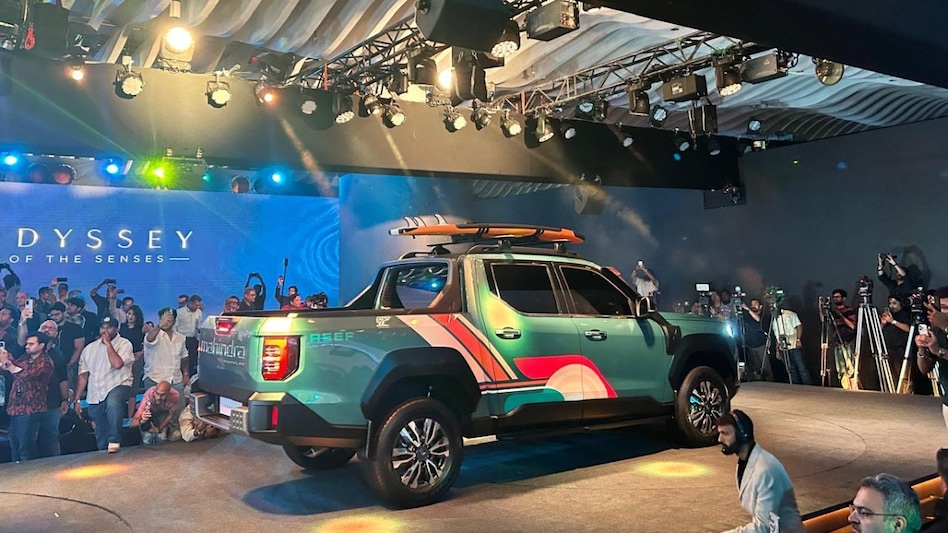 Mahindra Scorpio Lifestyler will be launched in India by April 2027
 BT Explainer: How the NCLT order in the Subhash Chandra case exposed gaps in personal guarantor cases and what could be done to improve outcomes
 HDFC Bank leadership shake-up: CEO Sashidhar Jagdishan to retire on Oct 26, will not seek reappointment
 GST Council set to meet on September 12; ITC norms, state revenues likely on agenda
 Multiple options exist post the deferment of Tata Sons' AGM, say legal experts
 From Apple to the Boardroom: Tim Cook’s leadership roles beyond Apple
 ITR Filing Deadline August 31: Key Rules For Freelancers, Content Creators & F&O Traders
 “Bengaluru Needs Metro, Not A ₹40,000-Crore Tunnel Road,” Says Tejasvi Surya
 Why Astra Microwave Could Benefit From Rising Defence Orders | Defence Sector In Focus
 Alienware 16 Area-51 Review: RTX 5080 Beast Or ₹3 Lakh Overkill?
 Hitachi Stock Doubles In 6 Months: Why It Became The Top Portfolio Performer Of 2026
 Jio Platforms IPO gets SEBI nod: Rs 27,500 crore debt repayment plan, $100 billion valuation in focus
 Closing Auction Session: Why the system expected to reduce volatility is still seeing occasional wild swings
 RIL-backed penny stock hits 52-week low; firm clarifies on high trading volume
 Happiest Minds shares slip despite IT stocks surge; here's what is weighing on the stock
 BEL, Solar Industries shares remain Nuvama's top defence picks; here's what it said on BDL, Data Patterns, HAL
 Kolkata to Bali: IRCTC launches an all-in-one holiday plan with a catch
 Durga Puja special: Darjeeling’s iconic toy train returns with a magical mountain ride
 Tim Cook’s 15-year Apple legacy: How he transformed the company after Steve Jobs
 September smartphone launches 2026: iPhone 18 Pro, Vivo X500, Redmi Note 17 Pro and more to expect
 Train seat rules: The innocent mistake that can land passengers in trouble












