

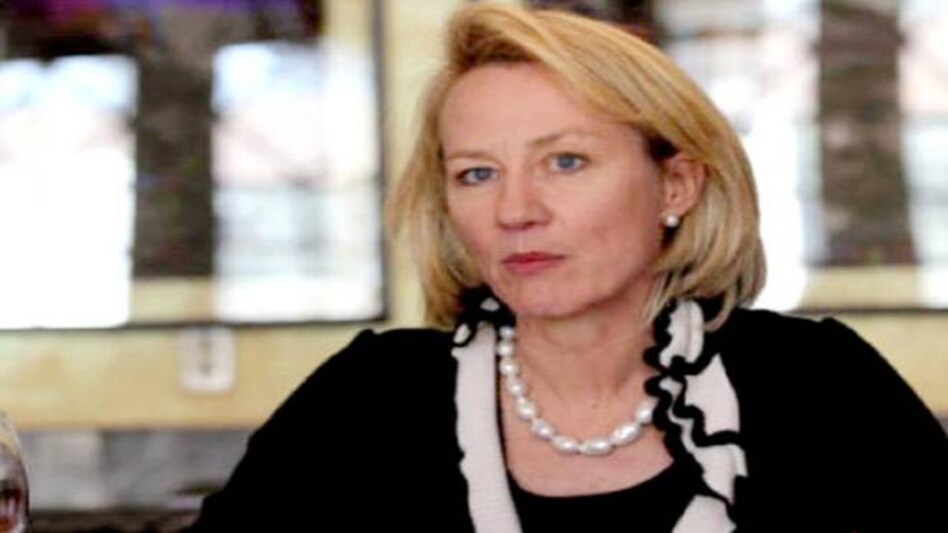
 Alice Wells, the outgoing Principal Deputy Assistant Secretary of State for South and Central Asian Affairs
Underlining that India has not been able to crack trade deals, a senior US diplomat on Wednesday said it needs to bring economic reforms to grab the opportunity provided by the coronavirus crisis. Alice Wells, the outgoing Principal Deputy Assistant Secretary of State for South and Central Asian Affairs, said the US wants a trade pact but India has not been able to do so.
Companies want to diversify their supply chains post-COVID 19, this really represents "a golden opportunity for India", which we think it should seize with market-friendly approaches instead of protectionist impulses, she said observing that the US really wants to work with India to improve the business environment. "I would point out that we're a country that makes trade deals. As rough and tumble as these discussions are, we make deals. We have not seen India be able to make these trade deals yet," Alice Wells told told a Washington DC-based think tank.
 Jefferies sees CAS proposals easing uncertainty for brokers, exchanges; maintains 'BUY' on Groww, 'Underperform' on BSE
 Tata Sons: A look at net worth of the holding company as IPO buzz gains traction
  'No good deed in govt goes unpunished': Ex-Telecom Secretary's memoir makes rare revelations on BSNL, 2G
 'It is my vehicle, I was at work': Gurugram car owner says friend was driving during woman biker crash
 iPhone 18 Pro effectively around ₹70,000: Here's how you get discounts
 Amit Shah Hails India’s Rise From Fragile Five To Top Five, Politics Of Performance Since 2014
 MEA Details BRICS Summit Outcomes as India Pushes Practical and People-Centric Cooperation
 Modi@25: Amit Shah Highlights 25 Years Of Leadership, Governance And 2047 Vision
 “Development And Environment Are Complementary”: PM Modi On Sustainability At BRICS
 Modi@25: Amit Shah Announces Seva Sankalp Campaign From Sept 17 To Mark Modi’s 25 Years Of Service
 Jefferies sees CAS proposals easing uncertainty for brokers, exchanges; maintains 'BUY' on Groww, 'Underperform' on BSE
 Motilal Oswal MF buys stake in Spectrum Electrical; Fidelity offloads 2.69% stake in CAMS
 Solar Industries to acquire South African firm Omnia Holdings for Rs 12,951 crore Tata Sons: A look at net worth of the holding company as IPO buzz gains traction
  NSE IPO: Nithin Kamath recalls how NSE supported Zerodha in its early years
 Delhi Police traces cab, returns Rs 3 lakh to South African delegate before flightJefferies sees CAS proposals easing uncertainty for brokers, exchanges; maintains 'BUY' on Groww, 'Underperform' on BSE
 Essar Energy Transition Retail acquires UK forecourt operator SGN Retail
 ‘Some more jobs gone’: Machine applying intricate mehendi designs gets Harsh Goenka’s attention
 JSW Motors to launch 360 hp plug-in hybrid SUV with 1,200 km range; prices expected from ₹30 lakh












