

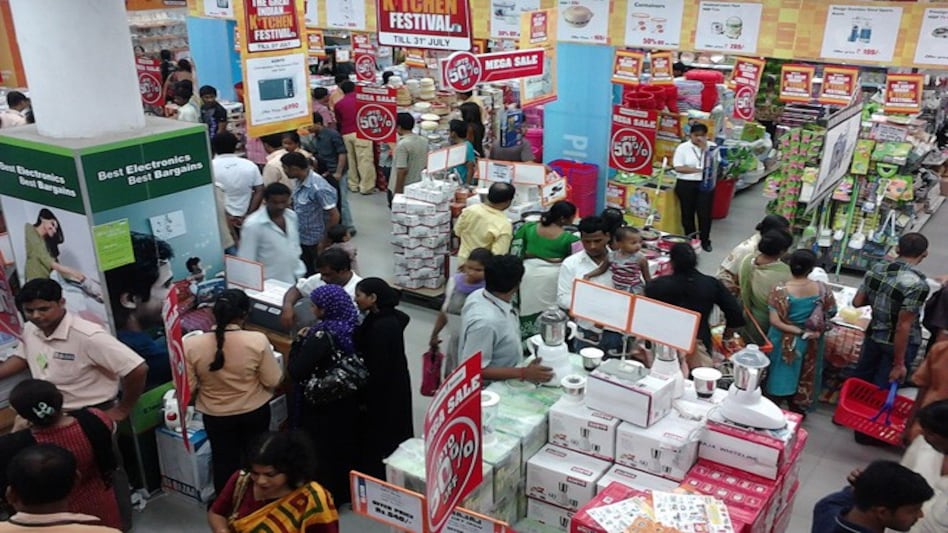
The average Indian is more than eager to revert to pre-lockdown lifestyle and the urge to do so is much higher among those who live in Tier II, III towns and in rural areas. Those living in cities, especially in the metros, are still wary about breaking out of their restricted lifestyle. With Tier II, III India relatively less impacted by the pandemic, the consumers' urge to bounce back is obviously higher. According to a recent KPMG report 'Time To Open My Wallet Or Not', 51 per cent respondents said that the impact of COVID-19 will be short-lived and normalcy was not far away. The respondents living in Tier II and III towns were 1.9 times more positive than those living in Tier-I cities. The report says that 22 per cent consumers in Tier-II and 30 per cent consumers in Tier-III cities felt that their spending would either increase or remain the same as prior to COVID-19. The optimistic consumer sentiment, especially in smaller markets, has come alive even in the Q1FY21 results of FMCG majors, where there is a clear trend of a consumption revival in rural markets. In fact, a large part of FMCG major HUL's 7 per cent growth in Q1FY21 is courtesy the rural markets. "Rural is no longer less that urban. With MNREGA spends going up, free food given by the Government and a good harvest, has helped rural India to bounce back," Sanjiv Mehta, Chairman and MD, HUL, had said in the company's Q1FY21 results conference.
While the intent to spend is definitely there, consumers in the COVID normal are going to be far more cautious than ever before, given the large scale job losses and pay cuts. The KPMG report says that 78 per cent of the respondents claimed that they have reduced discretionary spending. While consumers between the age-band of 20 and 30 years were far more open to discretionary spends, 82 per cent women and 76 per cent men said that their spending habits had considerably reduced through the lockdown. "In the next three months, 49 per cent respondents intend to spend upto Rs 5,000, across categories which makes this the most popular basket value and indicates that consumers are cautious about spending," points out Harsha Razdan, Partner and Head - Consumer Markets and Internet Business, KPMG in India.
 Why Zerodha Fund House is bullish on life cycle funds
 Ex-IMF economist Surjit Bhalla backs 7.8% GDP number: 'No evidence of exaggeration'
 Air India sacks Phuket-Delhi pilot after psychoactive substance test comes back positive
 BT Explainer: Why Volkswagen Group plans to axe 12% of its workforce in India
 NSE IPO update: SEBI approval likely next week; Check expected dates of price band and listing
 #DemocraticNewsroom | '800 Million People On Subsidies': Siddharth Zarabi On India’s K-Shaped Economy
 #DemocraticNewsroom | India Inflation Data: Are Official Numbers Hiding The Real Economic Picture?
 GDP Real Or Fudged? Siddharth Zarabi Defends India’s Growth Numbers With Data
 Financial Planning For Couples: How To Build A Strong Financial Plan, Budget & Wealth Together
 “High Sugar, Salt, Fat”: FSSAI CEO On Proposed Red Warning Labels On Food Packs
 56% rally in TBZ stock: Upper circuit led to record high today; here's why
  Sensex, Nifty snap four sessions of losing streak; RIL, Tata Steel, Bajaj Finance boost sentiment
  Physicswallah shares jump 9% as Motilal Oswal sees 66% upside
 KEC International: At 52-week low, Geojit expects more downside in infra stockNSE IPO update: SEBI approval likely next week; Check expected dates of price band and listing
 US debt hits $40 trillion: Why India should worry about rising yields, rupee and capital flows now
 Axis Bank Scapia credit card goes live: Check lounge access, UPI rewards, forex benefits and fees
 From HUL to local jewellery brands: Bigg Boss creates a two-tier advertising ecosystem
 HbA1c of 6.4% is NOT 'almost normal': Why this borderline reading can be a warning sign
 China’s oil use drops sharply: Expert says EV shift is changing global energy demand












