


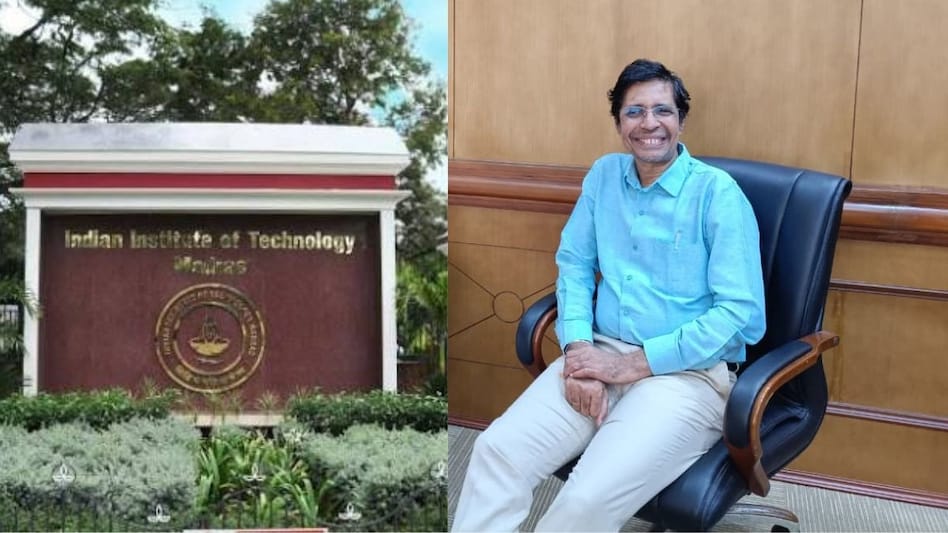
 IIT Madras Director V. Kamakoti wants the engineering institute to also produce its own doctors.
 For nearly seven decades, IIT Madras has been synonymous with engineering. Now, the institute is set to redefine its identity by entering medical education. In an exclusive interview with India Today on campus, IIT Madras Director Prof. V. Kamakoti announced plans to establish a School of Medical Sciences that will award its own medical degrees, including MBBS, MD, and PhD.
“IIT Madras will certainly launch a school of medical sciences,” Prof. Kamakoti said. “We want to give medical degrees, and I think that will be something which will make the institute much bigger.”

 EPF wage ceiling likely to be raised to ₹25,000 from ₹15,000; Cabinet may discuss proposal
 NSE IPO: Institutional interest strong; business highly profitable, says Ashishkumar Chauhan
 ED to scrutinise IBC cases with large haircuts, promoter re-acquisition of assets
 UPI MDR: Will mutual fund SIPs, stocks get costlier? Brokerages, experts explain impact on investors
 UPI vs debit card vs credit card MDR: How much does each payment method cost merchants?
 ₹3,383-Crore MLA Turns Beggar In Mumbai: Why BJP’s Parag Shah Took To Ghatkopar Streets
 Bengaluru Fake Medicine Racket: Counterfeit Drugs Supplied To 90+ Hospitals, Pharmacy Owner Held
 UPI Charges From October 15? What The New MDR Rules Mean For You
 UPI Payments Above ₹2,000 Face MDR: Who Pays The New Fee?
 Indian Markets Face More Sell-Off? Crude, U.S. Yields & Fed In Focus | Stock Market News
 UPI MDR: 0.02% charge on capital market payments; what investors, brokers need to knowUPI MDR: Will mutual fund SIPs, stocks get costlier? Brokerages, experts explain impact on investors
 TCS, Infy, HCL Tech, TechM, LTM, Coforge, Mphasis: Check fresh price targets for these IT stocks
 HAL, BDL, Mazagon Dock, Astra Microwave, Data Patterns: HSBC shares target prices for defence stocks
 UPI MDR: Radiant Cash, CMS Info Systems, ATM-related shares jump; here's why
 Umanga Kumawat returns to Google job after Miss Universe India 2026 finale, shares daily routine
 UPESSC teacher recruitment 2026: Over 15,000 posts announced, exams to take place in December. Key dates here₹3,383-Crore MLA Turns Beggar In Mumbai: Why BJP’s Parag Shah Took To Ghatkopar StreetsUPI MDR: 0.02% charge on capital market payments; what investors, brokers need to knowUPI MDR: Will mutual fund SIPs, stocks get costlier? Brokerages, experts explain impact on investors












