Merck, known as MSD outside the United States and Canada, and Moderna said the combination became the first and only regimen in this adjuvant melanoma setting to show statistically significant and clinically meaningful improvements in recurrence-free survival and distant metastasis-free survival compared with KEYTRUDA alone.
The companies said they plan to present the data at an upcoming international medical meeting and engage with US regulators on filing submissions for intismeran autogene in combination with KEYTRUDA.
Phase 3 readout
At a pre-specified interim analysis, the therapy showed improvment in patients with completely resected stage IIB, IIC, III or IV cutaneous melanoma, who had not received prior systemic therapy. In line with the trial protocol, the study will now continue to assess other key secondary endpoints, including overall survival.
The companies said the safety profiles of intismeran and KEYTRUDA in the trial were consistent with those seen in previously reported studies of the combination, and that no new safety signals were observed.
What the investigators said
Professor Georgina Long, the study’s principal investigator and medical director of Melanoma Institute Australia, and Chair of Melanoma Medical Oncology and Translational Research at the University of Sydney, said, “Today’s results represent a landmark moment for adjuvant melanoma treatment. This is the first Phase 3 study to show that intismeran, a treatment designed based on the unique mutational ‘fingerprint’ of a patient’s own tumour, given in combination with pembrolizumab can reduce the risk of recurrence or death in patients with completely resected stage IIB-IV melanoma compared to KEYTRUDA alone. Intismeran in combination with pembrolizumab has the potential to establish a new treatment paradigm in the adjuvant melanoma setting, helping patients remain cancer-free for longer.”
Dr Dean Y. Li, president, Merck Research Laboratories, said, “By intervening earlier in the course of disease, when many cancers are considered most treatable, the goal of adjuvant therapy given after surgery is to increase the possibility of cure for more patients. These first Phase 3 findings for intismeran in combination with KEYTRUDA as adjuvant therapy reinforce the promise of a more personalised approach to cancer treatment. We believe individualized neoantigen therapies have the potential to redefine how patients with completely resected stage IIB-IV melanoma are treated. Together with Moderna, we look forward to presenting data from INTerpath-001 at an international medical meeting and sharing with regulatory authorities.”
Stéphane Bancel, chief executive officer of Moderna, said, “These Phase 3 findings represent a pivotal moment for the field of cancer research. For many years, the idea of creating an mRNA treatment designed specifically for an individual patient’s cancer was aspirational. We are now helping turn that vision into a reality. Together with Merck, we have started to demonstrate the transformative potential of this technology to address critical unmet needs in the adjuvant melanoma setting. We are deeply grateful to the patients, investigators and study teams whose contributions make this progress possible.”
Development programme and earlier data
Merck and Moderna said they are advancing the INTerpath clinical development programme to evaluate the safety and efficacy of intismeran in combination with KEYTRUDA and other anti-cancer therapies, as well as as a monotherapy. The programme currently includes nine Phase 2 and Phase 3 clinical trials across multiple tumour types and stages of disease, including melanoma, non-small cell lung cancer, bladder cancer and renal cell carcinoma.
Additional clinical studies include the Phase 2b KEYNOTE-942/mRNA-4157-P201 trial in adjuvant melanoma and a Phase 1 study exploring adjuvant pancreatic ductal adenocarcinoma, perioperative gastric carcinoma and perioperative non-small cell lung cancer.
The companies said the Phase 3 readout builds on previously reported Phase 2b results from the KEYNOTE-942/mRNA-4157-P201 trial, including five-year follow-up data presented at the 2026 ASCO Annual Meeting. In that trial, the combination showed a 49% reduction in the risk of recurrence or death, with a hazard ratio of 0.51 and a 95% confidence interval of 0.294-0.887, and a 59% reduction in the risk of distant metastasis or death, with a hazard ratio of 0.411 and a 95% confidence interval of 0.200-0.843, compared with KEYTRUDA alone.
About the trial
INTerpath-001 is a randomised, double-blind, placebo- and active-comparator-controlled global Phase 3 trial, listed as NCT05933577 on ClinicalTrials.gov, evaluating the safety and efficacy of intismeran in combination with KEYTRUDA against KEYTRUDA alone in patients with high-risk, stage IIB-IV, resected cutaneous melanoma.
The trial enrolled 1,137 patients who, after complete surgical resection, were randomised in a 2:1 ratio to receive intismeran at 1 mg every three weeks for up to nine doses and KEYTRUDA at 400 mg every six weeks for up to nine cycles, for about one year, or KEYTRUDA alone for about one year until disease recurrence or unacceptable toxicity, or for a total treatment duration of up to about 56 weeks, whichever came sooner.
The primary endpoint is recurrence-free survival, defined as the time from randomisation to any disease recurrence, whether local, locoregional, regional or distant, as assessed by the investigator, or death due to any cause. Key secondary endpoints include distant metastasis-free survival, overall survival, safety, tolerability and quality of life.
About intismeran and melanoma
Intismeran autogene is an investigational mRNA-based individualized neoantigen therapy jointly developed by Merck and Moderna. It is designed and produced using a patient’s tumour sample to identify the unique mutational signature, or “fingerprint”, of the cancer and generate an anti-tumour immune response. Each therapy consists of a synthetic mRNA coding for up to 34 neoantigens and is tailored to the biology of an individual patient’s tumour. After administration, the RNA-encoded neoantigen sequences are translated in the body and presented to the immune system to generate specific T-cell responses against cancer cells.
The companies said melanoma is one of the deadliest forms of skin cancer and is marked by the uncontrolled growth of pigment-producing cells. More than 330,000 new cases were diagnosed worldwide in 2022. In the United States, melanoma accounts for a large majority of skin cancer deaths, with an estimated 112,000 new cases and more than 8,500 deaths expected in 2026. Patients with resected melanoma remain at risk of recurrence, most often within the first two years, and most recurrences are metastatic rather than localised.
KEYTRUDA and Merck’s oncology programme
Merck said KEYTRUDA has been established as a treatment option for the adjuvant treatment of patients with resected stage IIB, IIC or III melanoma based on the results of KEYNOTE-054 and KEYNOTE-716, and is also approved worldwide for patients with unresectable or metastatic melanoma. The company said it continues to study investigational individualized neoantigen therapies and new KEYTRUDA combinations to improve long-term outcomes in melanoma.
KEYTRUDA is an anti-programmed death receptor-1 therapy that works by increasing the ability of the body’s immune system to help detect and fight tumour cells. It is a humanised monoclonal antibody that blocks the interaction between PD-1 and its ligands, PD-L1 and PD-L2, thereby activating T lymphocytes, which may affect both tumour cells and healthy cells. Merck said it has more than 2,800 trials studying KEYTRUDA across cancers and treatment settings, and more than 30 ongoing registrational studies of its medicines and pipeline candidates in earlier-stage disease.













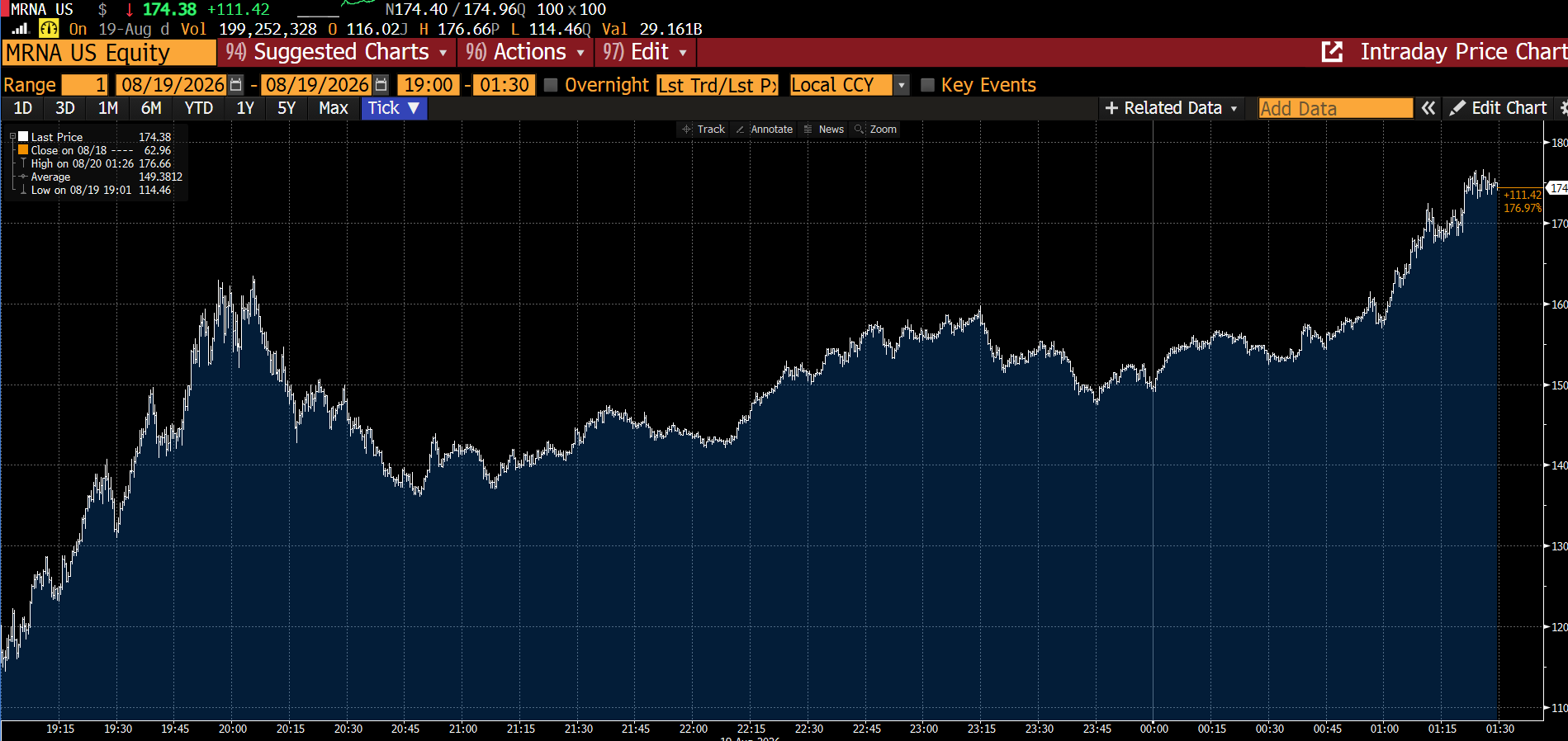



 At a pre-specified interim analysis, the therapy showed improvment in patients with completely resected stage IIB, IIC, III or IV cutaneous melanoma, who had not received prior systemic therapy.
 India to face 100% tariffs? US House moves Russia Sanctions bill, final vote tomorrow
 NSE IPO: SEBI decision on CAS acceptable, focus stays on implementation, says Ashishkumar Chauhan
 Paytm, Pine Labs share price targets as MDR charges on UPI above Rs 2,000 introduced
 Brent crude futures fell 93 cents to $107.82 a barrel even amid supply risks: Here’s what’s happening
 Mecca on air alert: Saudi Arabia issues first-ever warning amid Houthi attacks in West Asia
 Crude Oil Price Surge: Will Petrol And Diesel Prices Rise In India?
 Market Commentary: Sharad Avasthi On Nifty, Stocks & The Next Big Move
 RBI Files Caveat In Bombay HC Ahead Of Tata Sons Appeal | Tata Group Stocks | Tata Chemical Shares
 NSE IPO Explained: Price Band, Valuation, Growth Potential And Key Risks
 Stock Market Falls As Crude Oil Nears $110 & Weak Rupee | Stock Market News
 Kalyan Jewellers, PC Jeweller, Thangamayil Jewellery shares slip up to 8% in early deals; here's why
  Hero Motors IPO opens today: Should you subscribe? Check price band, latest GMP, reviews & more
 PNC Infratech shares hit fresh 52-week low, plunge nearly 34% in two days; here's why
 Sonata Software shares gain 4% on five-year pact with Amazon Web Services
  Sensex, Nifty open higher; rate sensitive stocks lead gains
  'We hope he's not acting here': Supreme Court gives Rajpal Yadav 2 weeks' respite in ₹5 crore cheque bounce case
 iOS 27 Siri AI is rolling out: A compatible iPhone isn’t enough, here’s how to get access
 ‘The additional revenue will help’: MobiKwik, PhonePe founders back MDR charge on UPI transactions over ₹2000


