


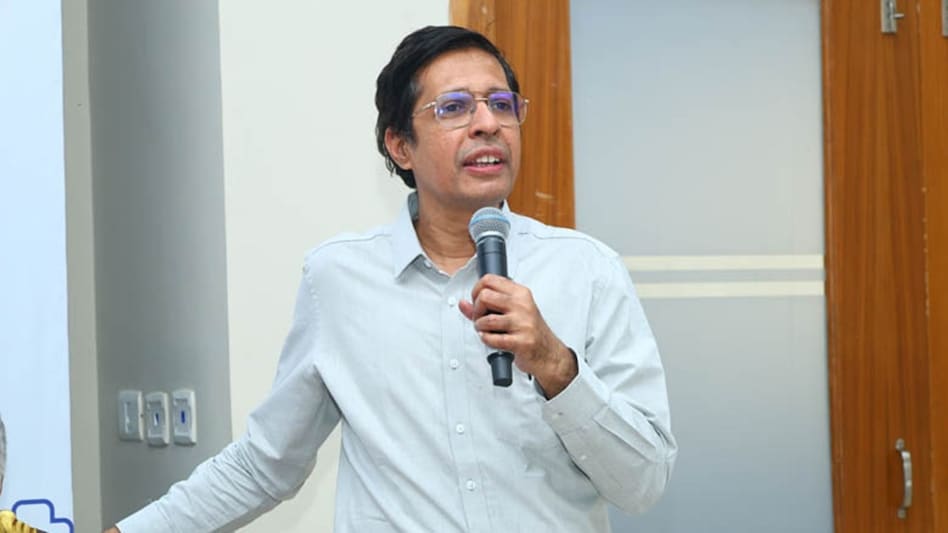
 He said the committee had made more than 250 strong recommendations.
The Centre has already enacted a stringent anti-paper leak bill, prescribing steep penalties and strict punishment for those involved in examination malpractices. Yet, after the alleged NEET-UG 2026 paper leak triggered nationwide outrage, a key question continues to linger: Why has the Joint Entrance Examination (JEE) largely remained free from such breaches?
Offering an answer, IIT Madras Director V. Kamakoti, a member of Prime Minister Narendra Modi's six-member Exam Reform Task Force, said the safeguards used in JEE could help plug long-standing weaknesses in other national entrance examinations.

 Sensex volatility spikes during CAS on F&O expiry day; here's what happened
 Nifty IT surges 3%: TCS, Infosys, LTM, HCLTech shares climb after Nvidia's strong results
 'Nothing’s Too Far': Tata Motors unifies all passenger vehicles under new TATA.CARS identity
 Big victory for Anthropic: US court strikes down Pentagon blacklist over 'illegal retaliation'
 179-year wait: Green Card backlog traps nearly 1 million Indians, making up 79% of total queue
 EV Insurance Explained: Battery Damage, Repairs & Insurance Coverage | Personal Finance
 Radhika Gupta On The Money Gap: Why Women Must Manage What They Earn
 IDV Explained: How It Impacts Your Motor Insurance Premium & Claim
 Nepal Flood Crisis: Massive Floods Leave Trail Of Destruction Across Rasuwa, Nuwakot And Chitwan
 Oseltamivir Shortage Explained: Why H1N1 Cases Are Driving Demand & Prices Are Varying Sharply
 Mid-cap IT stock jumps 15%; brokerage sees turnaround potential, here's what it said
 Ola shares rise 6% on S1Z launch with indigenous cell tech, claims 301 km per charge
 TTML shares soar 11% on strategic tie-up with Tata Comm to accelerate AI adoptionSensex volatility spikes during CAS on F&O expiry day; here's what happened
 Just Dial share price surged 10% today; here's why Mid-cap IT stock jumps 15%; brokerage sees turnaround potential, here's what it saidOla shares rise 6% on S1Z launch with indigenous cell tech, claims 301 km per charge
 Luxury stay ends in FIR: Delhi family allegedly flees Oberoi Udaivilas without paying ₹5.74 lakh bill. Know what happened next
 Strait of Hormuz: Tehran drafts conditions for reopening as Trump says US blockade holds TTML shares soar 11% on strategic tie-up with Tata Comm to accelerate AI adoption












