








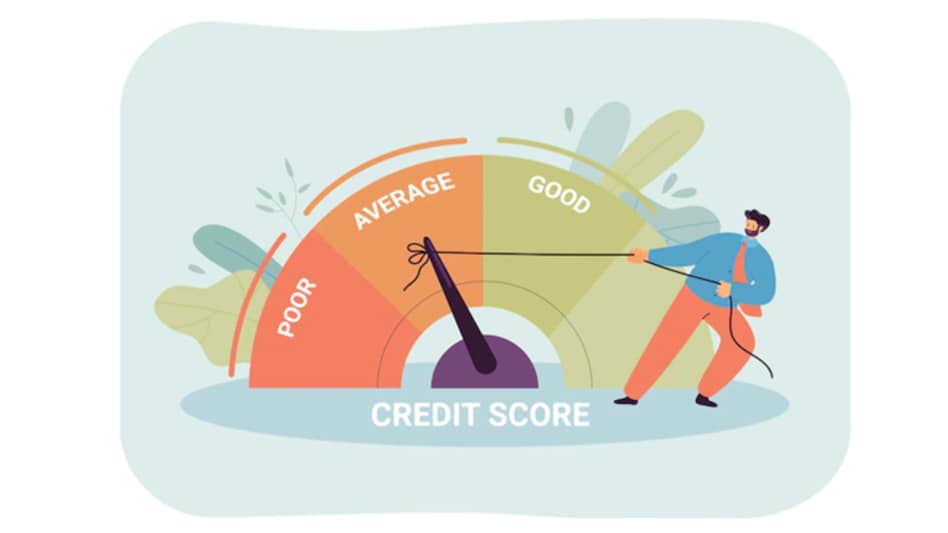
 Lenders generally regard borrowers with a higher score as low-risk applicants, as they have managed their finances properly in the pastLenders generally regard borrowers with a higher score as low-risk applicants, as they have managed their finances properly in the past
In the era of digital lending, your credit score is among the more crucial factors in your financial profile. This is simply because it is a score that is based on your experience with credit, and so, it indicates your creditworthiness.
Banks and other financial entities consider your credit score to determine whether you qualify for a loan. Not just that, banks also use your credit score to determine the terms to offer you, which includes the rate of interest. Lenders generally regard borrowers with a higher score as low-risk applicants, as they have managed their finances properly in the past.
Read on to know more about how your credit score can decide personal loan interest rates and, subsequently, the cost of borrowing.
Why Lenders Consider Credit Scores for Approvals
Your credit score is based on your credit report, which outlines your borrowing and repayment history. There are three main credit reference agencies, namely, Experian, Equifax, and TransUnion, that compile these reports and assign a three-digit credit score.
Apart from the borrower’s credit history, this report also contains the information provided by you on the loan application form. It allows lenders to access details about the amount owed by you, your new and old credit accounts, etc.
Financial institutions use automated systems to access this information and base their decision of your loan approval and denial on your credit score.
What is Risk-Based Pricing of Personal Loans?
Lenders generally use the risk-based pricing approach when it comes to providing loans based on your credit score. Under this approach, you get personal loans at lower interest rates if you have a high credit score.
This is because lenders regard financially disciplined borrowers as having lesser chances of defaulting on their repayment. Hence, involving a low risk of turning into a bad loan. On the other hand, borrowers having low scores or no score at all receive loans at higher rates.
Low credit scores indicate irregularities in earlier loan repayments and, thus, have a higher risk of another loan default.
However, a zero or no credit score reflects that the borrower has never availed of a loan or used a credit card. In other words, they lack a record of credit history, which makes lenders unsure whether they would be financially disciplined to clear their loans.
How to Improve Your Credit Score
While the minimum CIBIL score for a personal loan varies from lender to lender, most of them have 700-750 as the benchmark. If you are short of this benchmark score, you can boost your credit score by the following measures:
Clear Your Dues on Time
One of the major factors that causes a drop in credit score is late repayment or non-payment of existing dues. Make sure that you make your personal loan repayments on time to avoid a fall in your credit score.
Rectify Errors on Your Credit Report
Your credit report may contain some inaccuracies that could be pulling your credit score down. Thus, get your credit report from the credit referencing agency’s official website to check if it has any erroneous details.
To rectify such errors, you can fill out an application form and provide supporting evidence on the agency’s website itself.
Do Not Exhaust Your Credit Limit
Whenever you take credit in any form, make sure that you must not use the full credit limit. As per the experts, exhausting your credit limit adversely impacts your score. For instance, it is usually recommended to credit card users to keep the credit utilisation ratio below 30%.
It is clear that your credit score is vital to your loan application. As such, you should only apply if you make the cut and work on your score if you do not. There are many ways to improve your credit score, but there are no instant fixes. Building an excellent credit score, and maintaining it, takes time and effort. You have to manage your finances well and have the right habits to ensure your score remains intact. However, considering the benefits of a high credit score, it is definitely well worth the effort.
If you default on repayments, it will reduce your credit score and put the burden of paying penalties on late payments. To avoid such scenarios, it is best to create a realistic budget, cut down on unnecessary expenses, and clear your remaining dues to avoid falling into a debt trap.
 West Asia war: India may announce relief package to support exporters affected by conflict
 Israel-Iran war to hit India’s $2 billion worth of gems & jewellery exports
 US to finalise new tariff architecture before India signs trade deal
 First tanker through Hormuz: LPG vessel Shivalik reaches Mundra, Nanda Devi next
 Sensex jumps 939 points, Nifty reclaims 23,400: Why the market rebounded today
 Feb Trade Data: India’s Trade Deficit Widens As Imports Surge | Exports Dip Slightly
 “Not NATO-Led, No Final Call Yet”: Starmer On UK’s Strait Of Hormuz Response
 “Built By Saints And Sacrifice”: U.P. CM Yogi Pushes ‘Ek Bharat, Shreshtha Bharat’ Call
 Market Correction Opportunity? Deven Choksey On Stock Picking Now
 MP Raghav Chadha Raises Husband-Wife Tax Issue In Parliament | Joint Filing Proposal Explained
 Bajel Projects shares close 20% higher today; here's why Sensex jumps 939 points, Nifty reclaims 23,400: Why the market rebounded today
 XED Executive Development launches maiden GIFT City IPO; check key details
 Buy Auro Pharma & GE Shipping, sell Indian Bank: 3 stock ideas from Axis Securities
 ATGL share price: Adani Total Gas extends slide; analysts flag key support, resistance levels