more enduring: creating institutions built on governance, culture, systems and purpose that can remain relevant across generations.
This evolution is particularly significant in industries rooted in India's cultural legacy, where businesses carry a responsibility that extends beyond commerce. Heritage sectors such as textiles, handicrafts and ethnic fashion are not merely economic engines—they are custodians of centuries-old traditions, artisan communities and regional identities. Their future will depend not only on preserving craftsmanship but on reimagining it through modern enterprise.
Among the emerging entrepreneurs embracing this philosophy is Sudarshan Budhia, Director of Tapobhumi, a Surat-based enterprise operating under "Chitrakoot, a unit of Tapobhumi Ganga Narmada Private Limited". Rather than positioning Tapobhumi as another ethnic fashion company, Budhia has articulated a broader ambition: to build an institution-led House of Brands that carries India's textile heritage into the future through disciplined governance, manufacturing excellence and long-term organisational thinking.
The distinction is subtle but important.
While many businesses begin by asking, "What product should we sell?" institution builders often begin with a different question: "What organisation should we leave behind?"
That difference appears to influence many of Tapobhumi's strategic decisions.
Instead of concentrating its identity within a single consumer brand, the company has adopted a House of Brands architecture that allows multiple specialised brands to address distinct consumer segments while operating within a common institutional framework. The objective is not simply portfolio expansion but creating an organisation capable of nurturing brands, developing capabilities and adapting to changing consumer behaviour over decades rather than seasons.
This approach reflects a broader shift taking place across Indian enterprise. Increasingly, founders are recognising that resilient organisations are built through repeatable systems, leadership development and governance structures—not solely through individual entrepreneurial instinct.
For Budhia, the conversation around leadership appears inseparable from culture.
Within Tapobhumi, organisational philosophy has been formalised through three internal frameworks—Ethics, Quality & Etiquette (E.Q.E.), Adopt • Apply • Amplify (A.A.A.), and Learn • Earn • Serve (L.E.S.). While many companies publish value statements, these frameworks are intended to influence operational decisions, leadership behaviour and organisational development across every function of the business.
The emphasis reflects an increasingly recognised principle within modern management—that culture cannot remain aspirational; it must become operational.
That philosophy extends well beyond internal management.
Tapobhumi's long-term vision is rooted in the belief that India's textile heritage should evolve rather than simply be preserved. Across its growing portfolio of specialised brands, traditional craftsmanship is interpreted through contemporary design while remaining connected to the cultural narratives from which it originates. The company's creative language frequently draws inspiration from nature, regional artistry and India's diverse textile traditions, seeking to create products that are both culturally authentic and commercially relevant.
This balance between heritage and innovation is becoming increasingly important.
Consumers today are not merely purchasing products; they are increasingly seeking authenticity, craftsmanship and meaningful stories behind the brands they choose. In that context, cultural heritage becomes more than a design reference—it becomes a strategic asset capable of creating differentiation in increasingly competitive markets.
Manufacturing represents another important dimension of Tapobhumi's long-term strategy.
Rather than viewing manufacturing solely as a production function, the company positions it as a strategic capability supporting quality, innovation and scalability. Continued investment in manufacturing infrastructure, operational excellence and organisational capability suggests a leadership philosophy that values long-term resilience over short-term expansion.
Speaking about his vision, Sudarshan Budhia says:
"Great companies are remembered for the products they create. Great institutions are remembered for the values they preserve and the opportunities they create. At Tapobhumi, our aspiration has never been limited to building brands. We are committed to building an institution that carries India's textile heritage forward while creating opportunities for future generations through innovation, responsible growth and enduring organisational excellence."
His perspective reflects a leadership philosophy that extends beyond commercial success.
Throughout the organisation's internal philosophy, recurring themes emerge—respect for artisans, ethical sourcing, continuous learning, responsible innovation and professional conduct. These principles suggest an understanding that leadership is ultimately
expressed not only through business performance but through the standards an organisation chooses to uphold every day.
The House of Brands strategy itself illustrates this longer-term thinking.
Instead of expecting one brand to satisfy every customer segment, Tapobhumi has created specialised identities serving distinct consumer needs—from heritage silk sarees and luxury occasion wear to contemporary designer collections and premium gifting concepts. Each brand maintains its own positioning while benefiting from shared manufacturing capabilities, governance systems and institutional resources.
Leadership, however, is rarely defined only by strategy.
Perhaps the more distinctive aspect of Budhia's vision is the language he consistently uses to describe the organisation itself. The emphasis is as much on preserving stories, supporting artisans and strengthening communities as it is on producing garments.
As India's economy continues to evolve, founder-led enterprises will increasingly face a defining challenge: whether they remain personality-driven businesses or evolve into professionally governed institutions capable of enduring across generations.
That transition demands a different style of leadership—one that values systems over personalities, stewardship over ownership and legacy over immediate scale.
Whether Tapobhumi ultimately realises its long-term ambitions will depend on execution, market acceptance and sustained organisational discipline. Yet its direction reflects an emerging philosophy among India's next generation of entrepreneurs: that enduring businesses are not built by chasing growth alone, but by creating institutions that preserve values while remaining capable of continuous reinvention.
If that philosophy gains wider acceptance, the future of Indian enterprise may well be shaped not by the companies that grow the fastest, but by the institutions that are built to last.


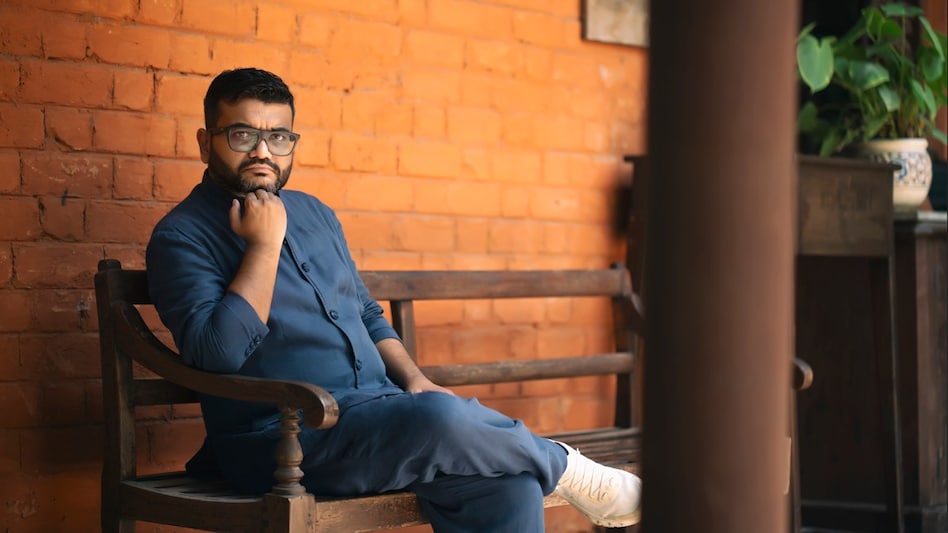 Sudarshan Budhia, Director of Tapobhumi
 Dollar deluge: RBI’s forex scheme draws $136.37 billion
 'Sugar availability is more than sufficient': Industry dismisses shortage fears ahead of festive season
 '125% of GDP kept in frozen savings of gold, silver': Kotak's Nilesh Shah flags India's growth hurdle
 Mahindra-SML merger to unlock sourcing, product platform and service synergies: Vinod Sahay
 'No mechanical boost to GDP numbers': MoSPI's detailed clarification on 7.8% growth
 U.S. May Tighten Child Passport Checks Under Trump, Indians And Birth Tourism Families Face Scrutiny
 Market Commentary | Deven Choksey On Buying Opportunities & Market Trends
 “India Is Certainly Not In Crisis”: Arvind Panagariya On Growth, Investment And Reforms
 Daily Calls: Ask Your STOCK MARKET TODAY QUERIES | Market Update | Share Market News Today
 What’s Hot: Stocks, Gold & Big Money Moves | Daily Markets Show | September 02 | Business Today
 RIL-backed Alok Industries shares hit fresh 52-week low, end slightly higher
 Milky Mist shares surge 10% after Q1 results; brokerage sees more upside potential
 Hero MotoCorp, Eicher Motors shares slide up to 5%; analyst flags key support levels
 Man Infraconstruction shares fall; Rs 169 crore buyback approval in focus
 Brigade Enterprises shares: Analyst on when to exit the real estate counter
  'Magical moment for India': Ex-Finance Commission Chairman hails Japan's A- rating upgrade, defends new GDP methodology
 'Comparing apples to oranges': Amitabh Kant defends India's revised GDP methodology
 'Excited to see Indian startups build the local AI economy': Nvidia CEO Jensen Huang












