Deo, who also serves as Deputy Dean - Faculty and Research, pointed to the gap between what AI can do and what systems are ready to adopt, especially in healthcare, and said that without intervention, AI is more likely to widen disparities than reduce them.
Edited Excerpts
How is AI disrupting higher education, and what changes is it forcing institutes like ISB to make?
First of all, irrespective of which profession we are in, all of us should ask what tasks in our profession or jobs an AI could do that a human was doing until yesterday. The professions and sectors that depend more on human capital, on putting information together and doing basic processing, are the ones more likely to be affected by AI. Higher education, and business education within that, is surely a candidate.
At ISB, we acknowledge that. There are a few things we can do. One is teaching students about AI and business. Second is recognising that students will use AI in the classroom and in evaluations. Third, which is perhaps most critical, is asking whether a lot of the learning that happens in the classroom could actually be done by students on their own using AI.
To address that, over time, we have tried to make our classroom environment more experiential. Many of these things cannot be done through AI. As educators, our goal is not only to equip students with skills and capabilities but also to inspire them and help them see future opportunities. That one-on-one connection between the educator and the student is still irreplaceable.
So, the MBA programme is not going away? It will remain relevant...
I would assume so. Many higher education degrees will surely change. But some shape or form of that education will remain, at least in the near future.
There has been a 14–15% drop in candidates taking the CAT. The drop in GMAT test-takers is even larger. Isn't that an indication of changing interest in MBA programs?
This is a pre-AI trend. All over the world, the number of GMAT takers has been decreasing, and that has been reflected in MBA programs, particularly in North America. Many second-tier MBA programs have shrunk. But the top MBA programs have not. They have continued to enrol people at scale and maintain strong placement records.
Fortunately for us, we are currently in a phase where we can maintain quality even with a limited number of GMAT takers. India is still somewhat behind more mature markets, where there is still a strong need for management skills and management thinking. We will likely continue with that trend for some time.
Has ISB introduced any changes in the admissions process because of AI?
We must anticipate what today's AI tools can do. Applicants will naturally use these tools to complete certain tasks, which makes it harder to assess their true individual capabilities.
Many business schools have essay components in their applications, and these are announced in advance. Realistically, applicants will use AI to write those essays. So, when we shortlist candidates for interviews, we ask them to write an essay on the spot in a closed room. We then ask questions based on what they have written.
This allows us to assess their writing ability and how they organise their thoughts in real time. Spontaneous thinking and communication will remain important skills regardless of how advanced AI tools become.
Since your expertise is in healthcare and operations management, where do you see AI use cases in India's healthcare system? How will it benefit or disrupt primary, secondary, or tertiary care?
AI has potential applications across the entire continuum of care -- from community-level screening and primary care to diagnostics and decision-making in hospitals. But the bigger question is not just where AI can be used, but whether health systems are prepared to evaluate these tools and deploy them at scale.
At the Max Institute of Healthcare Management, under the aegis of the Mphasis AI for Impact Initiative at ISB, we are offering building capacity programmes among public and private health leadership to better understand and evaluate AI tools in healthcare.
We are also working with the Telangana government to design and evaluate AI applications in health so that the state can make evidence-based decisions about which tools should be used or scaled.
Several solutions are being developed and piloted across primary, secondary, and tertiary care, and even at the community level.
For instance, when screening for TB, AI tools can read digital X-rays and estimate TB risk. Similarly, AI can help identify women at risk of high-risk pregnancies. Inside hospitals, AI can reduce the time required to prepare discharge summaries or generate electronic medical records through ambient listening. So, across both clinical and non-clinical settings, there are many potential use cases.
The bigger question, however, is whether we can deploy these tools at scale to generate real value. For example, to what extent has TB incidence been reduced because of AI? Or how many lives have been saved through AI-assisted cancer screening? We are not there yet. Right now, much of the work is focused on demonstrating that these tools are accurate. But adoption requires much more than technical accuracy. It requires changes in how clinicians work, how systems integrate with existing IT infrastructure, and how providers interact with patients. In that sense, AI adoption in healthcare is really a systemic intervention, and we are not seeing enough of that yet.
That, to me, is the next frontier. We need to address behavioural barriers, process barriers, and system-level barriers. At the end of the day, someone has to pay for these tools, just as we pay for medicines or diagnostic tests. Healthcare providers often say the tools are not ready, while developers say that unless the tools are used at scale, it is impossible to know if they are ready. Bridging that gap is the real challenge.
There is also the question of implementing AI tools and interpreting AI-generated reports.
Correct. One aspect is capacity building - training doctors to read and understand AI outputs. That is similar to any other technology. Doctors constantly have to upgrade their skills.
But we also need to consider the healthcare business model. India has both private and public health systems. Most of the time, patients in the private sector pay out of pocket. Hospitals have their own margin structures, and the private healthcare system is fragmented with many small hospitals. If you look at all this, the key question becomes: which player benefits from adopting AI? Will a small 200-bed hospital become more profitable by adopting AI? Will an insurance company increase profitability by encouraging AI adoption?
We are not yet thinking clearly about these questions within the healthcare sector. In most sectors, private adoption of innovation is driven by the profit motive. When AI developers can convincingly show private hospitals that AI improves profitability or efficiency, adoption will follow naturally. In the public sector, the motivation is different. The focus is on improving health outcomes at the population level.
How serious is the fear of job losses in healthcare due to AI? Will jobs disappear, or will new roles emerge?
In India, we already have a shortage of people across the healthcare system - doctors, nurses, technicians, and bedside attendants, especially those skilled in geriatric care. Because of that, I find it unlikely that we will see large-scale job losses.
If AI's potential is fully realised, the same number of healthcare workers may simply be able to care for more patients. Our healthcare needs are constantly increasing and evolving. Non-communicable diseases now cause more deaths than infectious diseases, and India will soon have a much larger elderly population.
So the profile of jobs and required skills will change. It is very difficult to retrain people quickly, and that is where AI can help plug gaps.
Will entirely new jobs emerge because of AI? That is harder to say. Fundamentally, we are still doing the same things in healthcare. I do not expect the nature of jobs to change dramatically. But what people do within those jobs may change. For example, doctors may no longer need to spend time taking notes. That time could instead be used to interact more with patients and customise treatments.
The IMF has warned that AI could disrupt up to 40% of jobs globally. If people lose jobs and incomes, consumption could fall. How would the economy function in such a scenario?
That's my question too. With any disruption or innovation, some people will win, and some will lose. Increasingly, what we are finding is that those who are already better off are more likely to leverage these tools for their benefit.
One thing I am reasonably sure about is that without intervention, AI will increase disparities rather than reduce them. AI is ultimately a tool of production, and in most capitalist societies, the means of production are controlled by a few people or entities that already have influence and power.
Is AI a bubble? Have you formed your opinion, or are you still forming one?
I am forming an opinion about individual tools. But if you ask whether AI will remain, the answer is yes. Will its use increase over time? Also yes. It is similar to many general-purpose technologies where, in the short run, people can become over-enthusiastic, and there may be a bubble-like phase. But in the long run, adoption tends to grow.
We saw the same with the internet and e-commerce. The investing community often becomes over-enthusiastic about when returns will come. Those are capital market bubbles. But over time, these technologies do transform the economy and their use spreads across sectors. That said, the digital divide is likely to remain and may even widen.



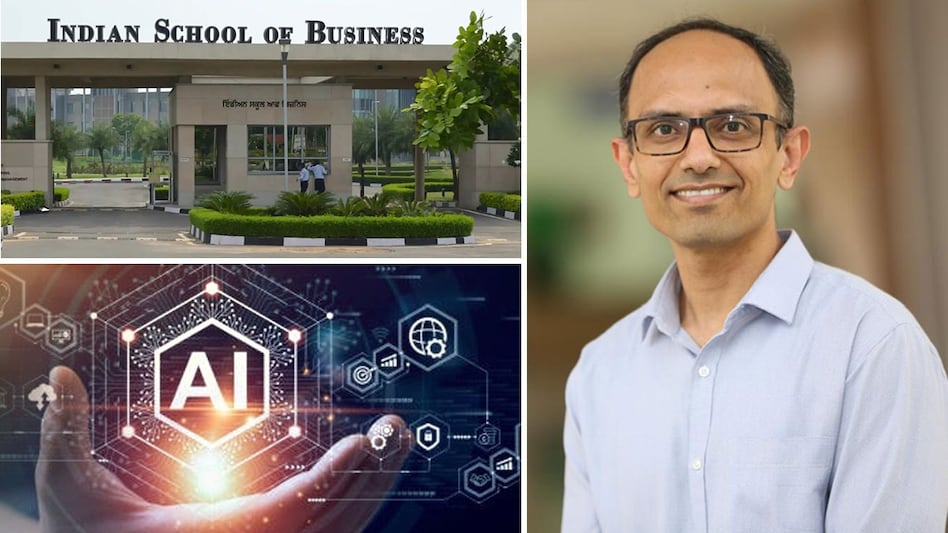 Sarang Deo, Executive Director, Max Institute of Healthcare Management at the Indian School of Business (ISB)
 Will RBI raise interest rates in October? Here’s what experts have to say
 Bitter Friday for Nestlé: Russia seizes assets as Moscow targets Western firms over Ukraine support
 West Asia impact: Saudi Aramco halts European crude allocations after East-West pipeline attack
 Tata Electronics partners with Japanese, Malaysian firms to boost semiconductor manufacturing in India
 From selling gold to spending ₹3.5 lakh: iPhone 18 Pro fever hits India as fans queue up on sale day
 “Unacceptable And Unprofessional”: MEA Rejects Pakistan’s Claims Over INS Kolkata Collision
  Commodity Trading For Beginners: How MCX & NCDEX Work | Trading Basics | Money Today
 US Fed Rate Hikes A Headwind For Foreign Flows? | Jibi Jacob | Jefferies
 ₹25 Billion FII Outflow: What Could Bring Foreign Investors Back? | Jefferies' Jibi Jacob
 India’s Private CapEx Picks Up: Christopher Wood On The Market Outlook
 Jindal Supreme, SS Retail, Hero Motors IPOs subscribed up to 181 times on final day; details here
 Sensex, Nifty post sixth weekly loss; TCS, Titan among top laggards, slip up to 4%
 How AI collapse could benefit Indian equity market; Jefferies' Christopher Wood explains
  Banks are no more secular growth story, prefer NBFCs: Chris Wood
 Jefferies' Christopher Wood sees gold at $10,000 'sooner or later'; likes India's small, midcaps
 Canada visa processing: Indians get faster visitor visas, Super Visa wait hits 70 days
 Countries with the highest take-home pay: Switzerland tops global ranking, Check full list here
 Fueling India’s tech surge: NaBFID lines up ₹3,000 crore loans for data hubs
 Panic button: California governor issue order for mandatory kill switch on advanced rogue AI












