


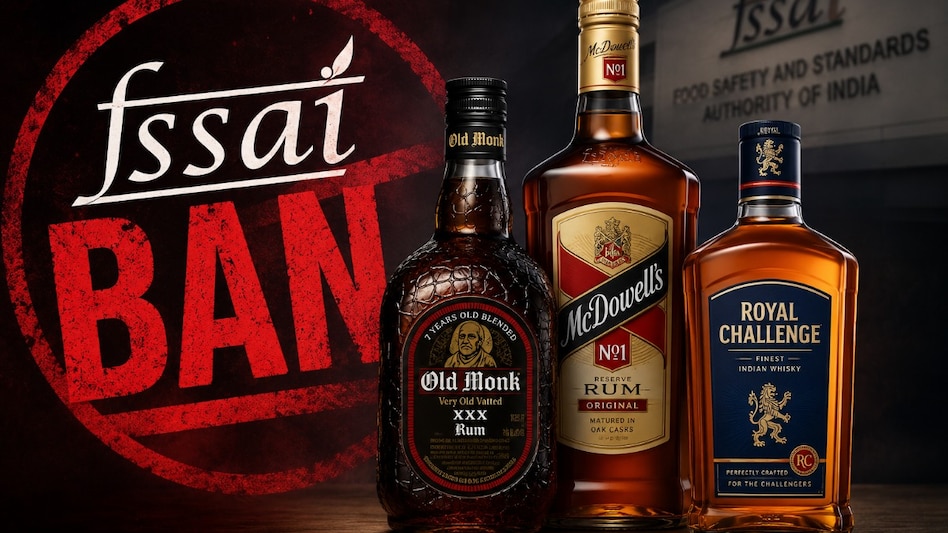
 The move has sparked confusion among consumers, especially over popular brands such as Old Monk, Royal Challenge, McDowell's No.1, Antiquity Blue and Bagpiper.
A fresh FSSAI order has put some of India's best-known liquor brands under the spotlight. The regulator has directed companies including United Spirits, Inbrew Beverages, Associated Alcohol & Breweries and Mohan Rocky Springwater to stop selling select whisky and rum variants, sparking questions over brands like Old Monk, Royal Challenge, McDowell's No.1, Antiquity Blue and Bagpiper. Here's a simple breakdown of what the order means, why it was issued and whether consumers should be worried.
Which products have been affected by the FSSAI ban?

 Brent crude tops $96 per barrel after Trump claims 'almost total control' of Strait of Hormuz
 'US in almost total control of Hormuz Strait': Donald Trump after US military's 'wave of strikes' against Iranian bases
 'It will be game over': Elon Musk warns sustainable energy alone won't save humanity
 The jobs that didn't exist before: How new technologies are creating entirely new career paths
 ‘Every Himalayan state has hazards…’: IIT professor on the risks of flash floods in India amid Nepal catastrophe
  Kotak’s Mid Cap & Flexi Cap Strategy: Where Should Investors Bet Now?
 India GDP Growth At 7.8%: What It Means For The Economy, Markets & You
 Sugar Stocks Under Pressure | Govt Tightens Dealer Stock Limits Till Nov 30
 Market Commentary: Where Is The Next Big Opportunity? | Asit Bhandarkar
 Daily Calls: Ask Your STOCK MARKET TODAY QUERIES | Market Update | Share Market News Today
 Brent crude tops $96 per barrel after Trump claims 'almost total control' of Strait of Hormuz
 Nifty, Sensex, Nifty Bank outlook for today: GIFT Nifty down 55 points; key levels to watch
 Top stocks in news: Wipro, Hero Moto, NMDC, Welspun Corp, Adani Green, Annu Projects, Gland Pharma
 Home loans are no longer enough: Why affordable lenders are turning to LAP and MSME
 Tata Tech, NCC, Data Patterns, eMudhra shares: Expert shares technical view, targets
 The John Ternus era begins: Apple’s new CEO to take centre stage at September 9 iPhone launch eventBrent crude tops $96 per barrel after Trump claims 'almost total control' of Strait of HormuzNifty, Sensex, Nifty Bank outlook for today: GIFT Nifty down 55 points; key levels to watchThe jobs that didn't exist before: How new technologies are creating entirely new career paths
 Quote of the Day by Anand Mahindra: 'Businesses look for stability; they look for direction'












