External Affairs Minister S Jaishankar on Monday briefed the Rajya Sabha on the rapidly escalating conflict in West Asia, cautioning that the crisis could lead to "serious supply chain disruption" with global implications. Amid opposition protests in the House, he said the government’s “overriding priority” would be to protect the interests of Indian consumers while closely monitoring the conflict and its impact on energy supplies and trade.
Briefing the House amid sloganeering by opposition MPs, Jaishankar warned that the unfolding crisis could trigger "serious supply chain disruption," particularly in energy and global trade flows. He said the government is continuously assessing the evolving situation and its potential implications for India’s economy.
India calls for dialogue as conflict escalates
Jaishankar reiterated India’s diplomatic position on the conflict, urging all sides to step back and pursue negotiations.
"Our government had issued a statement on February 28 expressing deep concerns and urging all sides to exercise restraint. We continue to believe that dialogue and diplomacy should be pursued to de-escalate the tensions," he said.
The statement came as the region has seen a sharp escalation following US-Israeli strikes on Iran and retaliatory attacks across parts of the Gulf.
Safety of Indians remains top priority
The minister also told the Rajya Sabha that the government is closely monitoring the safety of Indian nationals in the region, with Prime Minister Narendra Modi personally tracking developments.
"The Prime Minister continues to closely monitor the emerging developments, and relevant ministries are coordinating to ensure effective responses," he said.
Jaishankar added that advisories had already been issued to Indian nationals living in Iran and that the government was maintaining regular contact with Indian communities across the Gulf.
Embassy in Tehran assisting stranded Indians
According to the minister, the Indian Embassy in Tehran remains fully operational and is assisting citizens affected by the conflict.
He said the embassy has helped relocate several Indian students to safer locations inside Iran.
The government is also working to assist Indians stranded in other regional countries, including Qatar and Jordan, and facilitate their safe return if required.
Cabinet Committee on Security reviewed situation
Jaishankar informed the House that the Cabinet Committee on Security (CCS) held a meeting on March 1 under the chairmanship of Prime Minister Narendra Modi to review the situation.
During the meeting, the panel was briefed on the airstrikes in Iran and the subsequent attacks across several Gulf countries.
The CCS also expressed concern over the safety and security of the Indian community living across the region as the conflict continues to unfold.












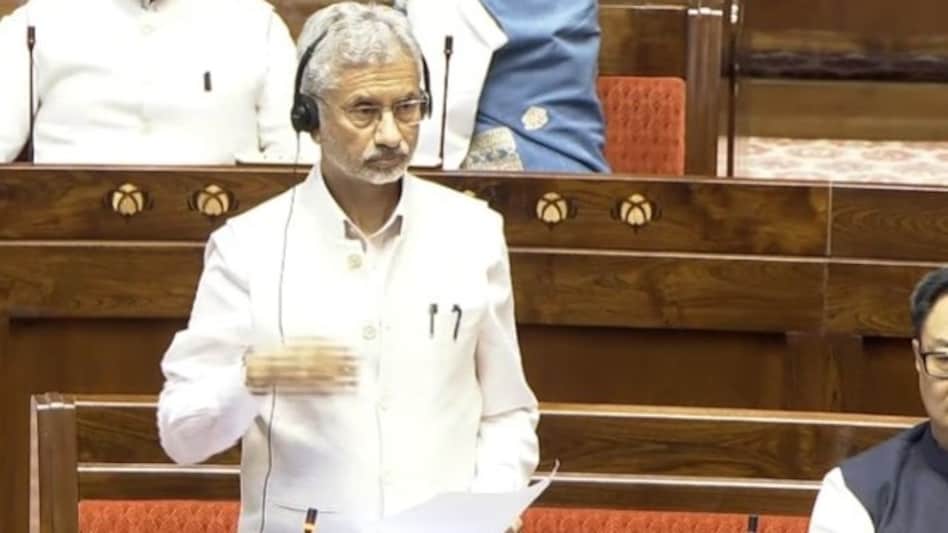 Amid Iran war, Jaishankar says India prioritising consumers and safety of Indians


