


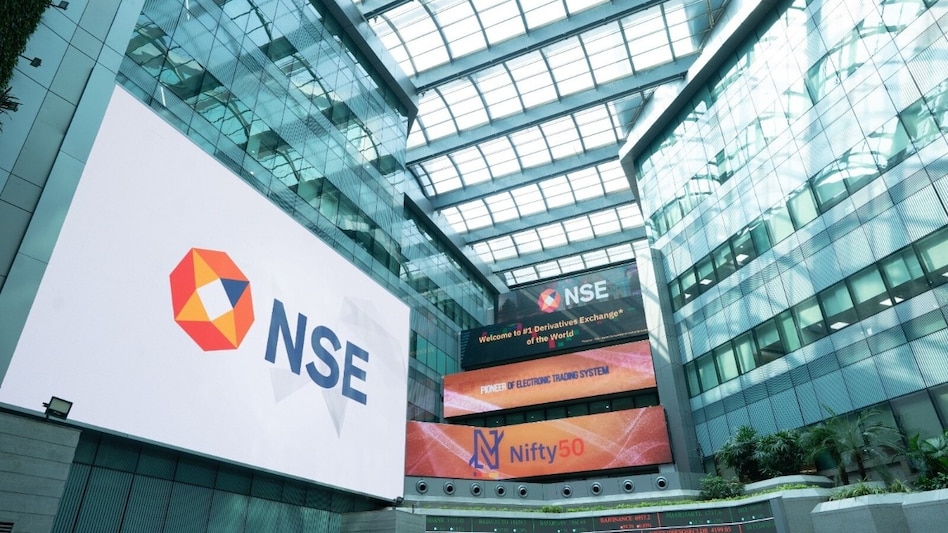
 The National Stock Exchange (NSE) is India's largest stock exchange.
The Delhi High Court on Wednesday ruled that the National Stock Exchange (NSE) is a "public authority" under the Right to Information (RTI) Act. The judgment means India's largest stock exchange will now come under the country's transparency law.
A Division Bench of Justices C Hari Shankar and Om Prakash Shukla dismissed the NSE's appeal and upheld a 2010 judgment by then Delhi High Court judge Sanjiv Khanna, according to Bar and Bench.

 Sensex volatility spikes during CAS on F&O expiry day; here's what happened
 Nifty IT surges 3%: TCS, Infosys, LTM, HCLTech shares climb after Nvidia's strong results
 'Nothing’s Too Far': Tata Motors unifies all passenger vehicles under new TATA.CARS identity
 Big victory for Anthropic: US court strikes down Pentagon blacklist over 'illegal retaliation'
 179-year wait: Green Card backlog traps nearly 1 million Indians, making up 79% of total queue
 “Analogue Paneer Isn’t Fake”: Sanjeev Kapoor On FSSAI Rules & What Consumers Must Know
 PSU Banks Vs Private Banks: Why Investors Are Betting Big On PSU Bank ETFs
 EV Insurance Explained: Battery Damage, Repairs & Insurance Coverage | Personal Finance
 Radhika Gupta On The Money Gap: Why Women Must Manage What They Earn
 IDV Explained: How It Impacts Your Motor Insurance Premium & Claim
 BEL, Solar Industries shares remain Nuvama's top defence picks; here's what it said on BDL, Data Patterns, HAL
 Mid-cap IT stock jumps 15%; brokerage sees turnaround potential, here's what it said
 Ola shares rise 6% on S1Z launch with indigenous cell tech, claims 301 km per charge
 TTML shares soar 11% on strategic tie-up with Tata Comm to accelerate AI adoptionSensex volatility spikes during CAS on F&O expiry day; here's what happened
 India plans to buy Javelin missiles from US: What makes the ‘fire-and-forget’ anti-tank weapon so lethal?
 Ola Electric launches S1Z with indigenous Bharat Cell LFP technology from ₹79,999BEL, Solar Industries shares remain Nuvama's top defence picks; here's what it said on BDL, Data Patterns, HAL“Analogue Paneer Isn’t Fake”: Sanjeev Kapoor On FSSAI Rules & What Consumers Must Know
 Historic glory! Praggnanandhaa becomes first Indian to conquer Grand Chess Tour












