

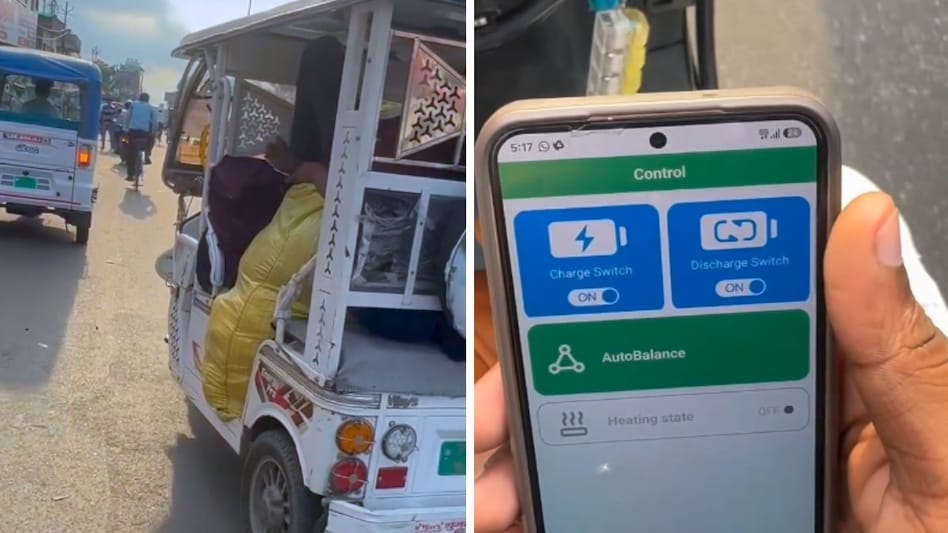
 A viral trend sweeping across India shows teenagers and young adults using a smartphone app to remotely switch off the batteries of e-rickshaws, leaving vehicles stranded in traffic and bewildered drivers scrambling to get them moving again.
 What many on social media are calling a harmless prank could, in reality, put lives at risk and expose participants to serious criminal charges. A viral trend sweeping across India shows teenagers and young adults using a smartphone app to remotely switch off the batteries of e-rickshaws, leaving vehicles stranded in traffic and bewildered drivers scrambling to get them moving again.
The videos may be attracting millions of views, but cybersecurity experts and social media users alike are warning that the consequences could extend far beyond online entertainment.
FAQs
What is the BAT-BMS app controversy involving e-rickshaws in India?
The controversy is about viral videos showing people using the BAT-BMS mobile app to remotely switch off batteries in some e-rickshaws. This can leave vehicles stranded on the road and cause serious trouble for drivers and passengers.
How are pranksters able to stop some e-rickshaws using a smartphone app?
Some low-cost e-rickshaws and electric scooters use Bluetooth-enabled battery management systems without strong password protection or authentication. If a vulnerable battery is within roughly 10 to 15 metres, an unauthorised person may be able to connect through the app and issue commands such as switching off the battery.
Why is remotely disabling an e-rickshaw a serious road safety issue?
A sudden power cut can make an e-rickshaw stop in moving traffic, strand passengers in unsafe places and increase the risk of collisions from vehicles behind. It can also worsen traffic jams and cause daily wage losses for drivers who depend on the vehicle for income.
Is using an app to switch off someone else’s e-rickshaw battery illegal in India?
Yes, it can be illegal. Unauthorised access to or interference with another person’s electronic system may attract provisions of the Information Technology Act, 2000. In serious cases, offenders may face imprisonment of up to three years, a fine of up to ₹5 lakh, or both, depending on the offence and intent.
What does this incident reveal about EV and battery cybersecurity?
It shows that connected batteries and vehicles can be misused if manufacturers do not build proper Bluetooth security and authentication. The incident is a warning that weak cyber protection in EV systems can create public safety risks as well as legal problems for anyone exploiting such vulnerabilities.
 India, China explore new investment framework; outlay package may be unveiled during BRICS summit: Report
 Nepal flash floods: Death toll crosses 150, 130+ Indians missing, India mobilises aid; What we know so far
 ICICI Prudential AMC shares: Prudential to sell 2% stake; what consensus target hints at
 Nifty, Sensex, Nifty Bank outlook for today: GIFT Nifty down 70 points; key levels to watch
 ‘Onion availability is comfortable…’: Govt says no cause for concern, festive season demand will be met
 YouTube, Insta Earnings Are Not Tax-Free: What Freelancers & Content Creators Must Know About Tax
 What’s Hot: Stocks, Gold & Big Money Moves | Daily Markets Show | August 26 | Business Today TV
 Nifty Rally Gets A Boost From Falling Oil: Vaishali Parekh On What Comes Next
 IIT Delhi Protests Over Student Death As Students Demand Accountability And Independent Probe
 How This Fund Manager Turned ₹1 Cr Into ₹7.6 Cr | Abhay Agarwal On Beating The Market by 8.8% A Year
 Tata Power shares in focus: $490 million arbitration challenge lost in SingaporeICICI Prudential AMC shares: Prudential to sell 2% stake; what consensus target hints atNifty, Sensex, Nifty Bank outlook for today: GIFT Nifty down 70 points; key levels to watch
 Top stocks in news: ICICI Pru AMC, Vedanta, BEL, Aye Finance, IRB Infra, Foseco, Juniper Green, PFC
 Zerodha @17.5 million clients, Groww @16.9 million: How retail investing built billionaires
 LPG, CNG, PNG prices today, August 27: Check latest rates in Delhi, Mumbai, Kolkata, other cities
 Where Do India’s Large Corporate Groups Locate Their Plants?Tata Power shares in focus: $490 million arbitration challenge lost in Singapore
 Petrol, diesel prices today, August 27: Check latest rates in Delhi, Mumbai, Chennai, Kolkata & more‘Onion availability is comfortable…’: Govt says no cause for concern, festive season demand will be met












