


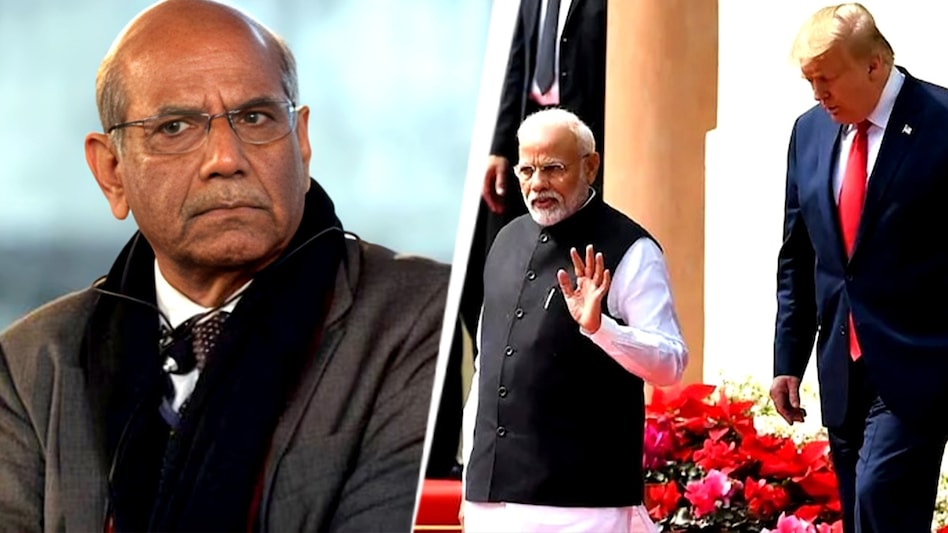
 'Lowest point in 25 years': Shyam Saran on the chill in India–US relations under Trump
Former Foreign Secretary Shyam Saran has said the India–US relations have entered their lowest phase in 25 years, attributing the strain to Washington's shifting stance toward Pakistan, tightening visa norms, and a "mercurial" U.S. leadership under President Donald Trump. Saran described the current dynamic as a "more challenging situation than we have been in for quite some time."
He pointed out that Trump's renewed warmth toward Pakistan's leadership reflects both personal and strategic motivations. "When the Indians denied him a role in India–Pakistan conflict resolution, Pakistan very happily gave him all the credit," Saran said in an interview with The Wire. "Not only gave him all the credit but gave him what he really wanted, which is a nomination for the Nobel Prize, which India kept completely silent about. So that alone explains quite a great deal in terms of the new kind of bonhomie that you see, particularly with the field marshal in Pakistan."

 IDBI Bank employees and pensioners have nothing to fear: DIPAM Secretary
 'I wish I was 20 years younger': Sunil Mittal on India's next 20 years, recalls OneWeb pitch to Rishi Sunak
 RIL group to become India's largest conglomerate by m-cap after Jio IPO: Uday Kotak
 NDMC announces two-day closure of Connaught Place's Central Park ahead of CJP's 'Lehra Do Tiranga' march on Friday
 IDBI Bank sale to Fairfax faces union resistance, black-badge protest on October 16
 Jio Platforms IPO: ₹30,000 Crore Issue Opens October 21, Valuation At ₹10.3 Lakh Crore
 Weekend OTT Releases: The Diplomat 4, Aasha, Sacrifice And More
 How Jio Transformed India From Data Scarce to Data Abundant! | Akash Ambani | Jio Platforms IPO
 Akash Ambani Decodes Jio's Financial Muscle | Reveals The 5 Key Business Drivers | Jio Platforms IPO
 From Dhirubhai’s 1977 IPO to Jio's Mega Launch | Uday Kotak Calls Jio IPO a ‘Moment in History’
 RIL group to become India's largest conglomerate by m-cap after Jio IPO: Uday Kotak
 Gold eyes sharp recovery; can MCX prices hit Rs 1.5 lakh? Vandana Bharti explains
 Tech Mahindra Q2 results: PAT rises 33% YoY to Rs 1,586 crore; recommends 1:1 bonus issue
 Jio Platforms IPO: How HFCL promoter Mahendra Nahata's investment could rise over 110 times
 South Indian Bank shares hit 52-week high on Q2 earnings, close higher
 Top 5 Biggest IPOs In India: Jio Set To Break Hyundai’s Record With ₹30,213 Crore Issue
 PM Modi Meets Indian Athletes After Asian Games 2026, India Wins 85 Medals
 Supreme Court Strikes Down ₹8,415 Crore AT-1 Bond Write-Off For Yes Bank | What Happened?Jio Platforms IPO: ₹30,000 Crore Issue Opens October 21, Valuation At ₹10.3 Lakh CroreIDBI Bank employees and pensioners have nothing to fear: DIPAM Secretary













