

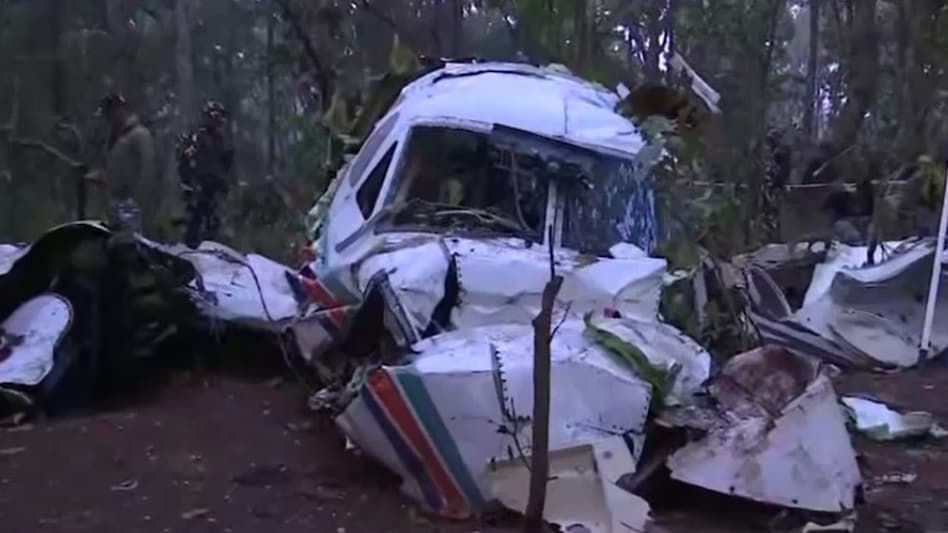
 Jharkhand Plane Crash Update
A medical evacuation aircraft that crashed in Jharkhand's Chatra district on Monday night, killing all seven people on board, did not carry a black box a factor that investigators say will complicate efforts to determine the exact cause of the accident.
The Beechcraft C90 King Air, operated by Delhi-based Redbird Airways Pvt Ltd, was flying from Ranchi to Delhi when it went down in the Kasaria area. Those killed included patient Sanjay Kumar (41), a doctor, a paramedic, two attendants and two pilots: pilot-in-command Vivek Vikash Bhagat, who had around 1,400 flying hours, and first officer Savrajdeep Singh, with about 450 hours of experience.
 NSE share price: PL Capital roots for capital market goliath, sets target of Rs 1,950
 NSE shares: RK Damani, Azim Premji, NRN, Dolly Khanna & others see fortunes rise as stock jumps 5%
 PB Fintech shares crash 32%: Why Policybazaar parent fell like deck of cards; 1.42 lakh retail investors hit; targets
 Sensex, Nifty crash; fear index shoots up 23%: Key factors weighing on the market
 Elevate Campuses IPO: Why India’s student housing market is drawing investor attention?
 Elevate Campuses IPO: ₹2,100 Cr Issue, Business Model, Valuation & Growth Plans
 NSE: Why Market Deepening Could Create More Demand For The Stock
 NSE Shares: Why The Exchange Could Be A Long-Term Compounding Story
 NSE Shares: 36-Month SIP Approach For A 10-Year Portfolio? Deven Choksey Explains
 NSE Listing: Why Institutional Investors Remain Bullish On The Exchange
 GAIL shares: Emkay upgrades stock, sees 16% upside; check target price
 PB Fintech block deal: 29 lakh shares changed hands; stock dives 34% to lowest since May 2024
 Tougher Sebi rules could make markets safer and bring in more investors: NSE chief
 Vishal Mega Mart shares gain as Jefferies, Morgan Stanley suggest up to 51% upsideElevate Campuses IPO: Why India’s student housing market is drawing investor attention?
 Good news for Kanpur-Delhi travellers: Indian Railways announces new daily overnight trainGAIL shares: Emkay upgrades stock, sees 16% upside; check target price
 The Family Man may make the jump to theatres following the success of Mirzapur
 'Gyanesh Kumar must resign immediately': CJP's Abhijeet Dipke says voter deletion raises serious questions
 Hyundai Bayon bookings open at ₹11,000 : What buyers need to know about price, features and launch












