


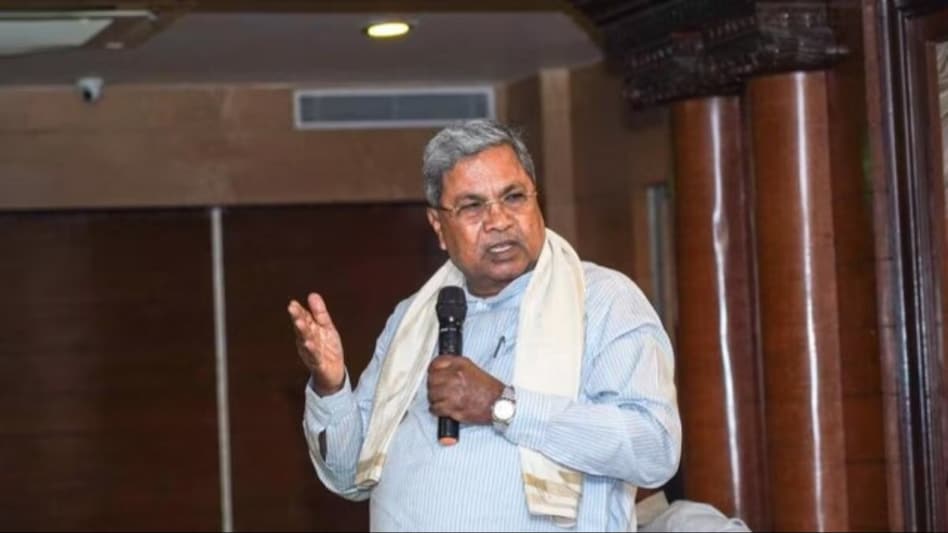
 Karnataka Chief Minister Siddaramaiah
The National Commission for Backward Classes (NCBC) on Wednesday confirmed citing the data from Karnataka government, all castes and communities of Muslims of Karnataka have been included in the list of other backward classes for granting reservation in employment and educational institutions under the state government.
As per the 2011 Census data, Karnataka has a Muslim population of 12.92 per cent. "Under category II-B, all Muslims of Karnataka state have been considered as OBC," the NCBC said. The commission said that in category-1, 17 Muslim communities have been considered as OBC whereas 19 Muslim communities have been considered as OBCs in category-2A.

 India's $30 trillion goal needs 8-10% growth, $400 billion more annual investment: Jayant Sinha
 BT India@100: ‘India has not lost the AI race,’ says Amitabh Kant, highlights the country’s biggest advantage
 Will Tukaram Mundhe enter politics? Here's what the Maharashtra FDA commissioner said
 Deepinder Goyal’s Temple gets a major redesign, shrinks to 'less than half the size'
 Bitcoin price today: Rs 16 lakh gain just in a week! What led to a sharp rally in crypto market?
 #IndiaAt100 : India’s Resilience Playbook | How Can The Economy Stay Strong Through Crises?
 #IndiaAt100 : Can India Become A $30 Trillion Economy By 2047? | Jayant Sinha Explains
 #IndiaAt100 | Building The Cities Of Tomorrow: How Will India Urbanise By 2047?
 #IndiaAt100 | The New Bureaucrat India’s Food Needs: Who Will Keep Food Safe?
 #IndiaAt100 | Amitabh Kant On The Future Of ‘Make In India’: Can India Become A Global Factory?
 Cupid, NTPC Green, NTPC, Raymond Realty, HAL shares: Key technical levels to watch
 Defence stock with Rs 2,654-crore order book hits record high; here's why
  GACM Technologies: FII holding jumps to 29%; penny stock in focus
 Puravankara shares rise 5% on fresh order win
  20 high-conviction ideas for up to 95% upside | stocks to buy
  Govt flags scam pattern, asks Google to shut hundreds of Firebase accounts#IndiaAt100 : India’s Resilience Playbook | How Can The Economy Stay Strong Through Crises?
 India Can Still Win The AI Race | Amitabh Kant On Data, Talent & Applications
 India’s jobs problem: Manufacturing has failed to keep pace with young workforce, says expert#IndiaAt100 : Can India Become A $30 Trillion Economy By 2047? | Jayant Sinha Explains












