A Bench of Justices Sanjay Karol and Prashant Kumar Mishra said the move was necessary as a large number of vehicles continue to run on Indian roads without insurance, leaving accident victims struggling to receive compensation.
"While the Insurance Regulatory and Development Authority of India (IRDAI) and the General Insurance Council (GIC) have recommended that this period not be enhanced, we are of the view that it is in the interest of road safety that the period be enhanced by one year. Therefore, it is directed that henceforth, third-party insurance for four years for new cars and six years for new two-wheelers be required to be purchased. IRDA to immediately issue necessary directions," the Bench said.
The latest order modifies the Supreme Court's 2018 judgment in the S. Rajaseekaran v. Union of India case, which had made it compulsory for new cars to have three years of third-party insurance and new two-wheelers to have five years of cover.
Don't Miss: Direct flights from Delhi to Daman now available — the route that completes IGI's network
Court flags uninsured vehicles
The court described the number of uninsured vehicles on Indian roads as "shocking" and said the absence of mandatory insurance often forces accident victims and their families to spend years fighting legal battles for compensation.
"The result of vehicles remaining uninsured is that the victims of the accident and their families have no recourse to adequate compensation, within a reasonable time period. They often have to enter into prolonged litigation concerning the quantum as well as liability for compensation. The consequence is even more severe for families where the victim is deceased or has suffered permanent disability, as the financial impact on the family is significantly heightened," Justice Karol, who authored the judgment, observed.
The Bench also said courts hearing motor accident compensation cases should not adopt a "hyper-technical approach".
Real-time insurance checks
To improve enforcement, the Supreme Court directed that Automatic Number Plate Recognition (ANPR) cameras installed on highways and roads be linked with insurance records maintained by the Insurance Information Bureau of India (IIB) and vehicle registration data available on the VAHAN portal.
It also ordered that State police personnel be equipped with mobile applications connected to the IIB and VAHAN databases so they can instantly verify a vehicle's insurance status and issue challans wherever required.
Fuel may be denied to uninsured vehicles
In another major direction, the court asked the IRDAI, in consultation with the Ministry of Road Transport and Highways, to examine a pilot project that links fuel purchase to a vehicle's insurance status.
Under the proposed system, vehicles without valid insurance could be denied fuel at petrol pumps until the mandatory cover is purchased.
"The benefit therein is two-fold. Firstly, it will assist in the identification of uninsured or unregistered vehicles. Secondly, it will prompt the owners of these vehicles to ensure that they have valid insurance status. This may be done through the use of ANPR cameras," the Bench said.
Four-tier insurance option
The court also directed that vehicle buyers should be offered a four-tier insurance policy at the time of purchase, allowing them to choose additional protection beyond the mandatory third-party cover.
The proposed policy will include:
- Compulsory third-party insurance.
- Optional cover for passengers or pillion riders.
- Personal accident cover for death or permanent disability of the owner, driver and other occupants.
- Cover against loss or damage to the insured vehicle.
While the premium for mandatory third-party insurance will be decided by the IRDAI in consultation with the Centre, insurers will be free to fix premiums for the optional covers. The court also asked the IRDAI, along with the GIC and insurance companies, to develop uniform terms for these optional policies.
Appeal dismissed
The directions came while the Supreme Court was hearing an appeal filed by an insurance company against a 2024 Telangana High Court judgment that ordered it to pay ₹10 lakh in compensation to the family of a road accident victim, who was the sole breadwinner of the household.
The insurer had argued that it was not liable to pay the compensation because no additional premium had been paid to cover the personal risk of the vehicle owner.
The apex court dismissed the appeal and upheld the compensation awarded by the High Court.
Faster disposal of accident claims
Taking note of the large number of pending motor accident compensation cases before Motor Accident Claims Tribunals (MACTs), the court also issued directions to speed up the disposal of older claims.
For accidents that took place before March 31, 2022, it directed State police authorities to promptly file Detailed Accident Reports before the concerned tribunals along with records such as the FIR, medical and post-mortem reports, insurance documents and vehicle permits.
The court further asked State police to ensure timely service of notices and produce relevant witnesses before MACTs to help clear pending cases faster.
The matter has been listed for further hearing on August 18 to review compliance with the directions.



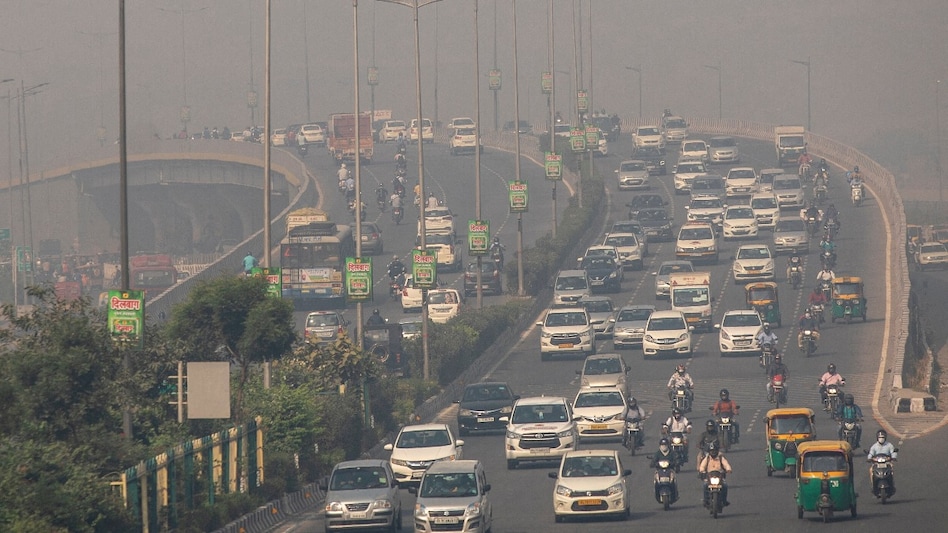 The court also directed that vehicle buyers should be offered a four-tier insurance policy at the time of purchase.
 'ISRO will neither be privatised, nor...': Space agency clarifies its future role amid private-sector push
 India becomes key diesel supplier to Europe via Bab-el-Mandeb
 SBI plans to hire 12,000 employees, up to 250 more branches in FY27
 Clash with BRICS Leaders’ Summit: GST Council meeting likely to be rescheduled
 West Bengal has Rs 8 lakh crore debt. Then why is it giving Rs 3,000 cash? FM Swapan Dasgupta explains
 Equity, FDs, Gold & More: How Couples Should Plan Their Investments Together
 How Couples Can Balance Shared Goals With Individual Dreams And Financial Needs
 FSSAI CEO On Misleading Food Ads, Brand Crackdowns And Pressure From Industry Lobby
 Couples & Tax Planning: How Smart Expense Planning Can Help Reduce Family Tax Outgo
 Mutual Fund Allocation: How Much Should Investors Allocate To Large, Mid & Small Cap Funds?
 APL Apollo, GNFC, Apar, Force Motors among stocks to turn ex-dividend next week; big payouts in focus
 LIC weighs NSE IPO strategy: CEO says market conditions, valuation to decide final move
 IHCL, LemonTree, Chalet among 5 hotel stocks to buy; analysts see up to 49% upside
 FCNR(B) windfall lifts NBFCs, small private banks: Why these stocks may be the bigger winners
 20 Asia-Pacific stocks with up to 145% upside: Full ‘Going For Glory’ list, no Indian stock included
 484 silver coins, including 134 with archaeological significance, seized at Delhi's IGI Airport
 Ganga crosses highest flood level in Patna: Over 22 lakh affected as Bihar floods worsen
 'ISRO will remain the bedrock of India's space sector': Pawan Goenka clarifies space agency's future role












