












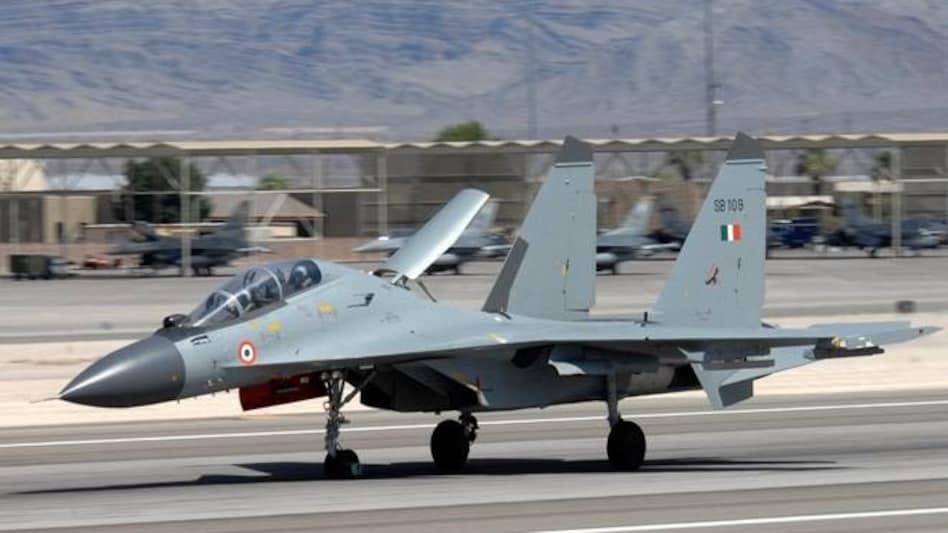
 At present, the IAF relies heavily on Russian SAP-518 pods and Israeli EL/L-8222 systems for airborne self-protection jamming.
 At present, the IAF relies heavily on Russian SAP-518 pods and Israeli EL/L-8222 systems for airborne self-protection jamming.
India’s push to dominate the invisible battlefield is gathering pace. The Indian Air Force (IAF) is preparing to flight-test an indigenous next-generation self-protection jammer pod — TALON SHIELD — a system that could dramatically improve the survivability of frontline fighter jets in future wars where electronic warfare (EW) may matter as much as missiles themselves.
MUST READ | ‘Genius move’: India’s Rafale decoy play during Operation Sindoor earns rare praise from US pilot
Developed by Data Patterns, the GaN-powered Advanced Self-Protection Jammer (ASPJ) pod is expected to undergo critical flight testing with the IAF in the coming months. If successful, it could become a cornerstone of the IAF’s future “Super Sukhoi” ecosystem and reduce India’s reliance on foreign electronic warfare systems.
Why electronic warfare is crucial as missiles
For decades, air combat was defined by speed, manoeuvrability and missile range. But modern warfare has fundamentally changed the rules of engagement.
Today, the fighter that detects first, jams first and disrupts enemy kill-chains often survives first.
That shift has made electronic warfare one of the most decisive elements of modern combat. From the war in Ukraine to rising tensions in the Indo-Pacific, militaries are increasingly realising that even the deadliest missiles are only as effective as the sensors and targeting systems guiding them.
Blind the radar, corrupt the targeting data or confuse the missile seeker — and an incoming threat can potentially be defeated without launching another missile in return.
TALON SHIELD’s vs Legacy jammers
At present, the IAF relies heavily on Russian SAP-518 pods and Israeli EL/L-8222 systems for airborne self-protection jamming. TALON SHIELD aims to change that with nearly 50 per cent indigenous content and advanced Gallium Nitride (GaN) AESA technology.
Unlike older jammers that mainly flood enemy radars with electronic noise, TALON SHIELD reportedly uses Digital Radio Frequency Memory (DRFM) architecture — a much more advanced deception-based system.
DO CHECKOUT | Operation Sindoor anniversary: India’s $1.2 billion missile upgrade targets China-Pakistan air power
The jammer can capture enemy radar pulses, manipulate them in real time and send back false signals designed to confuse hostile sensors. Instead of merely hiding an aircraft, the pod can create multiple fake targets, making a single fighter appear like several ghost aircraft on enemy radar screens.
In combat, that can severely disrupt enemy targeting and missile guidance systems.
Countering Chinese PL-15 & AMRAAM-class threats
The system is particularly relevant against modern beyond-visual-range missile threats such as Pakistan’s AIM-120C-5 AMRAAMs and China’s long-range PL-15 missiles.
Once these missiles activate their terminal active radar seekers, TALON SHIELD’s powerful AESA array can potentially overpower or deceive the missile seeker, forcing it to chase false targets rather than the real aircraft.
DON'T MISS | Mach 6+, nuclear-capable: How India’s new hypersonic weapon could redefine missile power
The pod is also designed to disrupt enemy fire-control radars associated with surface-to-air missile systems such as the HQ-9P and HQ-16.
By directing focused electronic energy at hostile radars, the system could interfere with radar locks and degrade the effectiveness of enemy air defence networks.
Built for future air combat along India’s borders
For fighter-versus-fighter combat, dual wingtip pod configurations are expected to provide near-360-degree hemispherical coverage against hostile aircraft such as the JF-17 Block 3, J-16 and even stealth-oriented platforms like the J-20.
The timing is especially important for the IAF.
India is already moving ahead with the ₹65,000 crore Super Sukhoi upgrade programme for its Su-30MKI fleet, which includes the integration of the indigenous Virupaksha AESA radar.
DON'T MISS THIS | Beneath the waves: Where India stands in a 2-front submarine war with China and Pakistan
TALON SHIELD could become the electronic warfare shield complementing that radar spear — significantly improving survivability for Indian fighters operating in contested airspace along both the northern and western fronts.
Reports suggest TALON SHIELD’s complete flight-testing and qualification process could take between one and one-and-a-half years before operational clearance.
If the programme succeeds, it would mark another major milestone in India’s push for indigenous defence technology and electronic warfare dominance.
 Why the G7 meet matters for India: Oil, inflation and markets
  Defence stock: This multibagger hit record high on Q4 earnings; Elara sees more upside
 Cut costs, shift to EVs, do online meetings: Govt asks state banks, finance and insurance firms
 Muthoot Fincorp to launch Rs 4,000 crore IPO; check key details
 Internet shutdown risk grows amid West Asia conflict: Must-have apps for Indians
 Rajeev Thakkar Explains Why PPFAS Is Avoiding Momentum Stocks Right Now
 "India An Oasis Amid Global War Crisis": Piyush Goyal Sets Historic $1 Trillion Export Target
 Rajeev Thakkar On Market Crash Fears, Oil Prices & Why SIP Investors Shouldn’t Panic
 Market Masters | Rajeev Thakkar Exclusive: Best Bets, Flexi Cap Strategy & Market Outlook
 CM Naidu Offers ₹40K Cash Incentive To Families For Having More Kids In Andhra Pradesh
 Delhivery shares set for 22% upside as MOSL sees 33% EBITDA CAGR over FY26-28
 Gland Pharma leads drug stocks higher as weak rupee boosts margins, export revenue
 Jhunjhunwala stock with 110% dividend set for 27% upside after Q4 results - Target price
  Coforge shares climb 5%, still down 24% in six months; what lies ahead for the Noida-based IT stock?
 Vedanta target price: Why should you buy stock post demerger - Rationale explained