Now, with shareholders expected to approve his third consecutive term as non-executive chairman later this month, his focus is shifting from rebuilding the company to preparing it for life beyond its founders. And he has made it clear there is no second chance if the succession plan goes wrong.
"I will be having a chairman at whatever point I exit from the scene, who will be a non-founder. There is no plan B if I hand it over to somebody and it doesn't work. I can't come back at 75, and I don't think any of these guys (other founders) want to come back either," Nilekani was quoted as saying by Time Of India.
Don't Miss: ‘This is an incredible time to be a…’: Nvidia CEO Jensen Huang said on ‘SaaSpocalypse’
Nilekani's return brought stability
When Nilekani returned to Infosys in 2017 following the turbulent years that followed the tenure of former CEO Vishal Sikka, the company needed stability.
At the time, he famously said he wanted to make Infosys "boring" again. But that vision was not about slowing growth. Instead, it was about reducing uncertainty, removing distractions and rebuilding trust among investors, employees and customers.
Over the following years, Infosys largely delivered on that promise. The company avoided major leadership controversies and maintained steady growth despite multiple global disruptions.
The Parekh factor
Much of that stability has been credited to the partnership between Nilekani and CEO Salil Parekh. Industry observers often point to the strong working relationship between the two leaders as a key reason behind Infosys' performance over the past eight years.
During this period, Infosys expanded its annual revenue from $10.9 billion in 2017-18 to more than $20 billion in 2025-26. Net profit also increased from $2.5 billion to $3.3 billion.
A succession plan takes shape
While Nilekani's leadership has brought continuity, company rules require him to step down as chairman once he turns 75, making succession planning increasingly important.
The recent appointment of former HUL chief Nitin Paranjpe as vice-chairman has sparked speculation that Infosys is preparing its leadership structure for the future.
According to industry experts, the move reflects a long-term governance strategy rather than an immediate leadership change.
"Infosys has deliberately strengthened the governance bench around him (Nilekani) with leaders like Paranjpe, which suggests the company is quietly building succession resilience without creating uncertainty around the chairman role itself. That is usually a sign of a mature board preparing for the long term, not reacting to immediate pressure," Phil Fersht, CEO of IT research and consulting firm HFS Research, was quoted as saying by TOI.
The CEO question
Nilekani's succession challenge goes beyond identifying a future chairman. He must also prepare the company for an eventual transition in the CEO's office.
Salil Parekh turns 62 this week and is already beyond the retirement age specified for executives. While shareholders have approved extensions in the past and analysts expect another shorter term could be granted, a long-term leadership plan will eventually be required.
Many observers believe Nilekani will want to oversee a smooth CEO transition before his own departure from the company.
Life beyond the founders
Perhaps the biggest change ahead for Infosys is its gradual shift away from founder-led leadership. Nilekani has openly stated that the company's next chairman is expected to come from outside the founding group.
"I would like Infosys to evolve into an institution that outlives founders and across generations through a professional model."
The statement reflects a broader vision followed by many global companies — building systems and governance structures that can function independently of their founders.
For Infosys, such a transition would mark the end of an era and the beginning of a new chapter.
Preparing for an AI-led future
Leadership succession is only one part of the challenge. The rapid rise of artificial intelligence is forcing technology companies around the world to rethink their strategies, business models and workforce needs.
According to experts, preparing Infosys for this AI-driven future could become one of Nilekani's most important responsibilities during his remaining years as chairman.
"Nilekani is well accepted by the board, management, employees and investors. He wants to ensure Infosys is safeguarded for the future," says Navnit Singh, chairman and regional managing director at Korn Ferry India.
Singh adds: "With the vice-chairman's appointment, we can expect the next phase of leadership evolution. The key challenge is how he prepares the firm for an AI-led world."
Why leadership continuity matters
As AI reshapes the global technology industry, leadership continuity is becoming increasingly valuable. Experts say companies need trusted leaders who can guide them through rapid change while maintaining investor confidence.
"At a moment like this, having someone of Nilekani's standing at the helm of Infosys is genuinely valuable," says Venkat Shastry, founder of leadership consulting firm QuantumV.
He adds: "He brings not just experience, but credibility - with clients, investors and policymakers alike. Boards of great companies understand that stability at the top is a strategic asset, particularly when everything else around them is changing rapidly."



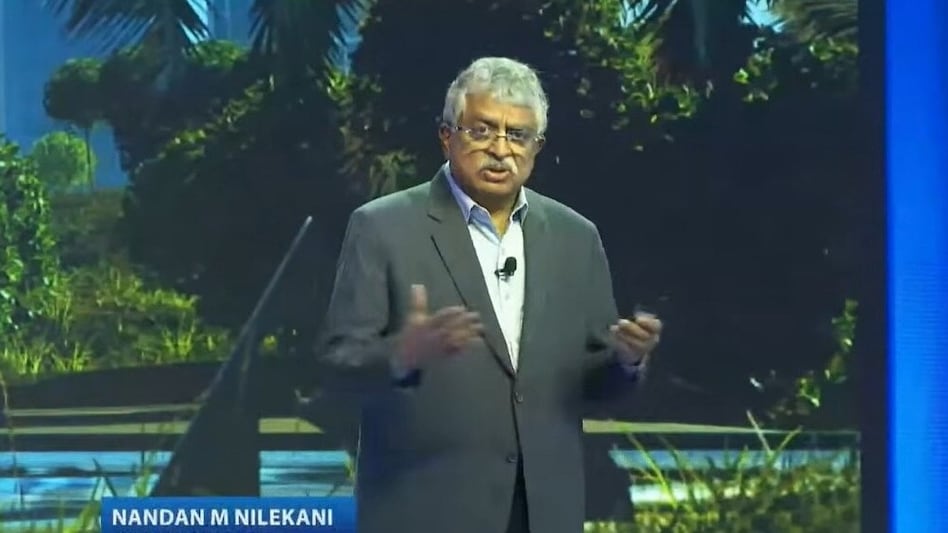 Having returned to Infosys in 2017 during a period of uncertainty, Nilekani helped restore stability and confidence at one of India's largest IT services firms.
 Hormuz crisis exposed world's energy weak spots: Why the next shock could hurt more
 Battle lines are drawn: Tata Trusts prepares to challenge N Chandrasekaran’s reappointment in the court
 'Hormuz will never be...': Qatar Energy chief dismisses Bessent's 'worthless in 2 years' claim
 ‘Very big things are coming’: Trump in ‘deciding mode’ as Iran sets 7 key demands
 Weather alert: IMD warns of heavy rain, thunderstorms across several states. Will Delhi get rain?
 Gold Price Target 2026: Expert Sees MCX Gold At ₹1.8 Lakh By Year-End Amid Strong Demand
 Health Insurance: Why Pre-Existing Diseases And Waiting Periods Matter For Buyers
 Crude Oil Above $100: How High Energy Prices And Rupee Weakness Impact Gold Prices In India
 CEA On India’s Manufacturing Rise, Atmanirbhar Bharat And Modi’s Economic Policy
 Health Insurance Buying Guide: 7 Things First-Time Buyers Must Check Before Choosing A Policy
 HDFC Bank shares: Buy, hold or sell? Bear case scenario in the price, says UBS
 HDFC Bank, Vodafone Idea, Welspun Corp: Top stocks to trade — Key levels, target price & stop loss
 Top stocks in news: Lenskart, Nestle, Hy-Tech, Manika, RVNL, Mazagon, Coforge, GR Infra, HEG, Lumino
 Block deal today: Lenskart stock in focus as 3 crore shares to change hands; key details
  SpaceX weight in Nasdaq 100 to jump to 2.82% following quarterly index rebalance: Report












