


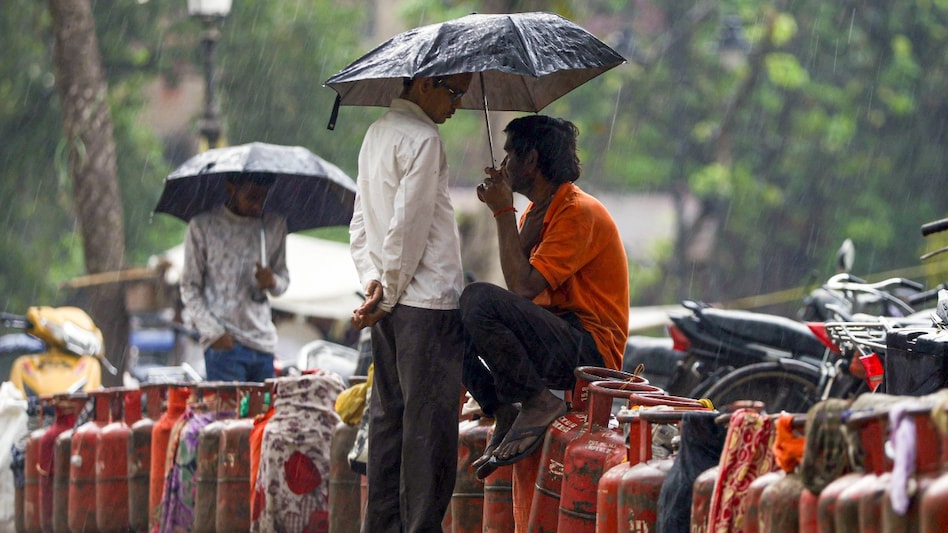
 LPG shortage? Sugar industry offers a solution to India's problem
The sugar industry has proposed a policy push to expand the use of ethanol beyond transport and into household kitchens, positioning it as a complementary clean fuel to reduce India’s heavy dependence on imported LPG and ease the government’s subsidy burden.
In a recent representation to the Prime Minister’s Office (PMO), the Indian Sugar & Bio-energy Manufacturers Association (ISMA) argued that India’s clean cooking ecosystem, despite significant gains under the Ujjwala scheme, remains structurally reliant on liquefied petroleum gas (LPG), with nearly 60 per cent of domestic demand met through imports.
This dependence, they noted, exposes the country to global supply disruptions and price volatility, particularly in the backdrop of ongoing geopolitical tensions impacting key energy corridors.
India currently consumes over 34 million tonnes of LPG annually, with a significant portion routed through geopolitically sensitive regions such as the Strait of Hormuz. The supply risk has already started reflecting on the ground, with commercial users such as restaurants and small businesses facing tighter access and longer booking cycles in recent weeks, according to the industry note.
Against this backdrop, the sugar industry is pitching ethanol where India has built substantial capacity as a viable, scalable and domestically produced alternative for cooking applications.
India’s ethanol production capacity has crossed 2,000 crore litres and is expected to expand further, supported by the government’s biofuel policies and the success of the ethanol blending programme (EBP). This creates what the industry describes as a “strategic opportunity” to extend ethanol usage beyond transport fuels into clean cooking.
Industry body ISMA highlighted that ethanol-based cooking solutions offer multiple operational advantages. These include clean combustion with negligible soot, lower emissions, and compatibility with flexible, small-quantity purchase models such as pay-as-you-go (PAYG), which can ease affordability constraints for low-income households.
The proposal also underlines a key gap in India’s LPG-led clean cooking transition access does not always translate into sustained usage. Data cited by the industry shows that average annual LPG consumption among Ujjwala beneficiaries remains below the national average, with instances of beneficiaries not refilling cylinders at all during the year.
From a fiscal perspective, the shift could be significant. The government currently allocates substantial resources towards LPG subsidies and compensation to oil marketing companies. A calibrated substitution of even 20 per cent of LPG demand with ethanol-based cooking solutions could reduce consumption by around 6 million tonnes annually and generate savings of over ₹8,000 crore through lower subsidy outgo and compensation requirements, the industry estimates.
Beyond households, the industry has identified multiple high-impact segments where ethanol could gain early traction. These include street vendors, small commercial establishments, migrant populations, and households in remote or hilly regions where LPG distribution remains logistically challenging.
Globally, ethanol-based cooking has already seen adoption in several African countries through decentralised refill models and public-private partnerships, offering a template for India to replicate at scale.
To enable the transition, the sugar industry has called for a coordinated policy framework, including formal recognition of ethanol as a clean cooking fuel, support for pay-as-you-go distribution models, integration with existing fuel retail networks, and targeted pilot programmes to build the ecosystem.
It has also recommended convergence with existing government schemes such as PMUY to accelerate adoption, alongside awareness campaigns and behavioural interventions to drive usage.

 Exam reforms: Tech titan Nandan Nilekani picked by PM Modi to fix national public examination system
  'Tax officers struggled for own land': Nirmala Sitharaman slams laidback attitude of govt depts
 CBDT issues new crypto reporting guidance: No new tax, but exchanges must track and report all transactions
 Did Cockroach Janta Party's 'Chalo Sansad' 2.0 threat trigger Dharmendra Pradhan's resignation? What we know so far
 'Will discharge my responsibilities with complete humility': Pralhad Joshi after being appointed Education Minister
 AI Data Centers, Aerospace & Gas Turbines: What's Powering Indo-MIM's Future Growth?
 Best Healthcare Stocks: Gaurang Shah's Outlook On Apollo Hospitals, Fortis & The Manipal Health IPO
 Is Indo-MIM's IPO Valuation Justified? Here's Why The Company Sees Strong Growth Ahead
 Treasury Bills Explained: Why T-Bills Are One Of The Safest Short-Term Investment Options
 FDs vs Markets: Where Should You Keep Your Short-Term Money?
 Gland Pharma stock: Price target of Rs 3,250 likely in medium term, says analyst
  Metal recycling stocks to buy: Gravita, Pondy Oxides, Jain Resource among top picks
 TRIL shares: Should you average the falling stock? Here's 'fixed and final' stop loss
 Adani Power: 45 GW target, Rs 2 lakh crore capex plan among conference call highlights
  ITC Hotels, Chalet, Ventive, IHCL, SAMHI: Hotel stocks to buy despite travel disruptions
 Looking for higher FD returns? Here's how HDFC Bank and Axis Bank compare in July 2026
 ITR Filing 2026: Own a second home? Here's how to report it correctly and avoid costly tax mistakes
 Retirement planning: Can my sister and I retire on FD income and property assets?
 SIFs, mutual funds, PMS or AIFs: Which investment route deserves a place in your portfolio?
 Beyond mutual funds: Why analysts see SBI Funds' alternative asset business as a long-term growth engine









