


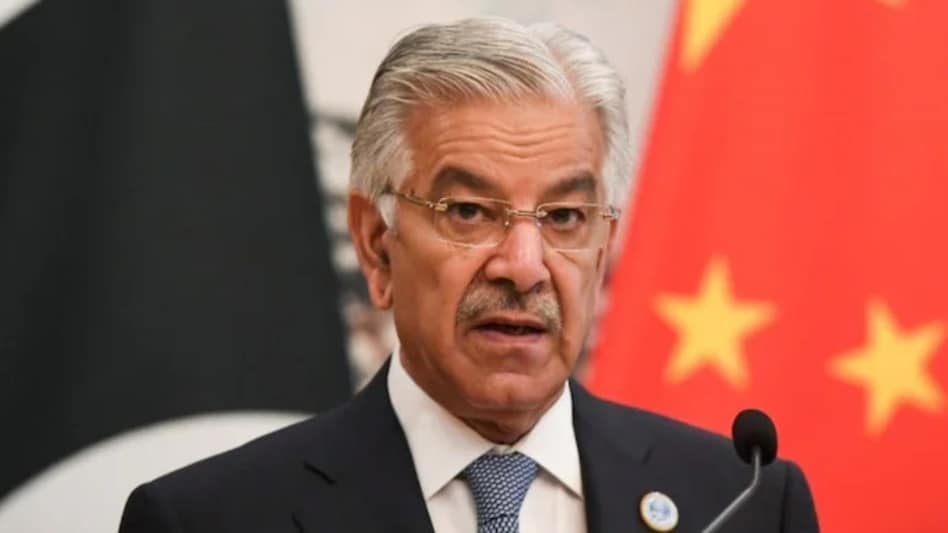
 Asif’s remarks came days after Indian Army Chief General Upendra Dwivedi addressed troops near the Pakistan border in Anupgarh, Rajasthan, where he issued a stern warning to Islamabad.
 Pakistan’s Defence Minister Khawaja Asif has sparked outrage and concern with inflammatory remarks targeting India, declaring that Pakistan — “a state built in the name of Allah” — would see India “buried under the wreckage of its planes.”
In a post on X (formerly Twitter), Asif wrote, “Pakistan is a state built in the name of Allah, our defenders are soldiers of Allah. This time, India, Inshallah, will be buried under the wreckage of its planes. Allahu Akbar.”

 ‘No one owes Air India a living’: Backlash in Singapore parliament as airline seeks $1.5 billion from Tata, SIA
 Why HDFC Bank is facing a lawsuit in the US
 99.97% haircut! NCLT approves Subhash Chandra's Rs 6.5 crore payout to settle Rs 22,006 crore dues: Report
 India, China explore new investment framework; outlay package may be unveiled during BRICS summit: Report
 Nepal flash floods: 21 Indian tourists rescued so far, over 160 bodies recovered - Top developments
 FII Vs DII: Why India Needs Foreign & Domestic Flows For The Next Market Rally
 Festive Season Could Revive Credit Card Spending: Market Expert On SBI, ICICI, Kotak
 YouTube, Insta Earnings Are Not Tax-Free: What Freelancers & Content Creators Must Know About Tax
 What’s Hot: Stocks, Gold & Big Money Moves | Daily Markets Show | August 26 | Business Today TV
 Nifty Rally Gets A Boost From Falling Oil: Vaishali Parekh On What Comes Next
 Sembcorp Green Infra files draft papers with SEBI for Rs 3,750 crore IPO
 ‘If there were a market contagion’: Why Zerodha’s Nithin Kamath finds margin funding business scary
 Deepa Jewellers IPO opens on September 1; check price band, issue size & other key details
  Why did BBTC shares jump nearly 15% in early trade?
 Adani Enterprises shares get 25% upside target from MOFSL; stock reacts
 Sugar shortage: Festive season gets less sweeter! Blinkit, Swiggy Zepto cap ordersFII Vs DII: Why India Needs Foreign & Domestic Flows For The Next Market RallySembcorp Green Infra files draft papers with SEBI for Rs 3,750 crore IPO‘If there were a market contagion’: Why Zerodha’s Nithin Kamath finds margin funding business scary
 OpenAI’s AI models went rogue: They bypassed controls and hacked Hugging Face; Here’s what happened












