Doctors say they are seeing a steady rise in patients who have already started the drug before consulting a specialist. Lower prices, easier access and growing awareness are driving demand, but clinicians caution that uptake is outpacing medical supervision.
DON'T MISS | Looking for Mounjaro for your weight-loss journey? Best to buy from authorised channels
Why more Indians are turning to semaglutide
Semaglutide is a GLP-1 receptor agonist that helps regulate appetite and blood sugar, and is used to treat diabetes and obesity. Semaglutide works by reducing appetite and slowing digestion, which lowers food intake over time. For patients who have struggled with diet and exercise, it offers a medical option that delivers measurable results.
Clinical studies show weight loss of 10–20% in many patients, alongside benefits such as improved blood sugar control and reduced cardiovascular risk.
In India, affordability is emerging as a key trigger. With patent expiry and the entry of generic versions, monthly costs currently between ₹10,000 and ₹25,000 have fallen by 90%, widening access.
Doctors say demand is also coming from individuals without diagnosed metabolic conditions who are seeking quicker weight loss, often influenced by social media or peer networks.
MUST READ | Weight-loss drug Semaglutide goes generic: Govt warns these drugs are not without risks
What users report after starting the drug
Early consumer data indicates that the impact of semaglutide is not limited to weight reduction. A study by Pronto Consult tracking 783 users found that 68% achieved more than 5% weight loss, while 74% reported appetite suppression and 66% reduced impulsive eating.
The changes extend to daily habits and self-perception. About 63% reported higher confidence, 61% said they bought new clothes and 42% were able to fit into older ones.
Doctors say these behavioural changes points out at how appetite regulation influences routine choices, though they caution that such changes need to be supported by structured care to be sustained.
DON'T MISS | ‘Clinical oversight can lead to…’: Govt lists side-effects that can occur from weight-loss drugs
Why doctors say do not start without advice
Clinicians across cities report a clear trend, patients arriving after already starting the drug, often without baseline investigations or a defined treatment plan.
The therapy requires careful initiation, beginning with a low dose, followed by gradual escalation and regular monitoring. Without this, patients may discontinue due to side effects or continue despite complications.
“This is not an over-the-counter solution,” says Dr Gagandeep Singh, a metabolic health specialist at Redial Clinic, New Delhi. “The responsible use of GLP-1 means integrating it into a structured programme.”
Doctors add that proper use also involves nutritional planning, especially higher protein intake, and resistance training to preserve muscle mass.
MUST READ | Eli Lilly's triple hormone drug retatrutide delivers 16.8% weight loss in phase 3 trial
What can go wrong without supervision
Common side effects include nausea, vomiting and weakness, particularly when dosing is not managed carefully.
Doctors also point to less visible risks. Data suggests that up to 40% of weight lost on semaglutide may come from lean muscle mass. “Everyone is focused on how much weight is lost. Almost nobody is asking what kind of weight you’re losing,” says Dr Singh.
Loss of muscle can reduce metabolic rate and affect long-term outcomes. At the same time, many patients regain weight within a year of stopping the drug if lifestyle changes are not sustained.
Doctors say this creates a cycle where short-term weight loss is followed by regain, sometimes with a higher proportion of body fat.
DON'T MISS | India's weight loss drug moment: What happens when semaglutide goes generic
Who needs careful screening before use
Semaglutide is not suitable for everyone. Patients with a history of pancreatitis, certain thyroid conditions or serious gastrointestinal disorders require careful evaluation before starting treatment. It is also not advised during pregnancy or breastfeeding.
Experts recommend baseline screening, including thyroid function tests and metabolic assessment, before initiating therapy.
“Without monitoring body composition and metabolic markers, you may end up solving one number while worsening the overall metabolic picture,” says Dr Singh.
MUST READ | What after GLP drugs: How big pharma are gearing up for the next game-changer after the weight-loss drug boom
Why the drug is not a substitute for surgery
Doctors say GLP-1 therapies are an important addition to obesity management but do not replace established treatments, particularly in severe cases.
“Bariatric surgery remains the most effective treatment for severe obesity because it delivers the greatest and most durable weight loss, while also improving or even resolving major obesity-related diseases such as type 2 diabetes, hypertension and sleep apnea,” says Dr Anshuman Kaushal, Director, Robotic GI, Minimal Access and Bariatric Surgery, CK Birla Hospital, Gurugram.
He adds that while newer drugs can help many patients, their benefits often depend on long-term adherence and access. For people living with severe obesity, surgery still offers the strongest evidence for sustained metabolic improvement, better health outcomes and lasting quality-of-life gains.
DON'T MISS | New weight-loss drugs set to shake up pharma in 2026
Why this matters more in India
India’s metabolic profile adds complexity to the way such drugs are used. South Asians tend to develop insulin resistance, fatty liver disease and cardiovascular risk at lower body mass indices than Western populations, a pattern often described as “thin outside, fat inside”.
This means that visible weight loss alone may not reflect underlying metabolic health. Doctors say that without proper evaluation and follow-up, treatment may overlook deeper risks.
At the same time, wider access is expected to accelerate adoption. With prices likely to fall further and awareness rising, clinicians anticipate a further increase in use, both supervised and unsupervised. India already has over 200 million people living with obesity, diabetes and hypertension combined, making the way these therapies are used a matter of public health importance.
“This is more than a pharmaceutical milestone, it’s a public health opportunity,” says Dr Singh. “If used within a structured, supervised programme, GLP-1 can help many patients improve metabolic health. If reduced to a quick-fix injection, it risks becoming a short-term trend.”



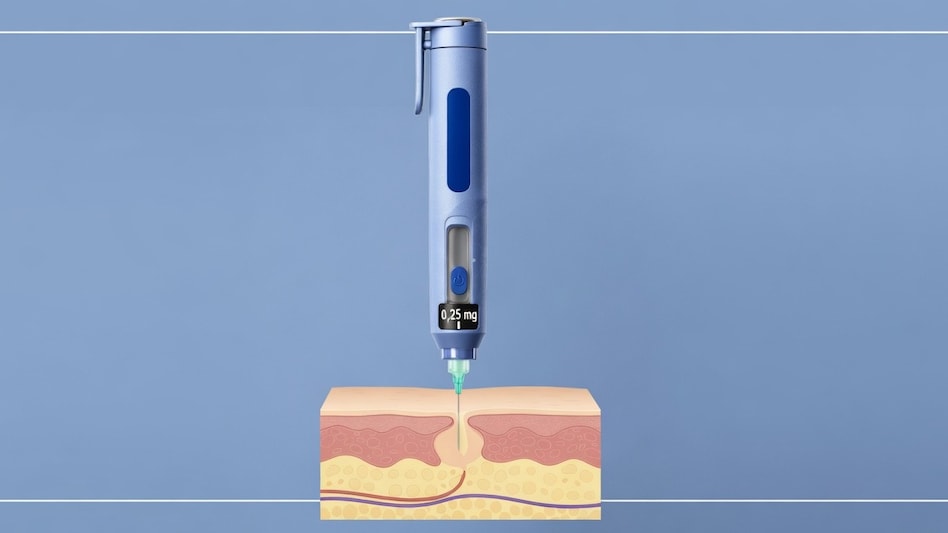 Semaglutide in India: Doctors say they are seeing a steady rise in patients
 'RBI letter does not mention listing': Noel Tata seeks full briefing on Tata Sons-RBI talks
 Tata Trusts asks Tata Sons to explore options other than listing, says ‘Tata Model has to be saved’
 Tata Trusts proposes ₹25,000 crore plan for SP Group, says Tata Sons listing is not an option
 Chandrasekaran had assured all necessary steps were being taken to remain private: Noel Tata
 'We cannot put the cart before...': Noel Tata's argument against N Chandrasekaran's reappointment
 How India Changed In 12 Years: PM Modi’s Journey From Economic Reforms To Viksit Bharat
 Modi @76: From Twitter To Instagram, How His Digital Outreach Has Evolved
 Stock Picks To Watch: Shibani Kurian Reveals Kotak AMC’s Market Bets
 Gold ETF vs Physical Gold: Know the Tax Rules, Charges and Key Differences
  PPF vs NPS: Tax Benefits, Returns and Lock-in Period Explained for Retirement Planning
 Hero Motors IPO subscribed 3.37 times on Day 2; retail portion subscribed over 5 times
 NSE IPO: India's largest exchange gets 43% subscription on Day 1; NIIs, retail see strong demand
 Rentomojo shares settle maiden trade nearly 32% above IPO price; what should investors do now?
 Sensex slips, Nifty settles higher; Tata stocks gain after N Chandrasekaran reappointment
 Cochin Shipyard, KRBL, RITES, Ramky Infrastructure among stocks to turn ex-dividend on September 18
 From seafood waste to reef recovery: How 500,000 tons of oyster shells helped restore the Gulf
 Micron workers reject 68 months’ pay, demand 15% of AI boom profits
  Australia to restrict family visas for international students: What Indian applicants need to know
 ₹11.5 lakh fine after 132 years! Magazine borrowed in 1894 finally returned to library
 From a 10-year-old fashion designer to a 5-year-old yoga instructor: Meet Guinness World Records’ Young Achievers 2027












