


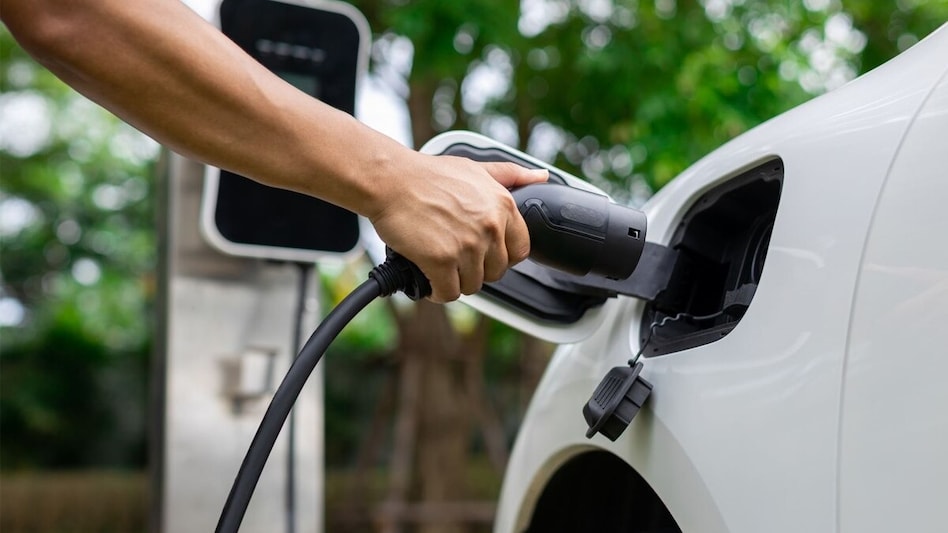
 In cars, the EV penetration rose marginally from 3.3% in October 2025 to 3.8% in November 2025
The penetration of electric vehicles in India’s two-wheeler industry remained stagnant at 4.6% in November after the GST 2.0 reforms unleashed a rush for internal-combustion engine (ICE) vehicles for the second consecutive month. EV penetration stood at 4.6% in October 2025.
In absolute volumes, sales of electric two-wheelers declined 2.5% year-on-year to 1.16 lakh units in November, according to data released by the Federation of Automobile Dealers Associations (FADA).

 90% EVs exported out of India are from Maruti Suzuki: MD & CEO Hisashi Takeuchi
 India's $30 trillion goal needs 8-10% growth, $400 billion more annual investment: Jayant Sinha
 1.1 billion barrels gone: IMF warns that global oil market is running out of safety cushions
 From Devbhoomi to industrial destination: Uttarakhand’s manufacturing moment
 India’s deep-tech startups face a new test: Crossing the valley of death
 #IndiaAt100 : CM Pushkar Singh Dhami On Uttarakhand’s Industrial Growth & India’s Next Leap
 #IndiaAt100 : Dr. Pawan Goenka On India’s SpaceTech Lift-Off And The Race To 2047
 #IndiaAt100 : P Chidambaram On India’s Growth Dilemma | What Could Hold Back $30 Trillion Dream?
 #IndiaAt100 | India’s Coolest Start-Ups: Meet The Innovators Building Tomorrow
 #IndiaAt100 | The Labour Code For Manufacturing: What Changes For Jobs & Industry?
 Cupid, NTPC Green, NTPC, Raymond Realty, HAL shares: Key technical levels to watch
 Defence stock with Rs 2,654-crore order book hits record high; here's why
  GACM Technologies: FII holding jumps to 29%; penny stock in focus
 Puravankara shares rise 5% on fresh order win
  20 high-conviction ideas for up to 95% upside | stocks to buy From Devbhoomi to industrial destination: Uttarakhand’s manufacturing moment90% EVs exported out of India are from Maruti Suzuki: MD & CEO Hisashi Takeuchi
 India set to become Hyundai’s No. 2 market ahead of FY30: Tarun GargIndia’s deep-tech startups face a new test: Crossing the valley of death#IndiaAt100 : CM Pushkar Singh Dhami On Uttarakhand’s Industrial Growth & India’s Next Leap












