















 Bengaluru leads among Indian metros, with 41.1% women’s representation, while Delhi-NCR trails at 28.5%.
For years, the direction of travel for women in corporate India was broadly upward. This year, the trend has turned.
Women now account for 16.7% of corporate executive roles among India’s Best Companies for Women, down from 20% last year. Overall representation has also slipped to 34.6% from 35.7% in 2025. After years of incremental gains, the reversal raises a bigger question: is India Inc losing momentum on women at a time when the economy needs more people in the workforce?
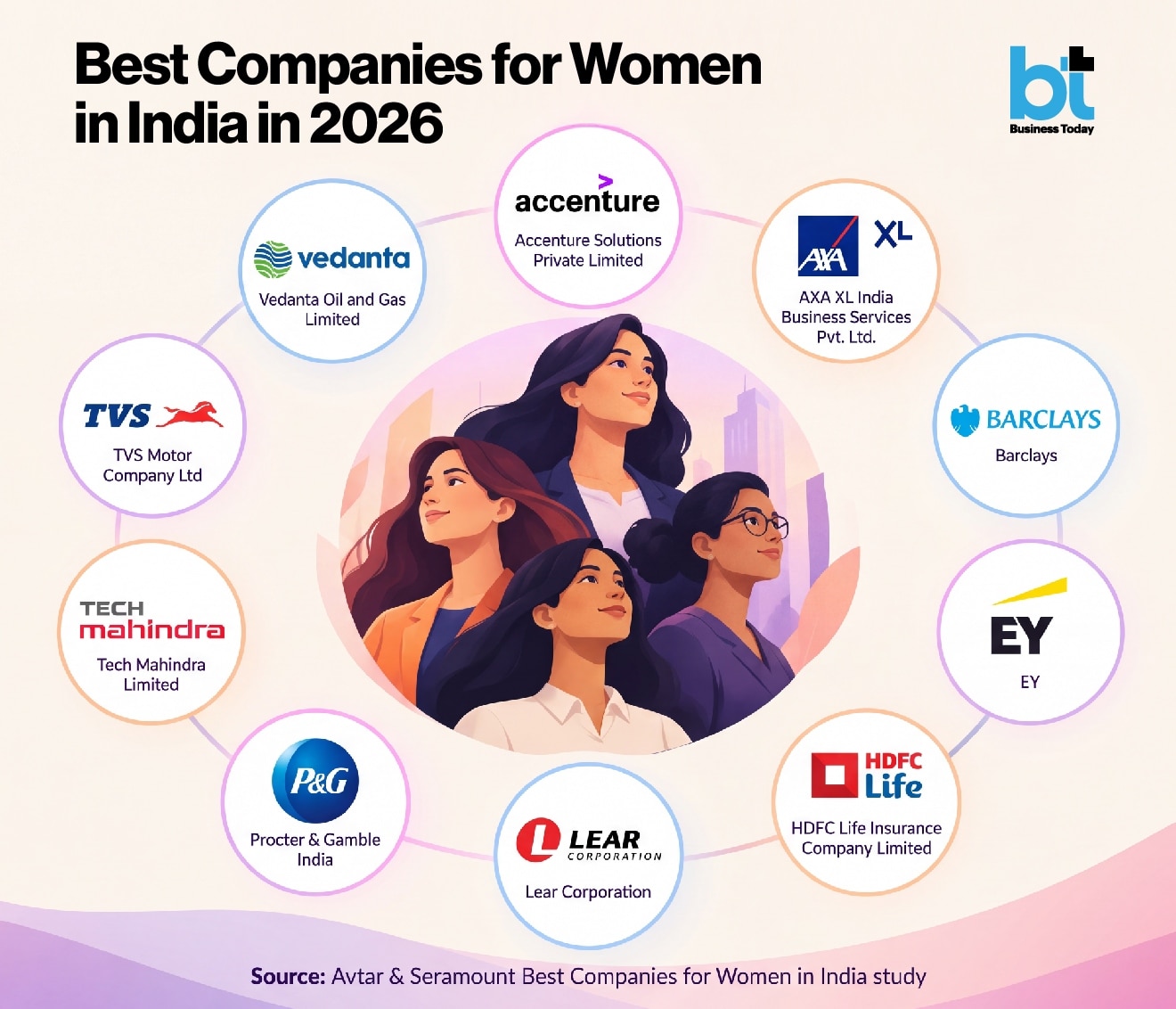
The findings come from the 11th edition of the Best Companies for Women in India (BCWI) study by workplace culture and DEI consulting firm Avtar Career Creators, in partnership with Seramount. This year, 387 companies participated, of which 125 made the Best Companies list. Of these, 63% are MNCs and 37% are Indian companies.

 It's official: Xi Jinping will attend BRICS Summit in New Delhi
  Insolvency regulator sounds alarm over misuse of bankruptcy law; tells professionals to dig deeper
 Coforge after OP Bhatt: Advent’s growing influence puts board dynamics under spotlight
 Westinghouse plans 18 nuclear power plants in India by 2047
 BRICS Summit 2026: India to encourage use of central bank digital currencies for cross-border payments
 HDFC Bank, TCS Stocks: Key Levels To Watch, Long-Term Outlook & Top I.T. Picks
 Delhi PG Horror: 22 Girls Left Without Food, Wi-Fi Or Warden After Satya Niketan Collapse
 SBI’s AI Vision: C.S. Setty On Agentic AI, Banking And India’s Next Frontier
 Delhi PG Collapse: ‘Dog-Walker’ MCD Chief Under Scrutiny As Resignation Calls Rise
 iPhone Duo First Look: Apple’s Foldable iPhone Packs Touch ID, A20 Pro & ₹3 Lakh Price Tag
 Sell IRFC on rallies, railway stocks may stay subdued despite fresh orders, says analyst
 Waaree Energies, Astra Microwave, Texmaco Rail among stocks to turn ex-dividend on September 11
 Manipal Health share price target: What JPMorgan, UBS, BNP Paribas, others say
  FMCG stocks looking attractive after sharp correction, says Quantum AMC's George Thomas
 Sensex, Nifty end higher after sharp fag-end swings on expiry day; CAS in focus
 iPhone 18 Pro, Pro Max global pricing compared: India vs US vs UK vs Europe vs Dubai
 Hyundai Creta gets new Lounge edition; prices start at ₹19.21 lakhSell IRFC on rallies, railway stocks may stay subdued despite fresh orders, says analyst
 KBC 18: IIT graduate’s ₹25 lakh dream ends after tricky ISRO scientist question, takes home ₹12.5 lakh Waaree Energies, Astra Microwave, Texmaco Rail among stocks to turn ex-dividend on September 11


