


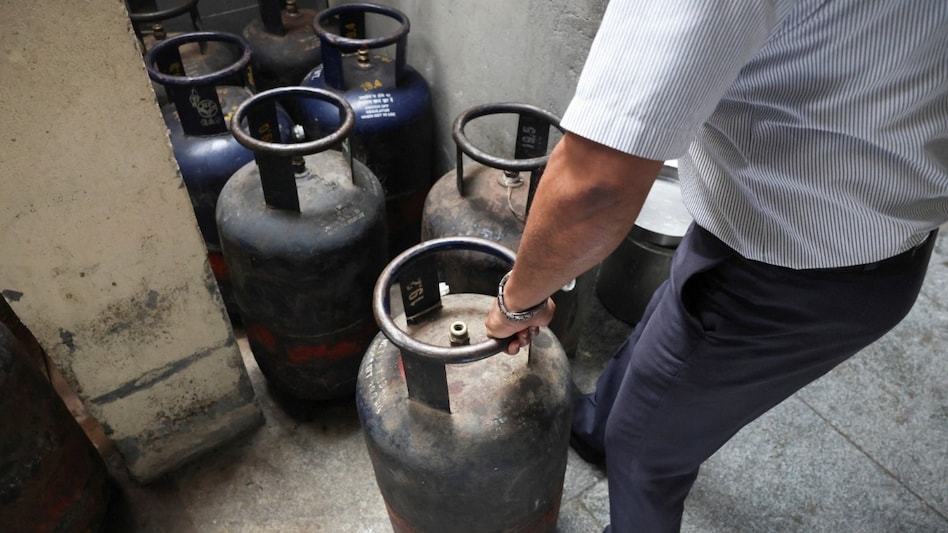
 LPG news: The government has invoked the Essential Commodities Act several times in recent years to manage supply shocks.
Amid the ongoing Iran war and rising concerns over disruptions to global energy routes, the Union government has invoked the Essential Commodities Act (ECA) to ensure an uninterrupted supply of natural gas and cooking fuel in the country. The move comes as tensions in West Asia threaten shipments passing through the Strait of Hormuz, a key route for India’s oil and gas imports.
Under the order issued by the Ministry of Petroleum and Natural Gas (MoPNG), gas supply will now be prioritised for domestic piped natural gas (PNG), compressed natural gas (CNG) used in vehicles, and liquefied petroleum gas (LPG) production. The decision aims to protect household consumption and transport services even if imports become tighter due to the conflict.

 TCS share price target: Porsche’s IT consulting arm buyout EPS neutral, win-win deal
 Canada to impose retaliatory tariffs on the US as trade talks collapse
 Bank unions strike: Around 8 lakh employees to agitate over 5-day working week, PLI scheme, pension issues
 ‘No need to be expert in Marathi’: CM Fadnavis as auto, taxi drivers protest against language diktat
 Suzlon share price: Stock in the red despite fresh order win; key details
 “Frozen Is Not Bad”: Sanjeev Kapoor Busts Myths About Restaurant Food & Food Safety
 Market Masters | Aniruddha Sarkar On Top Sectors, Market Outlook & Where To Invest
 Daily Calls: Ask Your STOCK MARKET TODAY QUERIES | Market Update | Share Market News Today
 All About Debt Funds: Types Of Debt Funds & How To Invest | Mutual Fund Guide | Money Today
 “India Can Attract Global Space Talent Like A Magnet”: PM Modi To Startup CEOs
 Suzlon share price: Stock in the red despite fresh order win; key details
 L&T shares rise after renewables business wins major Middle East battery storage order
 Shankesh Jewellers shares surprise investors on Dalal street listing, stock debuts at 11% premium
 Netweb Tech raises Rs 1,200 crore via QIP; stock falls for 2nd day, down 4%
 Sunshine Pictures stock disappoints investors despite a positive listing; shares list at 10% premium
 Apple’s CEO transition begins: iPhone-maker holds farewell for Tim Cook ahead of John Ternus’ takeover
 Karnataka FDA crackdown: Amazon, Swiggy, BigBasket food licences suspended over Datura salesBank unions strike: Around 8 lakh employees to agitate over 5-day working week, PLI scheme, pension issuesSuzlon share price: Stock in the red despite fresh order win; key detailsL&T shares rise after renewables business wins major Middle East battery storage order












