





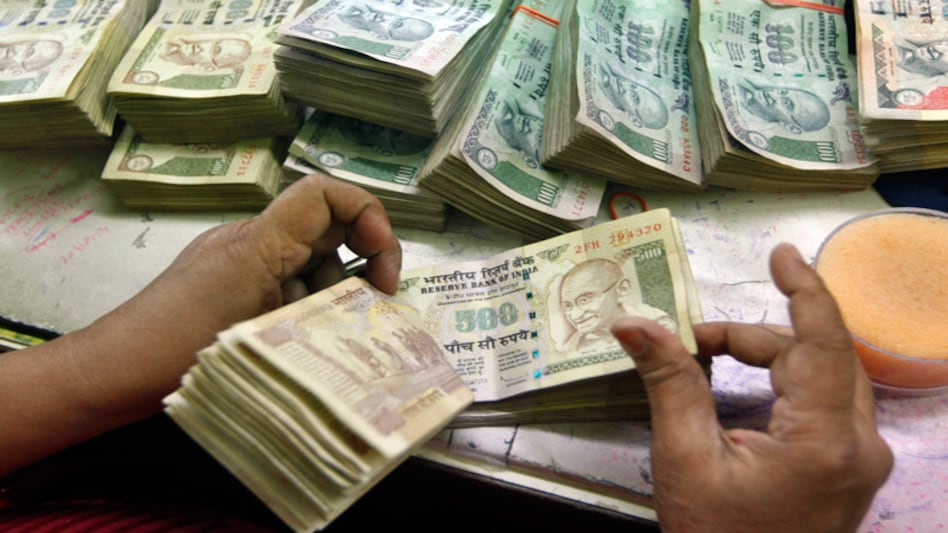
Black Money flows into the electoral system though various means. Insiders working on campaigns explain the dynamics of spend in every constituency. Every parliamentary constituency has around eight assembly seats, which are managed by an assembly in-charge who directly reports to the candidate. Depending on the might of the candidate, these assembly in-charges are paid a minimum of Rs 1 lakh to Rs 5 lakh for the entire campaign. Every assembly has at least two blocks which are under block in-charges who are paid a minimum of Rs 50,000. Every constituency will have minimum 200-240 panchayats which are manned by panchayat in-charges who are paid a minimum of Rs 25,000. Even if one takes the minimum amount paid to this stream of workers, the spend on assembly in-charges is a minimum of Rs 8 lakh, on block in-charges another Rs 8 lakh, on panchayat in-charges is Rs 50 lakh.
This is just the tip of the iceberg. Another big expense is incurred on polling day itself. Every constituency has 1500-1800 booths, even a minimum of two booth managers per booth would be paid Rs 2,500 each - the cost comes to Rs 75 lakh. Some observers say that this chain of workers alone can cost between Rs 2.5 to 15 crores per candidate. Given that each constituency has three serious contestants, the amount spent runs into multiples of this amount. And of course, expenditure incurred by non serious candidates should not be discounted either.
On community feats alone a candidate incurs expenses in excess of Rs 1 crore, given that there are 200 panchayats in a constituency and he invariably sponsors at least five such feasts per panchayat. In addition, for 'karyakarta (worker) meetings' the candidate/party has to shell out Rs 10,000-50,000 per meeting in every block with a meeting happening every second day.
In addition, for two nights before the poll, panchayat managers, along with their teams, guard their candidates' flock (or tola). A panchayat manager explains that he, along with along with around 20 helpers on bikes, ensures that his candidate's voters are not poached. He also has a similar team to do to rival candidates just what he is guarding against - take away voters from their tolas. For a Lok Sabha seat the candidate sets a target of 50,000 votes to be bought and for each vote a minimum of Rs 500 is paid. A minimum of Rs 2.5 crore is earmarked for this. Such purchased votes are called 'floating votes'. In every panchayat, a minimum of Rs 1.25 lakh is given for 250 voters. This expense is over and above the normal buyout of votes that happens through the election campaign month for which a couple of crores are already set aside by candidates. No wonder then, says Arun Kumar, Professor, Centre for Economic Studies and Planning, Jawaharlal Nehru University, that his study revealed that 35 per cent of election spend was in the last three days.
In case a candidate is an outsider imposed on a constituency, his expenses go up even further. The block in-charges, along with a team, are given a specific task 'mahaul banana' (creating a conducive atmosphere for the outsider). This team is generally sourced from the candidate's actual place of residence or the constituency he last contested from. This group creates networks for vote banks on the basis of caste, community, religion, profession, et al. The boarding and lodging of these workers, who have also come from outside, is naturally footed by the candidate. Their daily allowance can range from Rs 500 to 2,000.
Assembly in-charges along with block in-charges seek the services of 'mobilisers', whose job is to bring crowds to their candidates' rallies. The mobilisers are paid a minimum of Rs 1,000 for each rally. The candidate foots the bill for the travel of the people attending the rally along with the cost of their food 'packets' (essentially biryani, distributed by the mobiliser) and payment of Rs 100 per person. Team leaders and the ones who shout slogans are paid Rs 500 for their services. Insiders say that this payment is made well in advance to the mobiliser so that on the day of the rally public comes in without any baggage.
With every fresh election, due to rising inflation and the entry of more high profile candidates election expenditure keeps rising. Former Chief Election Commissioner, Y.S. Quraishi says that anecdotal estimates suggest that Rs 5-10 crore were spent in the last Lok Sabha election by each candidate when the limit was Rs 40 lakh. Even if the average of Rs 5 crore is considered per candidate, for 543 seats and three serious candidates per constituency, the spend is phenomenal: almost Rs 10,000 crores, and a majority of it is unaccounted or black money. However, pundits says that the current election will be the mother of them all with almost a Rs 50,000 crores spend.
 'Not seeing enough churn in our business elite': Sanjeev Sanyal on why millionaires are leaving India
 Power trading overhaul: CERC eyes fee rationalisation as market coupling nears 2026 rollout
 PMO directs Coal India to list all 8 subsidiaries by 2030 to boost governance, transparency
 Rs 11,000 crore IPO plan: Zepto files confidential papers with Sebi
 'Not govt land, was bought for a campus': Mohandas Pai clarifies Infosys' Rs 250-crore land sale in K'taka
 RBI Rate Cuts To Drive Realty Stocks Higher In 2026, Here's The Top Picks
 How 2025 Became The Year Indian Banking Regulation Was Reset
 Telecom Duopoly At Work: Why Bharti Airtel And Indus Towers Look Well Placed
 Looking For Alpha? New-Age Stocks To Watch In 2026
 Gold & Silver Long-Term Outlook: How Should Investors Position After The Big Rally?
 PMO directs Coal India to list all 8 subsidiaries by 2030 to boost governance, transparency
 'Asset prices are likely to peak in 2026': Hedge fund manager points to 100-year market patternRs 11,000 crore IPO plan: Zepto files confidential papers with Sebi
 PNB, MCX, Coforge, Shree Cement, Timex Group among stocks in focus next week; here's why
 Vikran Engineering bags over 1,000 MW solar orders in a week; stock in focus on Monday