


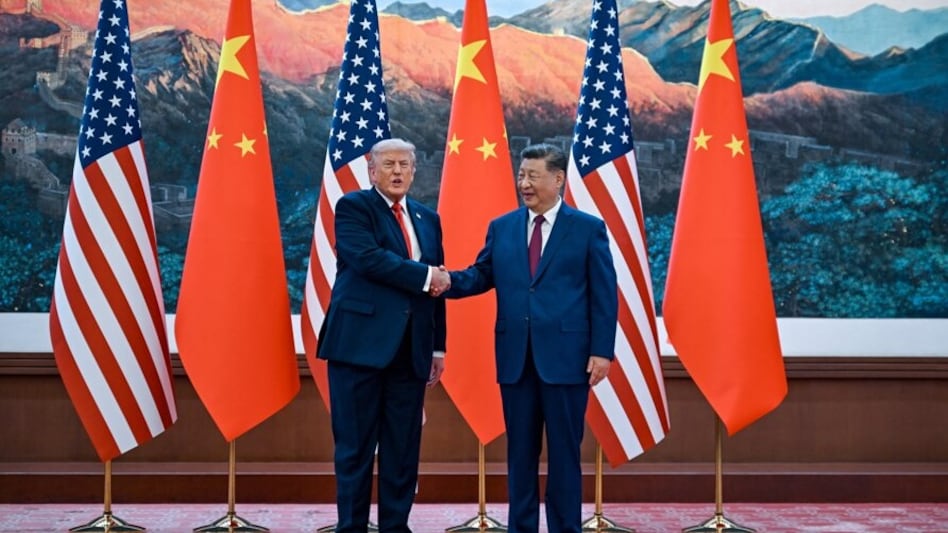
 For India, the evolving geopolitical landscape presents both opportunities and challenges.
The intensifying trade and geopolitical rivalry between the United States and China could have far-reaching consequences for countries beyond the two superpowers, including India, according to a new article by World Bank economist Aaditya Mattoo, IMF official Michele Ruta and WTO chief economist Robert W. Staiger.
The authors argue that while cooperation between strategic rivals remains possible, growing geopolitical competition is changing the nature of global trade and could impose costs on third countries caught in the crossfire.

 NCLT order misread: Subhash Chandra's ₹22,006 cr case isn't a 99.97% bank loss, say govt sources
 BT Explainer: Why JSW Group is putting its plans to make battery cells in India on hold
 BPCL takes rare risk to bring Iraqi crude through Strait of Hormuz
 NDA may win 326 seats, BJP 261 if Lok Sabha polls held today: India Today-CVoter MOTN
 India eyes ₹13,000 crore battery component push to reduce reliance on China: Report
 Nepal Flood Crisis: Massive Floods Leave Trail Of Destruction Across Rasuwa, Nuwakot And Chitwan
 Oseltamivir Shortage Explained: Why H1N1 Cases Are Driving Demand & Prices Are Varying Sharply
 Stock Market Outlook: Strong Earnings, Global Risks; What’s Next For Nifty Above 24,000?
 Lupin Stock Outlook: Citi Downgrade Vs Bernstein Buy; Is The Pharma Stock A Buy Now?
 Polycab, KEI Industries: BofA Buy Calls, Targets Up To ₹11,000; Sunny Agrawal Picks Polycab
 HDFC Bank shares hit 52-week low, down 28% YTD; experts see further downside
 Fintech firm Paramotor Digital gets Sebi nod for IPO
 Wipro ADRs jump 7% on Google Cloud partnership; key details
 Internet stocks look expensive, but Nykaa and Lenskart remain long-term bets: Mayuresh Joshi
 Gujarat Pipavav shares: JM Financial retains target, sees 27% upside
 Leaving a ₹50 LPA salary behind: Why this techie walked away to find clarity in travel
 SBI new FD rates: Bank revises bulk deposit interest by up to 25 bps, keeps retail rates unchanged
 Turning waste into wages: Meet the Noida student giving 250 rural women financial freedom
 What’s happening beneath Mount St. Helens? Scientists find major magma-storage zone underground
 This smart coating turns roofs into smart switches: Cuts annual household power bills by up to 10%












