









 Currently, India’s exports to Russia stand at $4.9 billion, compared with imports of $63.8 billion in 2024–25.

 Currently, India’s exports to Russia stand at $4.9 billion, compared with imports of $63.8 billion in 2024–25.
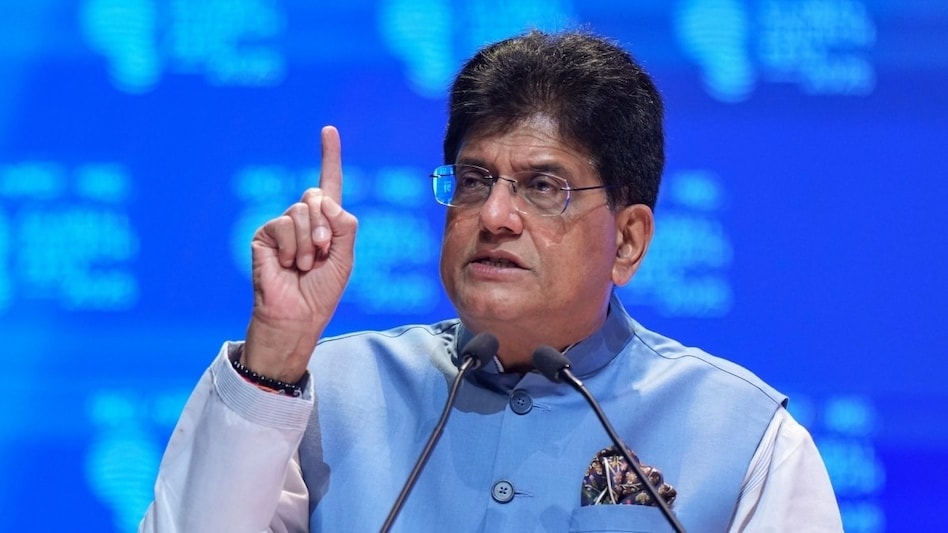
Commerce and Industry Minister Piyush Goyal on Thursday set the tone for a renewed push in India–Russia economic engagement, stating that both countries have “huge opportunities” to expand bilateral trade and work toward a more balanced partnership. Speaking at the India–Russia Business Forum organised by FICCI, Goyal stressed that while trade is nearing USD 70 billion, India cannot afford to remain complacent. “We need to grow, we need to balance that,” he said, underscoring the urgent need to reduce the sharply skewed trade equation.
Goyal highlighted several sectors that hold strong potential for expanding Indian exports to Russia. These include consumer goods, food products, automobiles, tractors, heavy commercial vehicles, smartphones and other electronics, industrial components, and a wide range of textiles. He added that India’s services sector—already a global strength—can also contribute significantly to enhancing trade with Russia.
Currently, India’s exports to Russia stand at USD 4.9 billion, compared with imports of USD 63.8 billion in 2024–25. This leaves a massive trade deficit of around USD 59 billion, driven largely by energy imports. Both sides have set an ambitious target of USD 100 billion in bilateral trade by 2030, but New Delhi has made clear that the growth must come with greater balance.
Russian officials echoed this need for rebalancing. A senior Russian government representative noted that India’s share in Russia’s total imports remains below 2%—a figure that needs to rise meaningfully. He identified six major areas where India could sharply increase its exports: agriculture, pharmaceuticals, telecom equipment, industrial components, and skilled human resources. Indian officials also stressed the importance of simplifying procedures and removing bottlenecks to boost outbound shipments to the Russian market.
Putin’s India visit to focus heavily on trade
The backdrop to these discussions is Russian President Vladimir Putin’s return to India—his first visit since 2021 and since the start of the Ukraine conflict. Trade will dominate his talks with Prime Minister Narendra Modi, with both sides preparing to sign around 10 inter-governmental agreements and 15 commercial deals, signalling strong intent to deepen economic engagement.
India is particularly keen on expanding exports of pharmaceuticals, chemicals, engineering goods, machinery, automotive products, agricultural commodities, and marine goods to the Russia-led Eurasian Economic Union under a proposed trade agreement that is currently in negotiation. To address the wide trade deficit, New Delhi has already flagged more than 65 non-tariff barriers affecting Indian marine exports to Russia and identified four categories of hurdles impacting pharma shipments—registration, clinical trials, market access restrictions, and price registration.
Putin’s full schedule in New Delhi
Putin will receive a ceremonial welcome at Rashtrapati Bhavan at 11 am on December 5, followed by a wreath-laying ceremony at Rajghat at 11:30 am. At 11:50 am, he will meet Prime Minister Modi at Hyderabad House for delegation-level talks. Press statements from both leaders are expected around 1:50 pm. Putin will then attend a business event at 3:40 pm, with the venue yet to be confirmed by the MEA. After the 23rd India–Russia Annual Summit, where several agreements are likely to be signed, Putin will meet President Droupadi Murmu at Rashtrapati Bhavan at 7 pm before departing New Delhi around 9 pm.
 Delhi EV policy 2026: Should you buy these premium electric SUVs & MPVs under ₹30 lakh?
 Big news for commercial petrol, diesel buyers: India lifts emergency curbs on retail sales from July 1
  'Never seen so many tankers': India's Russian crude imports may hit record high in June
 Delhi EV Policy 2026 Explained: What's changing for car, bike and auto buyers
 Why Jio BlackRock feels hybrid long-short is the perfect fund to launch now as it enters the SIF space
 Why Jio BlackRock AMC Is Launching Hybrid Long-Short As It's First SIF
 Delhi Unveils ₹15,000 Crore EV Policy: What It Means For Auto Companies And Consumers
 Gold, Silver Or Crude? Where Should Investors Bet Now? | Vandana Bharti
 How India Strategically Managed LPG & Crude Oil Supplies During West Asia War | K. Surana Explains
 Delhi’s Green Revolution: CM Rekha Gupta Unveils Massive ₹15,000 Crore EV Policy To Combat Pollution
 Why Jio BlackRock feels hybrid long-short is the perfect fund to launch now as it enters the SIF space
 Where should investors put their money? PL Wealth CEO has some tips
  Axis Bank CFO Puneet Sharma steps down; stock likely in focus on Tuesday
 Apollo Hospitals, Medanta, Healthcare Global, Max Healthcare, Artemis Medicare: Check target prices, outlook
 Polycab: Amid record FII buying, shares at all-time high but brokerages expect more upside