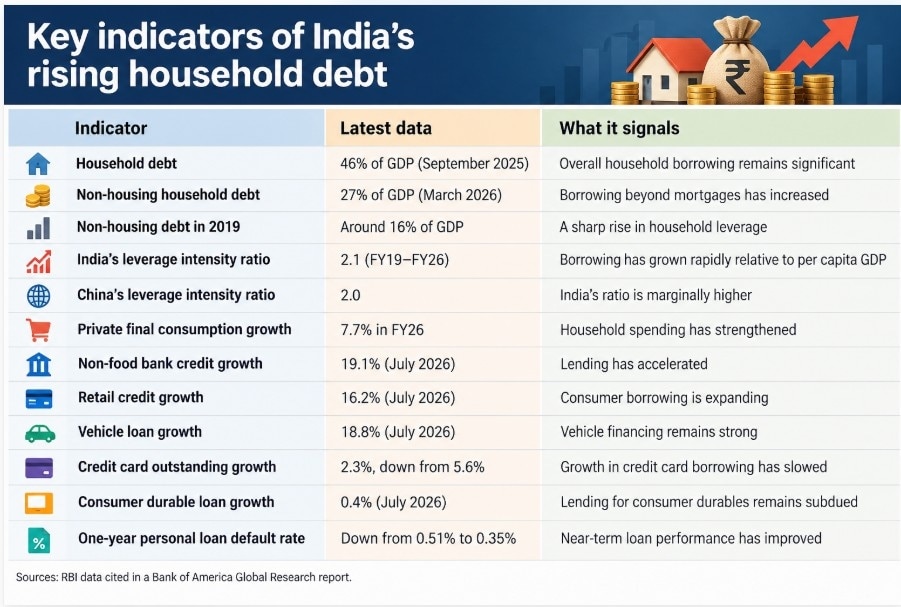



 India’s leverage intensity ratio, which measures the change in household borrowing relative to the change in per capita GDP, stood at 2.1 during FY19-26.
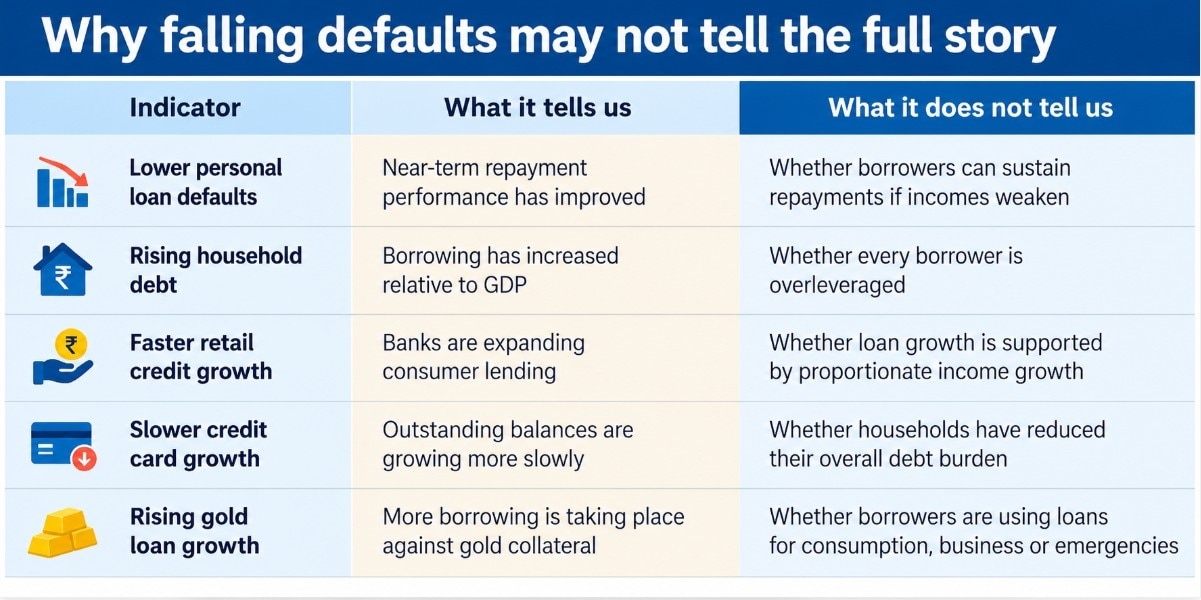
 India’s banking sector may be facing a less visible credit risk: households accumulating debt faster than their incomes can support, even as personal loan defaults improve. Rising leverage, uneven credit growth and pressure on middle-class finances are raising questions about the sustainability of the country’s retail lending boom.
Household debt, including mortgages, stood at 46% of India’s gross domestic product (GDP) as of September 2025, according to Reserve Bank of India (RBI) data cited in a Bank of America Global Research report. More concerning is the rise in non-housing household borrowings, which increased from around 16% of GDP in March 2019 to 27% in March 2026.

 Maximum prison term for GST offences rationalised, says finance ministry FAQ
 Jio Platform IPO price to be set at Rs 1,065-1,119, says report; check details
 ‘Vote chori’ proof will be submitted to President, says Rahul Gandhi after INDIA bloc meeting
 'Navi' triumphs over Trump! Indian-origin Navanethem Pillay wins 2026 Nobel Peace Prize
 Tata Sons boardroom battle: Why India Inc fears a wider crisis of ownership rights
 Silver Investment Outlook: Why Gen Z Should Watch This Metal's Long-Term Growth Potential
 Gold Price Outlook: Is This the Right Time to Invest? Expert Sees Potential for New Highs
 India Slams US PERM Suspension, Says JD Vance’s ‘Indentured Servants’ Remark Is Offensive
 Govt Plans Tighter Rules For Prescription Drug Ads, Pharmacies And Wholesalers In Focus
 Apple May Unveil Touchscreen MacBook, OLED iPad Mini In October: What To Expect
 Market on the back foot, opportunities ahead: where should investors put their money?
 Poonawalla Fincorp Q2 earnings: Net profit zooms 405%, NII at Rs 1,589 crore
  Vedanta, TCS shares to turn ex-dividend; Ola rights issue; 2 stock splits next week
 IPO rush: Rs 50,000 crore worth IPOs to hit Street by Diwali; Jio, Avada to lead fundraise
 Adani Ports, GMR Airports rise up to 5% amid block deal reports; check details
  US visa uncertainty: Where can Indian tech professionals find jobs beyond America?
 Garba meets AI! Humanoid robot in traditional attire wows Gujarat crowd
 Financial Horoscope Today, October 10, 2026: Libra Natives Should Control Their Budget, Know the Status of All Signs
 iPhone Duo price comparison: How much does Apple's foldable phone cost around the world?
 World’s best cities for quality of life 2026: Canberra tops list, Europe dominates; Check list here