


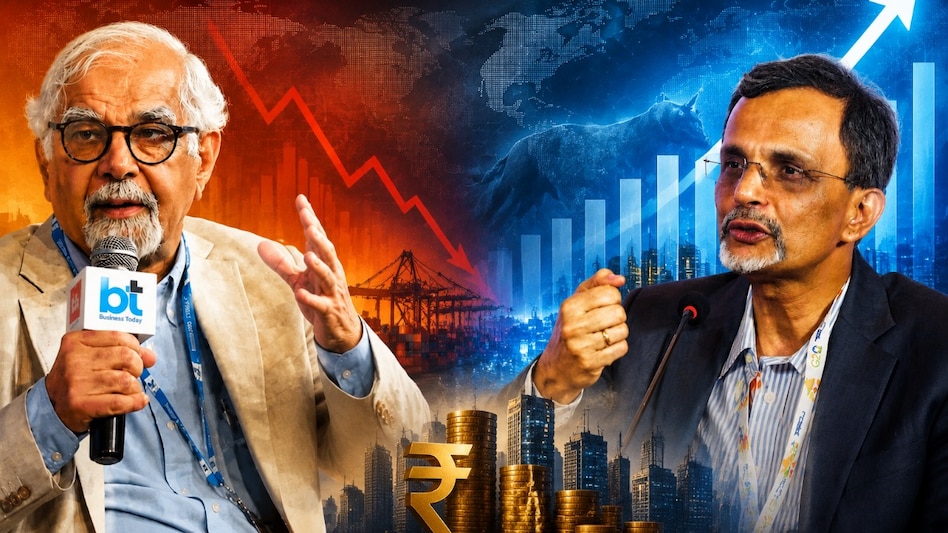
 CEA counters Surjit Bhalla: If investors were shunning India, fresh FDI wouldn’t be nearing $95 billion
Chief Economic Advisor (CEA) V Anantha Nageswaran has dismissed economist Surjit Bhalla's claim that India's weak foreign direct investment (FDI) inflows stem primarily from changes to the country's Bilateral Investment Treaties (BITs).
The CEA said that global factors have played a much larger role in shaping investment flows. "He (Bhalla) has talked about the fact that the modifications that India made to the bilateral investment treaties contributed to declining interest in India. These phenomena have multiple causes, and to reduce them to a single factor that the bilateral investment treaty alone played a part in causing the foreign investor interest in India to wane. I'm not entirely sure. I'm not persuaded by that argument," he said in an interview with India Today TV.

 Apple’s growth under CEO Tim Cook: The journey from $350 billion to $5 trillion
 Top 1,000 listed Indian companies see 53% jump in FY25 carbon emissions: IIM-Bangalore study
 How Tim Cook introduced larger iPhone screens and changed Apple’s smartphone strategy
 HDFC Bank's next CEO: Deputy MD Kaizad Bharucha in focus after Jagdishan opts out
 NSE's ₹30,000 crore IPO: SBI, its investment banking arm to offload 1% stake
 Gold Price Rally: Why Gold Surged 16% In August; Key Triggers Behind The Comeback
 Gold Vs Silver Vs Sensex Since 2005: Which Investment Delivered Better Returns?
 “Women’s Reservation Will Be Fulfilled”: Kiren Rijiju On Delimitation And Census
 Freelancers & Content Creators: How To Plan Tax On Irregular Income? Expert Explains
 “Gen Z Is Not Anti-BJP”: Tejasvi Surya On Winning Young Voters And The BJP’s Youth Strategy
 NSE's ₹30,000 crore IPO: SBI, its investment banking arm to offload 1% stake
 Jio Platforms IPO gets SEBI nod: Rs 27,500 crore debt repayment plan, $100 billion valuation in focus
 Closing Auction Session: Why the system expected to reduce volatility is still seeing occasional wild swings
 RIL-backed penny stock hits 52-week low; firm clarifies on high trading volume
 Happiest Minds shares slip despite IT stocks surge; here's what is weighing on the stockGold Price Rally: Why Gold Surged 16% In August; Key Triggers Behind The ComebackApple’s growth under CEO Tim Cook: The journey from $350 billion to $5 trillionGold Vs Silver Vs Sensex Since 2005: Which Investment Delivered Better Returns?Top 1,000 listed Indian companies see 53% jump in FY25 carbon emissions: IIM-Bangalore study
 Escaped Kerala prisoner returns to police station for Aadhaar card, flees again after being recognised












