

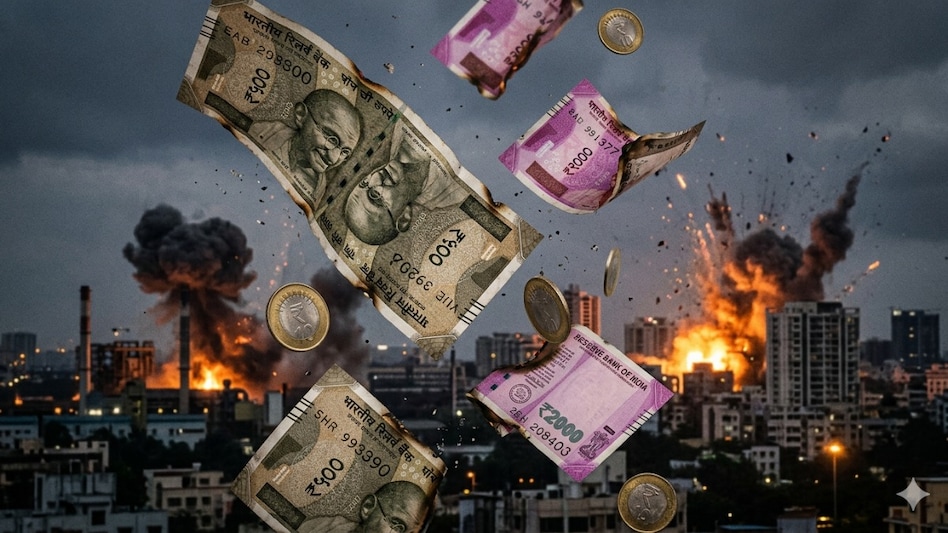
 On Friday, March 20, the currency witnessed its worst single-day fall in more than four years.
 An inauspicious start to Samvat 2083
The Hindu New Year, Vikram Samvat 2083, which began on March 19, has so far not been too auspicious for the Indian Rupee. Just a day after the festive market holiday, trading reopened to a brutal bloodbath for the Rupee, immediately highlighting deep macroeconomic vulnerabilities in the face of a highly volatile global environment.
 BT BIG STORY: Why your MBA fees keep getting more expensive
 ₹25,000 EPFO ceiling: What happens to employees earning ₹20,000, ₹25,000 and ₹35,000?
 Noel Tata raises key Tata Sons listing concern: What if a group company gets into trouble?
 China cut bancassurance commissions 30%: Could India see a similar insurance reset?
 Nearly 1.9 lakh cancer cases in India associated with infections: What Lancet study found
 Why Foreign Investors Are Betting On Mid & Small Caps Over Traditional Large Caps
 SEMICON India 2026: Global Chip Giants Announce Major India Investment Plans
 Ep17: How Mira Kapoor Is Building India’s Luxury Wellness Brand | Building A $4 Mn Wellness Business
 PROMO | 27 Years Of BT Golf | BT Golf 2026-27 Tees Off On 19 October 2026
 Supreme Court Questions High Medicine Prices At Corporate Hospitals | Essential Drugs Pricing
 Nilesh Shah on FOMO: Why investors should stop chasing ‘once-in-a-lifetime’ opportunities
 Indian rupee hits two-month low, ends nearly flat below 96 per US dollar
 Stock picks during correction: Coal India, Sona BLW, Blue Star form part of defensive watchlist, says analyst
 Helios Capital on why falling gold prices are not a trigger for renewed interest in yellow metal
  Prestige Estates stock outlook: Motilal Oswal sees 29% upside on strong launches, check target price
 Quote of the Day by Azim Premji: 'You cannot underestimate the value of luck in success in life. And I've really learned to appreciate that'
 Gen Z is influencing India’s home market: 35% link home improvement with self-expression
 iPhone 18 Pro 256GB can cost ₹1,07,900 in India: How to unlock ₹57,000 in offersBT BIG STORY: Why your MBA fees keep getting more expensive
 Oppo ColorOS 17 gets a major makeover: New design, AI tools and more












