


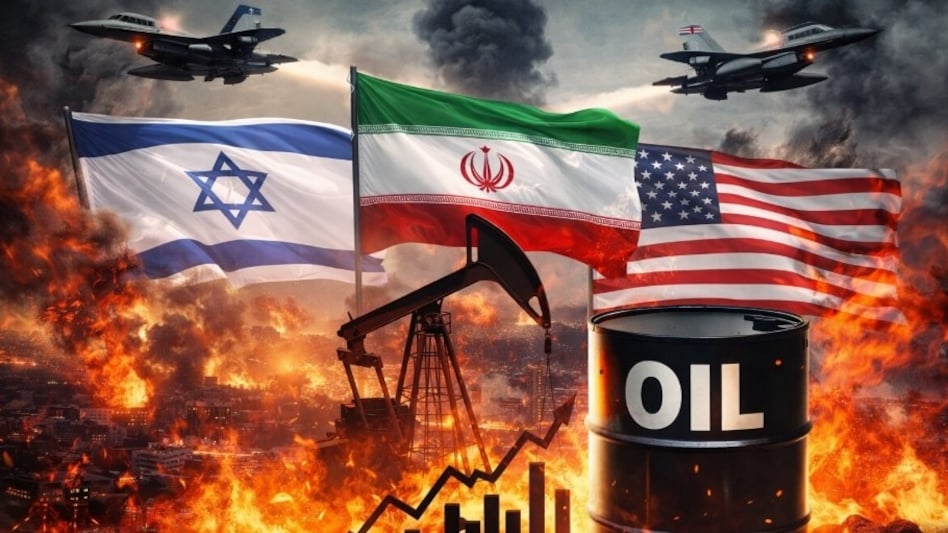
 One of the most immediate risks comes from higher crude oil prices, which tend to rise sharply whenever geopolitical tensions disrupt energy supply routes in the Gulf.
 The escalating confrontation in the West Asia involving the United States, Israel and Iran could have far-reaching economic consequences for India, affecting everything from inflation and currency stability to trade flows and several domestic industries.
Investment banker Sarthak Ahuja, in a recent analysis, outlined five major channels through which the conflict could impact the Indian economy, warning that as many as 15 sectors and business segments may face direct or secondary effects if tensions persist.

 Jio IPO: Meta, Google, ADIA, 7 others eye Rs 3.2 lakh crore stake value, gains on investment
 SIR row: Supreme Court issues notice to EC; seeks response from Gyanesh Kumar, 2 other ECs
 'Trump likely to take decision in 10 days or so': Sergio Gor on 100% tariff against India for Russian oil purchases
 A 100-bps rate rise could weigh on global growth: What does it mean for Indian exports? Here's what Goldman Sachs says
 Trump mulls using MOAB, the 'mother of all bombs', against Iran: Report
 JNU Sexual Harassment Row: Bimol Akoijam Denies Charges, BJP Steps Up Pressure
 Punjab Drug Menace: Anti-Drug Activist Parvinder Singh Jhota Murdered, Accused Arrested
 Akash Ambani Reveals Jio's 5 Big Growth Plans | 5G By 2030, AI For All & Global Expansion
 India Wants Minerals, Canada Wants Markets: The Big Trade Deal Explained
 Sugar Prices Surge ₹1,000 Per Quintal Before Diwali: Will Government Measures Bring Relief?
 CEAT CFO sees margin pressure to continue in Q3; premium passenger tyres in focus
 HAL, BEL, Ideaforge, Data Patterns: Top defence stocks to buy; check targets & key expectations
 Jio IPO listing to make it India’s 4th most-valued firm after RIL, Airtel, HDFC Bank
 Nestle India Q2 earnings: Net profit at Rs 1,026 crore, stock plunges 9%
  Jio Platforms IPO: Rs 2,500 crore quota for RIL shareholders; how to check eligibility?
 FM Nirmala Sitharaman Arrives In Bangkok For High-Level Diplomatic And Economic Visit
 BT Explainer: What is BS-VII, what changes does the draft propose, and how could it impact vehicle manufacturers and buyers?CEAT CFO sees margin pressure to continue in Q3; premium passenger tyres in focusJNU Sexual Harassment Row: Bimol Akoijam Denies Charges, BJP Steps Up PressureHAL, BEL, Ideaforge, Data Patterns: Top defence stocks to buy; check targets & key expectations












