According to the Reserve Bank of India’s (RBI) latest ‘State of the Economy’ report, the first 19 days of March 2026 have already seen an increase in the prices of staples such as pulses and edible oils.
High-frequency food price data reveal a broad-based increase across tur/arhar and moong dals. "Among pulses, an increase is observed across tur/arhar and moong dal," the RBI noted. "There is a broad-based increase in edible oils prices led by sunflower oil and groundnut oil," it said.
Also read: India has sufficient crude oil: PM Modi allays oil, gas supply fears as West Asia conflict rages on
The Packaging Pinch
Beyond staples, the fast-moving consumer goods (FMCG) industry is facing a rising tide of cost escalations. Since the conflict erupted earlier this month, the cost of critical packaging materials—largely derivatives of petrochemicals—has spiked at an unprecedented rate. Polyethylene and other polymers, essential for everything from food wraps and milk cartons to shampoo bottles, have seen a 40–50% cost escalation.
Chandrasekhar Rajagopalan, President of the Indian Flexible Packaging & Folding Carton Manufacturers Association, warned that maintaining current price levels is becoming a losing battle. “Despite continuous efforts to absorb these increases through operational efficiencies and cost optimisation measures, the scale and persistence of these challenges make it unsustainable to maintain current price levels,” Rajagopalan said.
In other words, the cost of packing materials is likely to increase for FMCG companies, and perhaps by a large margin. Packaging alone can account for up to 15% of the total manufacturing cost for products like soaps and detergents.
The grammage game
For many consumers, the price hike isn’t always visible on the tag; it’s hidden in the weight. In Delhi’s grocery markets, the transition is already visible. One local chain owner pointed out that the iconic Rs 5 pack of Parle-G glucose biscuits, which previously weighed 50 grams, has been reduced to 45 grams. While the count remains unchanged, the "grammage cut" allows the manufacturer to offset rising costs without breaking the critical Rs 5 price point.
In Mumbai, a pack of five theplas, which was priced at Rs 50 till last week, now comes for Rs 75. The local eatery, which supplies these theplas says exorbitant cooking gas prices have led to the price spike for its consumers. Cooking gas prices were increased by Rs 60 per cylinder earlier this month, but amid a supply shortage and fears of continued scarcity, coupled with hoarding, prices have increased by much more than the official Rs 60 hike.
Anuj Sethi, Senior Director, Crisil Ratings, explained that crude-linked inputs account for about 25-35% of the overall FMCG sector. Crude derivatives are used in packaging as well as input for a few key personal care and home care products like soap, detergents, hair oils, and shampoos, amongst others. “A rise in crude prices owing to the conflict is expected to increase raw material costs for FMCG companies. Players are expected to take marginal price hikes/grammage reduction to offset the impact of higher raw material, packaging, and freight costs.”
A Squeeze on Growth
The pressure isn’t just on the consumer’s wallet; it’s on the industry’s future growth. Angshuman Bhattacharya, Partner and National Leader for Consumer Products and Retail at EY India, warned of a looming slowdown in consumption.
"There are two types of pressure in an inflationary environment. First, there is the price pass-through, where the consumers’ pocket gets hit. Second, and very importantly, when FMCG companies are under profitability pressure, they cut back on discretionary investments. This includes new product launches, distribution expansion, and marketing spend. This creates an overall slowdown. It’s not just about the consumer’s budget; it’s about the reduced budgets companies have to spur demand. When discretionary spending is checked to protect margins, it impacts the expansionary growth of the entire sector and companies. I see companies really feeling the pinch in the next few quarters."
Bhattacharya said that Indian FMCG companies operate at 8-15% EBITDA and “if prices of essential commodities rise meaningfully, your ability to respond to it is very limited. Companies will have to take price increases, and yes, that will inevitably impact consumption.”
The Global Energy Link
The crisis is further complicated by the global push for biofuels. Crisil’s Sethi noted that edible oil prices rose by approximately 5% in March, in anticipation of palm oil being diverted for biodiesel. Similarly, sugar prices have climbed as crude prices surged over 50%, driving up demand for ethanol blending globally. He said that while milk prices are expected to remain stable for the remainder of 2026—following a Rs 2–3 per litre hike in 2025—the broader FMCG landscape remains under significant duress. It is clear that as long as the conflict in West Asia persists, the pressure on the Indian pantry is unlikely to ease.


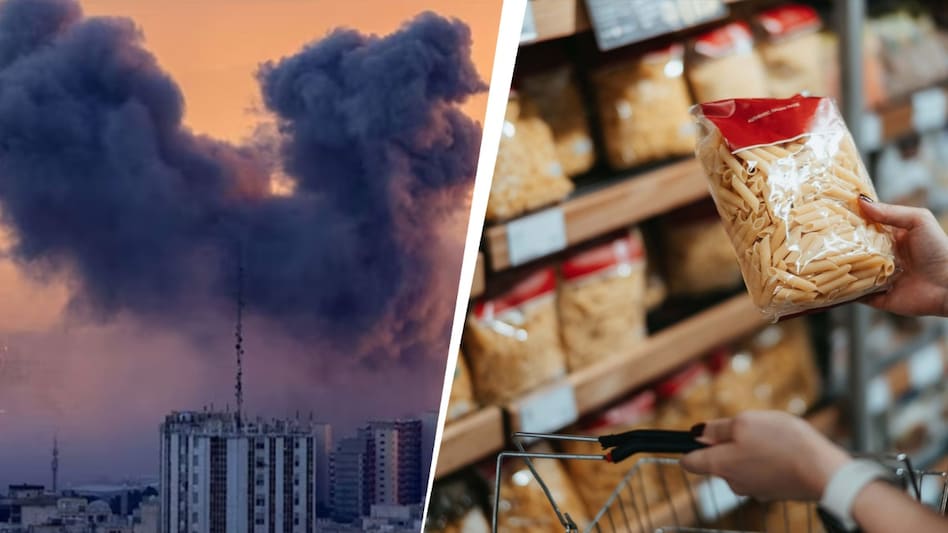 The first 19 days of March 2026 have already seen an increase in the prices of staples such as pulses and edible oils
 Tata Trusts asks Tata Sons to explore options other than listing, says ‘Tata Model has to be saved’
 'We cannot put the cart before...': Noel Tata's argument against N Chandrasekaran's reappointment
 Tata Trusts opposes N Chandrasekaran reappointment, says board resolution is ‘legal nullity’
 N Chandrasekaran reappointed for 5 yrs as Tata Sons Chairman; board approves public listing
 Tata Sons IPO: Board approves listing on stock exchanges
 How India Changed In 12 Years: PM Modi’s Journey From Economic Reforms To Viksit Bharat
 Modi @76: From Twitter To Instagram, How His Digital Outreach Has Evolved
 Stock Picks To Watch: Shibani Kurian Reveals Kotak AMC’s Market Bets
 Gold ETF vs Physical Gold: Know the Tax Rules, Charges and Key Differences
  PPF vs NPS: Tax Benefits, Returns and Lock-in Period Explained for Retirement Planning
 Hero Motors IPO subscribed 3.37 times on Day 2; retail portion subscribed over 5 times
 NSE IPO: India's largest exchange gets 43% subscription on Day 1; NIIs, retail see strong demand
 Rentomojo shares settle maiden trade nearly 32% above IPO price; what should investors do now?
 Sensex slips, Nifty settles higher; Tata stocks gain after N Chandrasekaran reappointment
 Cochin Shipyard, KRBL, RITES, Ramky Infrastructure among stocks to turn ex-dividend on September 18
 Tata Trusts proposes ₹25,000 crore plan for SP Group, says Tata Sons listing is not an option
 'RBI letter does not mention listing': Noel Tata seeks full briefing on Tata Sons-RBI talks
 Want EPFO Updates On WhatsApp? Here’s How To Follow The Official Channel In Just A Few Steps
 Why Are Brokerages Still Bullish On HDFC Bank Stock | HDFC Share Analysis
 Tata Sons IPO: Tata Trusts cites Ratan Tata-era decision to keep company unlisted












