


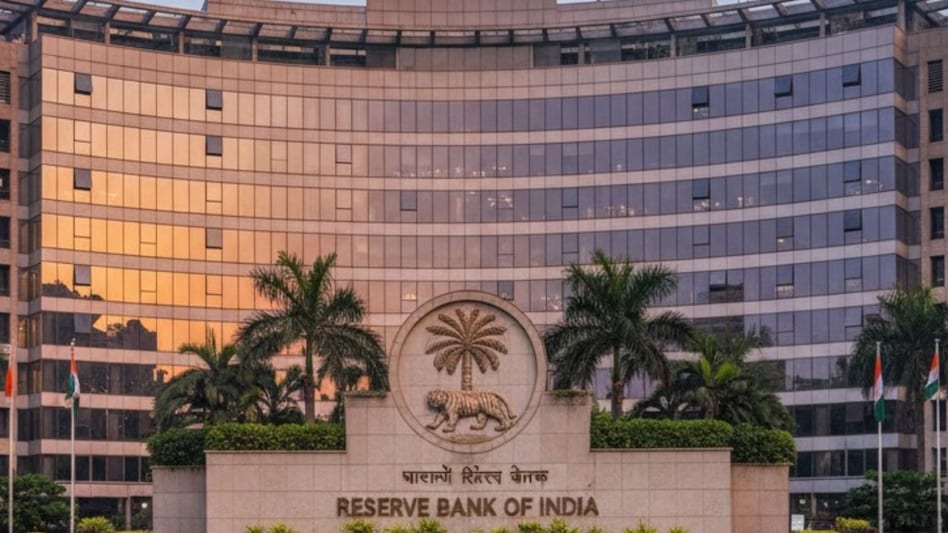
 RBI announced a $5 billion dollar-rupee buy and sell swap auction scheduled for May 26, in a bid to boost liquidity in the banking system.
The rupee recovered against the US dollar on Thursday, May 21, after consecutive days of touching record lows. Thursday’s gains were driven by cooling oil prices, but also importantly, due to the Reserve Bank of India stepping in, in the foreign exchange market through the sale of the dollar to shore up the currency.
The rupee, which had closed around 96.8 to the dollar, strengthened around 0.5% in the morning trading to around 96.30. It eventually settled at 96.37 against the greenback.
"This recovery follows a retracement in crude oil prices amid tentative signs of easing geopolitical friction, alongside active central bank intervention," said Nandish, deputy vice-president at HDFC Securities.
On Wednesday evening, the Reserve Bank of India (RBI) announced a $5 billion dollar-rupee buy and sell swap auction scheduled for May 26, in a bid to boost liquidity in the banking system. Essentially, banks would sell US dollars to the RBI and simultaneously agree to buy the same amount in rupees. The trade reverses at a pre-agreed rate on a future date.
MUST READ: Oil at $140, rupee near 100? Gita Gopinath warns India faces tough economic shock
The central bank is said to have intervened in the forex market on Thursday to stabilise the sliding rupee, and the expectation is that it may have to look at more options to shore up the rupee, particularly if the war drags on for a few more weeks and months, which will keep oil prices elevated and in turn hurt big importers like India, and pressure the current account deficit.
Since the US and Israel launched a war on Iran, the supply lines through the Strait of Hormuz have been impacted, which, coupled with strikes on a few crude oil and gas assets in West Asia, has led to energy prices soaring. This has impacted India’s economy hard. After leaving prices unchanged since the war began, petrol and diesel prices have been raised twice since last Friday. That has fuelled risks of inflation in the coming months.
A weakening rupee and its looming impact on the economy have also hit equity market sentiments, which have seen a relentless selling by foreign institutional investors, in turn further putting pressure on the rupee.

 RBI repo rate: Crisil says India Inc can absorb 50-bps rate hike as corporate balance sheets remain strong
 AI’s $4.7 trillion global opportunity: What it could mean for Indian companies and investors
 Credit-card EMI isn't always cheaper: Check these six costs before converting
 How much do government documents cost in India? Check PAN, Passport, Aadhaar and DL fees
 Lack of US-India deal will not have an adverse impact on India’s growth, says Panagariya
 Mira Kapoor On Dhun Wellness, Clinical Longevity And The Dhun Intelligence Method
 Tech Gear EP 19 | iPhone 18 Pro Series, Apple Pay & Redmi Note 17 Pro Max | Business Today
 Mira Kapoor On Dhun Wellness, $4 Million Funding And Building Its Competitive Edge
 How To Transfer Data From Old iPhone To New iPhone | Easy Guide
 How Mira Kapoor Became An Investor And Decides Which Brands To Invest In
 Nvidia shares approach record high as AI optimism revives investor demand
 Sebi receives 20,000 comments on proposed CAS changes; framework to follow soon
 Stock market sell-off: Nifty, Sensex log 8th straight weekly loss; key levels & top triggers now
 IPO boom: 69 Indian companies raise Rs 90,500 crore in Q3 despite stock market sell-off; what's next
 TCS, Infosys, HCL Tech, TechM, Wipro, LTM, Coforge, HEXT: Fresh target, Q2 previews for IT stocks
 LPG, CNG, PNG prices on today (October 4): Check latest rates in Delhi, Mumbai, Kolkata, other cities
 Petrol, diesel prices today (October 4): Check latest rates in Delhi, Mumbai, Chennai, Kolkata & more
 India has world’s best digital financial setup, positioned to soar: Nobel laureate Michael Spence
  Quote of the Day by Warren Buffett: 'Price is what you pay. Value is what you get'
 India weighs 3 more Scorpene submarines as Project-75(I) moves closer to approval












