









 Says without policies and interventions to conserve groundwater, warming temperatures will challenge India’s food and water security
 Says without policies and interventions to conserve groundwater, warming temperatures will challenge India’s food and water security
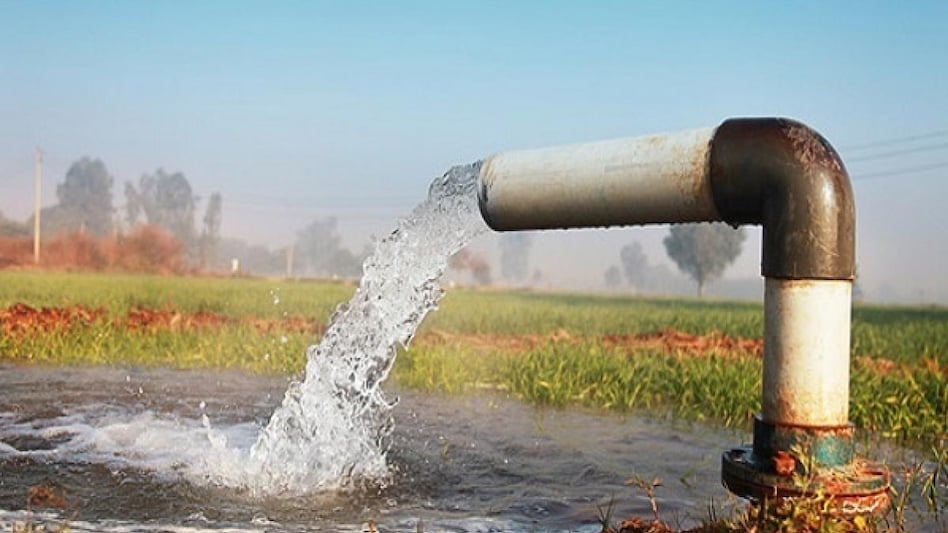
India’s groundwater resources are rapidly depleting due to increased withdrawals, with warming climate likely to triple the groundwater depletion rates, reveals a study done by University of Oklahoma’s Department of Geography and Environmental Sustainability, in the US. Published in the journal Science Advances last week, the research was led by Assistant Professor Nishan Bhattarai.
The report paints a grim picture, suggesting that under prevailing practices of groundwater utilisation for irrigation, rising temperatures may triple the rate of groundwater depletion. Around 60 per cent of India’s irrigated agriculture heavily relies on groundwater sources.
“Without policies and interventions to conserve groundwater, we found that warming temperatures will likely amplify India’s already existing groundwater depletion problem, further challenging India’s food and water security in the face of climate change,” Bhattarai said.
The study employed an empirical model that connects groundwater depletion, crop water stress, and India's changing climate. After analysing these relationships, the researchers delved into the variations in these connections concerning India’s two primary aquifer systems: unconsolidated and consolidated aquifers.
Moreover, the study predicted that climate change could expand the regions in India facing groundwater depletion. While presently, the most overexploited aquifers are concentrated in the northwest and south of India, by 2050, this issue may extend its grip to the southwest, the southern peninsula, and central India.
Given the increasing water demand, the warming temperatures exacerbate crop water stress during both the monsoon and winter growing seasons. While monsoons provide substantial water resources for crops through precipitation and surface water availability, the study highlighted that for consolidated aquifer systems, groundwater depletion is driven by a decrease in monsoon recharge. Meanwhile, unconsolidated aquifer systems suffer declines due to increased groundwater withdrawal during the winter season.
The research further compiled its findings by utilizing a unique dataset that combines groundwater depth information from thousands of wells across India, high-resolution remote-sensing data measuring crop water stress, and temperature and precipitation data.
This study also thoroughly examined the feedback mechanisms between climate change and groundwater depletion, while also considering the decisions made by farmers. The researchers said that farmers may resort to increased irrigation to meet rising crop water demands, but warned that groundwater depletion could compromise irrigation capabilities over the course of decades.
The researchers called for an end to the overexploitation of groundwater withdrawals and urged for the implementation of policies to regulate power supply rationing and metering electricity usage, which has historically enabled farmers to withdraw groundwater without restrictions. Additional measures include the development and allocation of regional water sources, incentivizing farmers who invest in groundwater recharge, and the reduction or removal of energy subsidies.
The study’s co-authors include David B. Lobell of Stanford University, Balwinder Singh of the International Maize and Wheat Improvement Centre in India and the Department of Primary Industries and Regional Development in Western Australia, Ram Fishman of Tel Aviv University, William Kustas of the U.S. Department of Agriculture, Yadu Pokhrel of Michigan State University, and Meha Jain of the University of Michigan.
 India's Venezuela push: What's driving interest in oil fields, not just crude cargoes?
 Meet Bangladeshi-origin Robin Khuda, whose firm AirTrunk announced ₹3 lakh crore investment in India
 Tata Trusts refutes 1989 share transfer claims, says transaction was fully lawful
 RBI's 5 Big Moves To Attract Foreign Capital Amid U.S.-Iran War & Rupee Pressure
 What makes Delhi airport the country’s largest aviation hub?
 Hindalco Eyes ₹1,000-Cr Revenue From Eternia Business By 2028; New Copper Recycling Plant Soon
 Govt's Big Tax Gift To FIIs! Will Global Money Flood Back Into Indian Markets?
 What’s Hot: Stocks, Gold & Big Money Moves | Daily Market Show | Business Today TV
 Daily Calls LIVE: Ask Your STOCK MARKET TODAY QUERIES | Market Update LIVE | Share Market News Today
 TMC Rebellion Deepens: After MLAs, Are MPs Next To Leave Mamata Banerjee's Party?
 CMR Green Tech IPO attracts over Rs 56,200 crore bids, subscribed 127 times; check GMP, listing timeline
 IFCI shares gain 31% in nine days: Key factor behind the rally and price targets
  IT stocks to ‘Buy’ amid AI push: Infosys, TCS among nine names – Check target prices
 BT Closing Bell | Sensex settles 474 pts lower from day’s high, Nifty below 23,400; Tata Group trio lead index losers
 Rajesh Exports latest news: 'Confident that Sebi will … ' - Another clarification from Rajesh Mehta-led company | 10 points