


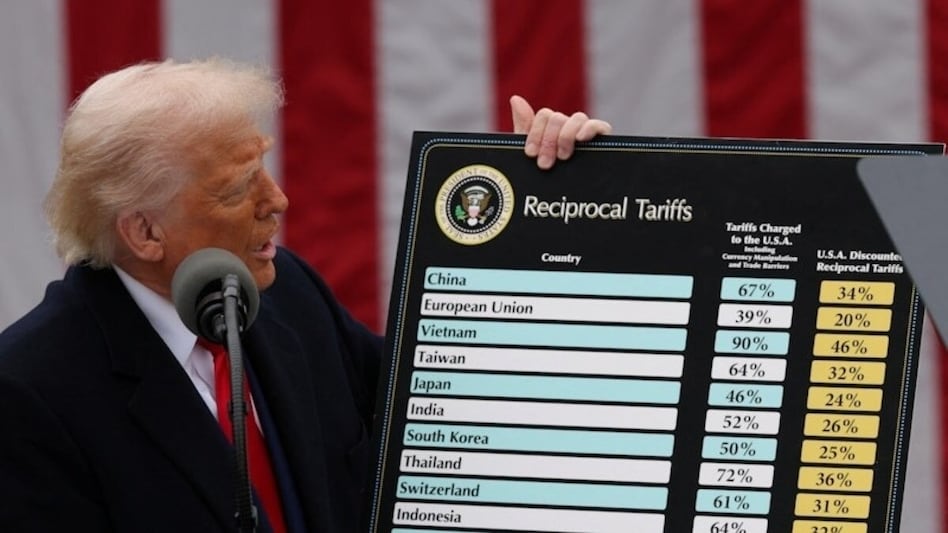
 The Dow had plummeted more than 2,000 points while the S&P 500 dropped 5.7% on April 5, responding to Trump’s aggressive tariffs.
When President Donald Trump slapped fresh tariffs on imports from some of the world's poorest nations, he reignited a global firestorm. Framed as a move to protect American industries, the sweeping duties—some as high as 49% — hit countries like Cambodia, Madagascar, and Myanmar, where millions already grapple with poverty and disaster. But as markets trembled and critics lashed out, questions mounted: Is this economic strategy — or something far more cynical?
Gurmeet Chadha, Managing Partner and CIO at Compcircle, didn’t hold back. In a scathing post on X (formerly Twitter), he slammed the US move: “Forget about bond yields, deficits etc which superpower slaps tariffs on poor countries. Cambodia 49%; Madagascar 47% where people earn $2 a day, Myanmar which recently had an earthquake killed 3000 people, 45%. Shame on entire US think tank!”

 Bangladesh turns to India for wheat as Black Sea disruption pushes up prices
 Morgan Stanley accidentally leaks 100-plus deal pipeline, including India IPOs: Report
 Sebi may ease margin requirements for longer-tenure F&O products
 India boosts LPG production as festive demand rises and Gulf supplies remain uncertain
 No petrol, diesel price hike proposal yet; govt may support OMCs if crude stays high
 India Growth Outlook Gets Major Boost: S&P, Fitch, ADB Raise FY27 Forecasts; OECD Upgrades 2026 View
 A-One Steels IPO Explained: Key Details, Growth Strategy & Future Outlook | Management Live
 Market Commentary: Nifty Outlook, Stocks & Market Strategy | Deven Choksey
 Ignore Large Caps? Why Investors Are Chasing High P/E Mid Cap Stocks Now
 30 IPOs In A Month: Deven Choksey On IPO Flipping And Secondary Market Liquidity
 Sebi may ease margin requirements for longer-tenure F&O products
 RBI to conduct OMO sale of Rs 25,000 crore in government bonds on September 28
 NSE shares: Deven Choksey lists reasons for long-term investment; calls stock 'shock absorber' in volatile markets
 Crude oil prices fall for sixth session; PL Capital explains what could happen next
 Mazagon Dock, GRSE shares: Does short-term bounce signal trend reversal? Analyst decodes
 Is ₹1 crore enough for retirement at 45? Check corpus, inflation, healthcare and longevity
 Medical tourism in focus: Indians spend up to ₹41,649 on health-related domestic trips
 Graphite, not lithium, may be the battery industry's biggest choke point: Report
 Bengaluru CEO says no male hires from UP, Bihar, Rajasthan, MP; cites alleged employee misconduct
 Financial Horoscope Today, September 24, 2026: Cancer Signs Should Control Expenses, Know the Status of Other Signs












