


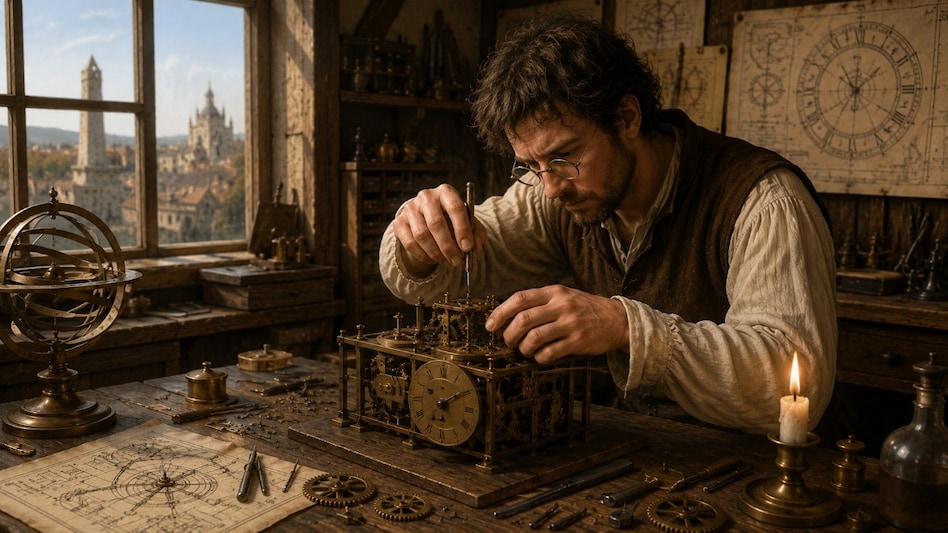
 The movement of the Sun across the sky, the phases of the Moon and the changing position of stars provided the earliest reference points.
Today, checking the time is almost instinctive. A glance at a phone, smartwatch or wall clock can tell us the hour, minute and even second. But for most of human history, there was no clock to consult. So when the first mechanical clocks appeared, how did their makers know what time they were supposed to show?
The answer goes back far beyond gears and springs. The first clockmakers did not invent timekeeping—they inherited a system humans had already built by watching the sky.

 'Volatile Trump may misinterpret it': Ex-diplomat on whether BRICS is becoming anti-West
 India cannot become $30 tn economy without US, China, Europe: Amitabh Kant on New Delhi's BRICS challenge
 Bahrain Court rejects claims by investors in Credit Suisse AT1 bonds case against HDFC Bank
 It's official: Xi Jinping will attend BRICS Summit in New Delhi
  Insolvency regulator sounds alarm over misuse of bankruptcy law; tells professionals to dig deeper
 Crude Oil Shock: Should You Avoid Oil & Gas, Paint & Tyre Stocks Now? Expert Explains
 ISKCON Restaurants Shut In Mumbai: FDA Finds Pests, Poor Hygiene & Food Safety Violations
 ‘Heteropolarity’ Is Here: How Big Tech Is Challenging The Power Of Nations | BRICS ROUNDTABLE
 India Inc Growth Story Is Real: Anant Goenka On Demand, GST 2.0 And Global Opportunities
 Trump’s 9/11 Firefighter Claim Sparks Controversy On 25th Anniversary
 Closing Auction Session here to stay, says Sebi chairman Pandey
 Power stocks: Nuvama picks ACME Solar, NTPC, Power Grid; check target prices
 FII outflows, market correction: Client Associates’ Himanshu Kohli on where investors should put their money now
 MSCI India rebalancing went well under CAS, says SEBI chief: Report
 HFCL share price: Why recent rally is a red flag; analyst says this on fresh entryCrude Oil Shock: Should You Avoid Oil & Gas, Paint & Tyre Stocks Now? Expert ExplainsISKCON Restaurants Shut In Mumbai: FDA Finds Pests, Poor Hygiene & Food Safety Violations‘Heteropolarity’ Is Here: How Big Tech Is Challenging The Power Of Nations | BRICS ROUNDTABLE
 NPS Swasthya gets closer to launch: Pension regulator to issue final guidelines soonIndia Inc Growth Story Is Real: Anant Goenka On Demand, GST 2.0 And Global Opportunities












