

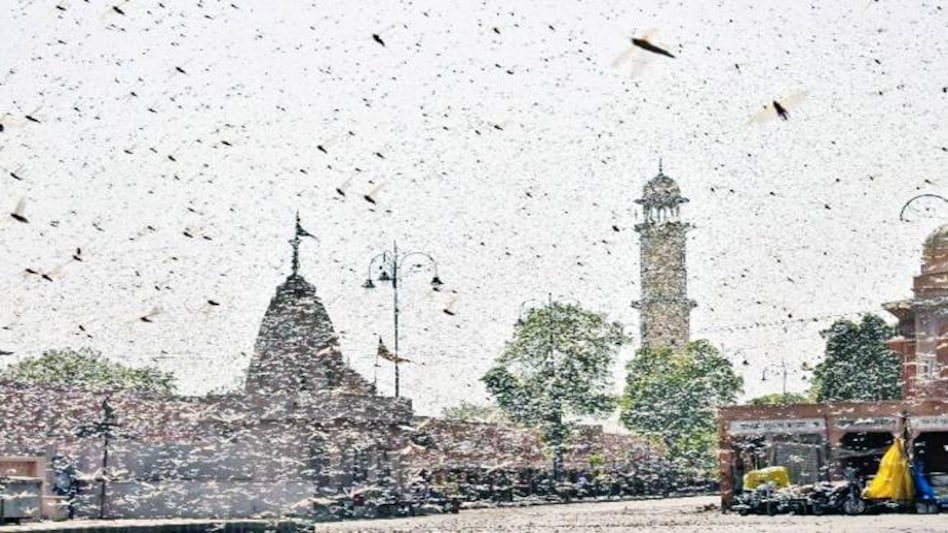
 The Centre has joined hands with Gujarat, Rajasthan, Madhya Pradesh, and other states to check the locust menace
A swarm of locusts that was supposed to hit Delhi have been diverted due to a change in wind direction. However, the threat still looms as new swarms continue to throng India from across the Pakistan border.
The tropical grasshoppers are headed towards Madhya Pradesh, according to a senior official from India's Locust Control Organisation (LCO). The official added that the LCO along with state agriculture department officials and farming communities are trying to ascertain the locusts' movement for the next day.
 Global debt hits $365 trillion: Why inflation masks the world’s rising debt burden
 'Going to look very different in 365 days': US Labor Dept watchdog warns amid H-1B crackdown
 El Niño's weather paradox: How one climate event causes floods and droughts
 EPFO ₹25,000 ceiling: How much PF will be deducted from your salary from October 2026?
 SIR notice received? ECI changes hearing rules; BLO may now visit your home
 R Veeramani Case: Granite Tycoon Faces Widening POCSO Probe In Chennai
 Gen Z And Money: Why Young Investors Want Quick Returns Over Long-Term Wealth Creation
 How Is Alexa+ Different? Will It have Ads Even If You Pay? Exclusive Chat
 Demand Robust Across Segments | Production To Ramp Up, Exports To Expand: Vivek Srivatsa
 GST Council To Meet On October 7: Invoice Matching, ITC & UPI MDR Tax In Focus
 IPO rush: Four IPOs conclude today; check subscription status, other details of issues still open
 Meesho shares slip 7% as Nomura assigns 'reduce' call; here's what the brokerage says
  Sensex, Nifty extend losing streak to seventh week, longest since 2020: What's next?
 Suzlon in bear grip: Oversold signals emerge near 52-week low for the stock
  EIL shares jump 7% to hit record high; stock up nearly 62% in six months: What's driving the rise?
 From herbal remedy to ‘gas station heroin’: What is kratom and why is the US worried about it?
 BJP spent ₹529 crore in last election cycle. How the party split its election fund?
 Gold, silver prices on September 27: Check latest rates in Delhi, Mumbai, Kolkata, other cities
 Prime Focus AI venture Brahma AI reaches $2 billion valuation with ₹1,437 crore fund raise
 Muthoot Fincorp becomes BCCI’s title sponsor for home cricket till 2028












