


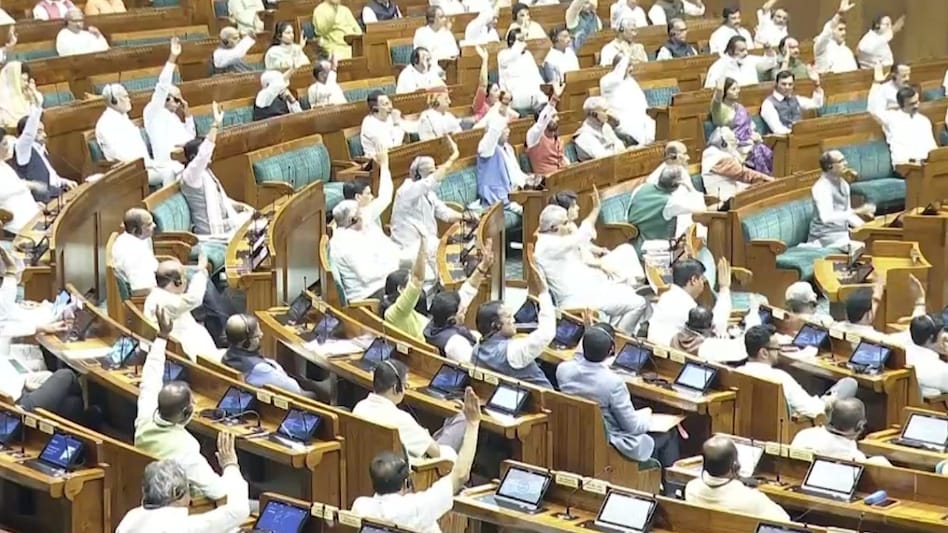
 The Public Examination (Prevention of Unfair Means) Amendment Bill, 2026 was passed by voice vote
Amid sloganeering by Opposition parties and in the shadow of recent student protests over paper leaks, the Lok Sabha on Wednesday approved the bill to amend the anti-paper leak law with stricter punishment of up to 10 years in jail and a fine of ₹50 lakh.
The Public Examination (Prevention of Unfair Means) Amendment Bill, 2026 was passed by voice vote, with the Narendra Modi-led government saying the legislation reflected its willingness to strengthen safeguards against examination malpractice based on experience. The bill was introduced in the House by Union Minister Jitendra Singh on July 27, days after large-scale student protests led by the Cockroach Janta Party forced Dharmendra Pradhan to resign as the education minister.

 How Tamil Nadu is continuing to lead in manufacturing with factories and factory workers
 Did you know India’s cash demand is strong despite the digital payment boom?
 Xi Jinping likely to visit India after 7 years for BRICS summit, may bring 400-member delegation
 Bitcoin price today: BTC crosses $80,000 for first time since May, rises 25% in week; what's driving it
 Onion prices soaring: Centre to sell onions at ₹35/kg, sends Kanda Express to boost supply
 Trump Moves To Make H-1B Visa Fee Permanent And Higher: What It Means For Indians
 Market Rally Vs Geopolitical Risk: What Wins From Here? Aditya Agarwal
 Daily Calls: Ask Your STOCK MARKET TODAY QUERIES | Market Update | Share Market News Today
 Symbiotec Pharmalab IPO | Top Management On Growth Plans, Business Outlook & IPO Strategy
 Chennai Second Airport Halted: Parandur Project Faces Wetland Concerns & Political Storm
 Paytm shares up 33% in a month: Time to book profits or is there more upside left?
 Nykaa shares: Elara Capital hikes target price; sees 43% upside potential
 Crompton Greaves shares: Brokerage sees 67% upside potential; check target price
 Dixon Tech, Amber Enterprises: Will they benefit from MPMS? Kotak shares views
 Vodafone Idea, Paradeep Phosphates, Hindustan Copper shares: What expert says
 94% of Indians use AI, but only 20% build with it: Why the AI skills gap is widening
 'Be a Malayali for a Day': Keralam Tourism launches new initiative; know all about it
 CheQ launches UPI with up to 2.5% rewards on RuPay credit card transactions: What users get
 SEBI pushes for Indian commodity benchmarks, sees shift from global price-taker to price-maker
 Varun Beverages enters alcohol business, taps former Diageo executive Prathmesh Mishra












