


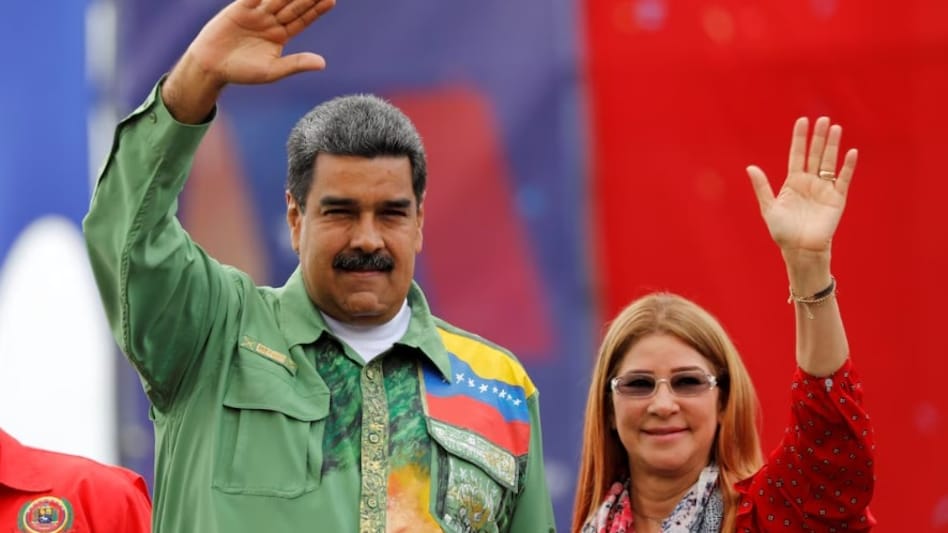
 Chellaney also highlighted the striking similarity in the manhunt dynamic. Like Saddam after the fall of Baghdad, Maduro was not defeated in open combat.
 The 1989 US seizure of Panama’s strongman Manuel Noriega has once again entered global discourse, this time as analysts search for historical parallels to Washington’s dramatic operation in Venezuela that led to the capture of President Nicolás Maduro and his wife. But for geopolitical expert Brahma Chellaney, the Noriega comparison, while superficially appealing, obscures more than it reveals.
In a post on X (formerly Twitter), Chellaney argued that although Maduro’s capture carries familiar legal framing — centred on drug trafficking charges and criminal indictment — the resemblance to Noriega largely ends there. “Maduro’s capture looks superficially like the 1989 US seizure of Manuel Noriega because of the familiar legal framing,” he wrote, “but the resemblance largely ends there.”

 HDFC Bank shares in focus: MD, CFO, Group Head fined in MSRDC case; warning letters issued
 'AI is a profound civilisational shift': N Chandrasekaran says software companies won't be left behind
 Parliament set for first major debate of Monsoon Session on Anti-paper leak bill; Here's what the bill proposes
 'Create jobs, do not replace them': Satya Nadella calls for community-first AI growth
 ITR filing last date July 31: Will the deadline be extended? Here’s what we know
 DCB Bank Management | Q1 Earnings, Loan Growth, Margins & Asset Quality Explained
 Infosys Fined In France: 70-Hour Work-week Debate Returns After €175,000 Labour Penalty
 I.T. Sector Outlook: Is the Worst Over for Indian I.T. Stocks After Long Underperformance?
 France And Spain Wildfires Threaten Cap Ferret Mansions And Bordeaux Wine Country
 Maruti Suzuki Eyes 25-30% SUV Growth, Says CNG Demand Has Overtaken Diesel
 BEL share price targets: What Jefferies, UBS, Goldman Sachs, Nomura, Morgan Stanley say
 Nifty, Sensex, Nifty Bank outlook for today: GIFT Nifty down 53 pts; key levels to watchHDFC Bank shares in focus: MD, CFO, Group Head fined in MSRDC case; warning letters issued
 Suzlon, Ambuja Cements, Radico Khaitan: Stocks to trade— Key levels, target, stop loss
 Top stocks in news: Meesho, IndiGo, Suzlon, Coal India, BEL, Tata Power, Adani Energy, TMPVBEL share price targets: What Jefferies, UBS, Goldman Sachs, Nomura, Morgan Stanley say
 Air India has made significant progress in the transformation journey: N Chandrasekaran
 CJP claims Centre assured no fresh cases against protesters after NEET paper leak stirITR filing last date July 31: Will the deadline be extended? Here’s what we know
 Samsung Galaxy Z Fold 8 First Impression: The foldable we've been waiting for?










