


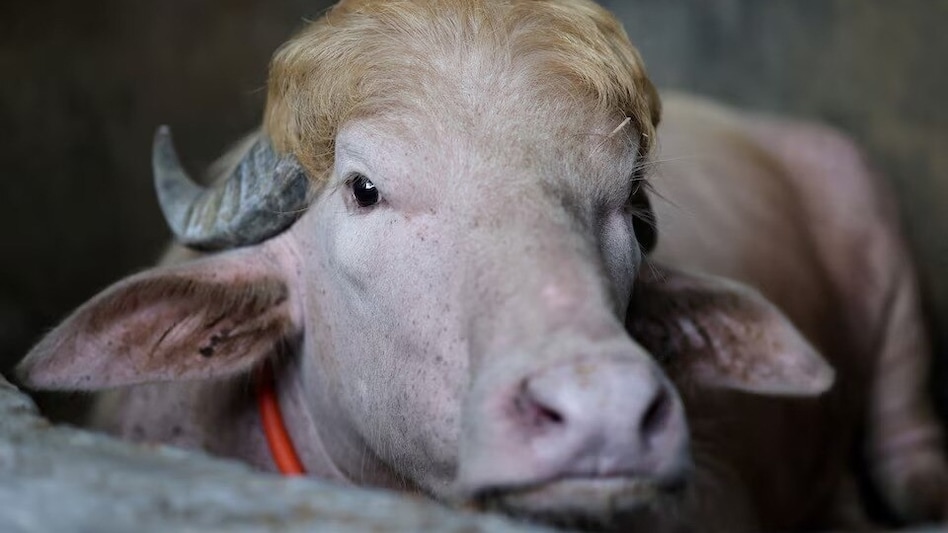
 The four-year-old albino buffalo became an internet sensation over the past few weeks. (Image: Reuters)
 A rare albino buffalo with a blond tuft of hair nicknamed “Donald Trump” has become one of Bangladesh’s biggest pre-Eid attractions this year, drawing massive crowds and social media attention before its scheduled sacrifice during Eid al-Adha.

 JPMorgan warns of global food crisis in 2027: How El Niño, fertiliser shortages could hit India
 India faces fertilizer squeeze as rising costs force govt to rethink urea policy
 RBI’s FCNR (B) swap window saw strong inflows. Why then was it closed early?
 Meet Deepak Mahaske, BJP's new Social Media Convenor
 BSE, L&T, Bharat Forge, Navin Fluorine, Sundram Fasteners shares: Expert weighs in
 Mahindra BE 6 Sport Teq Launched At ₹11.45 Lakh With BaaS | New Tech, Gemini AI & More
 The week's Tech News By AI Sana | Tech Gear EP 14
 Mahindra BE 6 Sport Teq Design Decoded | Pratap Bose Reveals What’s New
 Mahindra Eyes More SUV Market Share, Says India Ready For Pickup Trucks
 Vande Mataram: Why BJP Is Targeting Sonia Gandhi & Rahul Gandhi Over Full National Song
 Cupid promoter Aditya Kumar Halwasiya increases stake; multibagger stock slips 8%
 NMDC shares: Nuvama upgrades stock to 'Buy' despite Q1 EBITDA miss; check target price
 Avtar Steel files draft IPO papers with Sebi to raise Rs 585 crore through fresh issue
 Polycab shares may offer more returns despite stellar sectoral rally: SBI Securities
 BEL, L&T among SBI Securities top capital goods bets after Q1 earnings
 ‘What does the middle class get?’: Shehzad Poonawalla seeks scrapping of income tax for salaried Indian
 El Niño vs La Niña: How Pacific Ocean changes can reshape global weather
 Why government jobs are disappearing even as millions of Indians chase them
 Woman lost her arm in 2019 road crash; Delhi tribunal awards ₹31.7 lakh compensation
 'Tarique Rahman has dug a hole': Ex-foreign secretary after Bangladesh links PM's visit to Hasina extradition












